 Search


- During the 14th Five-Year Plan, Guangdong will build a comprehensive transportation network with internal and external links
The first phase of the Dafenghua Expressway is open to traffic. More than half of the tunnels of the Meilong High-speed Railway have been excavated. Construction of the T3 terminal of Guangzhou Baiyun International Airport has started... Since 2021, the construction of major projects in Guangdong's comprehensive transportation has been a success story. The "Fourteenth Five-Year" Development Plan for the Comprehensive Transportation System of Guangdong Province puts forward that the total investment in major transportation infrastructure projects in the Fourteenth Five-Year Plan of Guangdong Province is estimated to be approximately 4.6 trillion yuan, of which only rail transit infrastructure construction will be used. The investment amounted to 2.2 trillion yuan, accounting for nearly half. By then, Guangdong's rail transit network will be denser, and the "Greater Bay Area on the rail" is about to emerge.
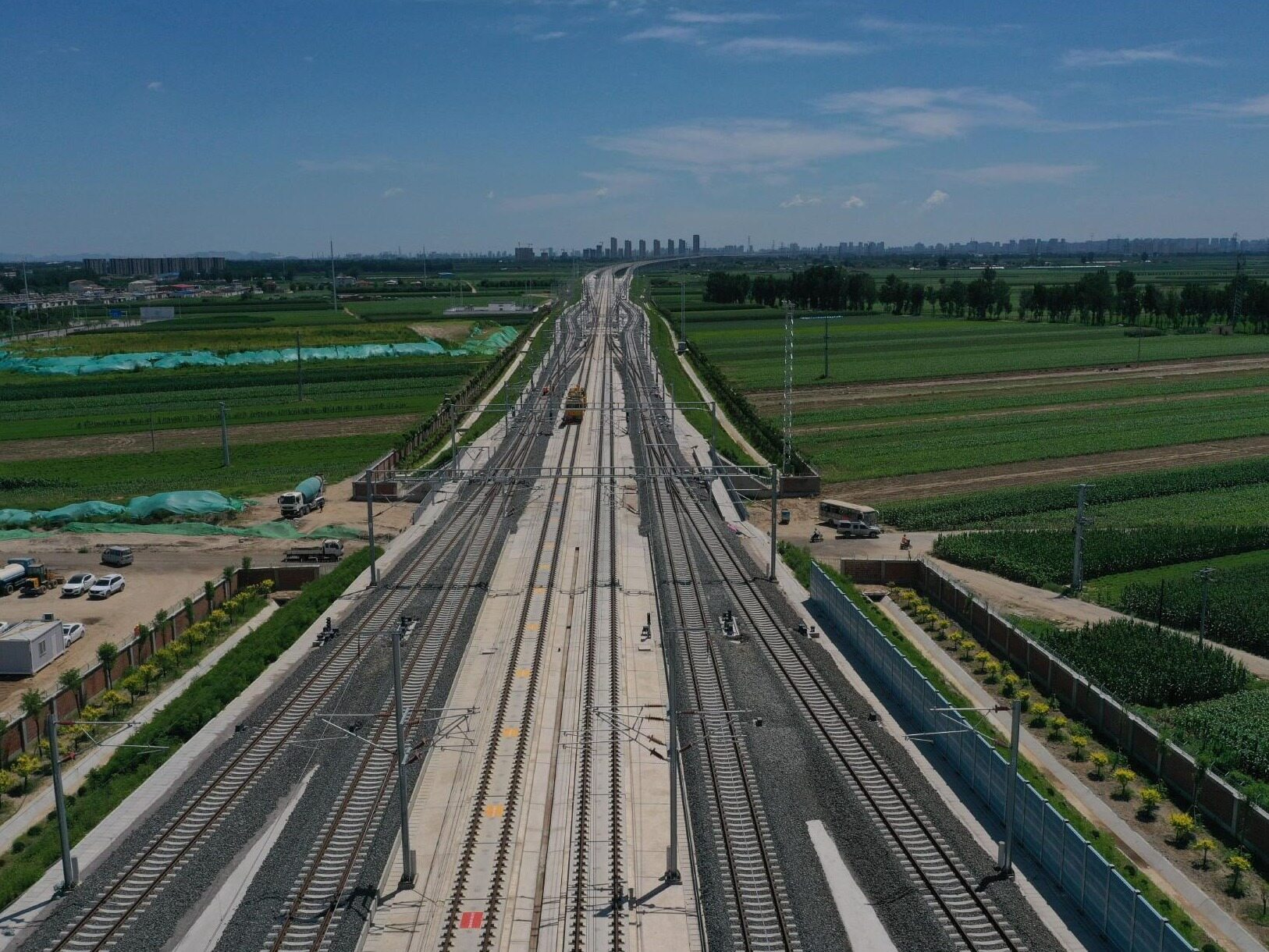
During the "14th Five-Year Plan" period, Guangdong will construct the Guangzhou-Zhuhai (Macau) high-speed rail, Zhuhai-Zhaoqing high-speed rail and other projects, promote the Guangzhou-Shenzhen-Hong Kong high-speed rail and Guangzhou-Zhuhai intercity to enter the central city of Guangzhou, study the new Guangzhou-Shenzhen high-speed rail, and build Guangzhou. Shenzhen-Guangzhou-Zhuhai Express Corridor.
Completed investment of 1.43 trillion yuan during the 13th Five-Year Plan
The relevant person in charge of the Provincial Development and Reform Commission introduced that Guangdong is one of the provinces with the strongest domestic and international transportation demand, the most complete transportation methods, the most developed transportation infrastructure network, the most abundant service supply, the most diverse business models, and the most active innovation power in China. .
During the "Thirteenth Five-Year Plan" period, the total investment in the transportation infrastructure of Guangdong Province was 1.43 trillion yuan, which was about 1.68 times that of the "Twelfth Five-Year Plan" period. The scale and quality of the comprehensive transportation network were significantly improved.
Before the "Plan" was issued, Guangdong had been listed as a "pilot unit for building a strong transportation country." The "National Comprehensive Three-dimensional Transportation Network Planning Outline" clearly positioned the Guangdong-Hong Kong-Macao Greater Bay Area as the "extreme" and international nature of the national comprehensive three-dimensional transportation network. Comprehensive transportation hub cluster.
During the 14th Five-Year Plan period, the first to form a "channel + hub + network" linkage
On the solid foundation of the "13th Five-Year Plan", the "Planning" puts forward the overall goal of Guangdong's comprehensive transportation development in the "14th Five-Year Plan": by 2025, a comprehensive three-dimensional transportation network will be basically formed, passenger and cargo transportation service quality will be significantly improved, and transportation The comprehensive transportation management capabilities have been further enhanced, and a modern comprehensive transportation system that runs through the province, smoothly domestically, and connected to the world has been established on the whole, and the high-quality development of transportation is at the forefront of the country.
"To achieve the above goals, during the '14th Five-Year Plan' period, Guangdong must take the lead in forming a coordinated development pattern of'channels + hubs + networks'." said Wang Ming, researcher and director of the National Development and Reform Commission's Comprehensive Transportation Research Institute.
Under the new development pattern, Guangdong has a rich accumulation advantage in terms of the dual scale of domestic and foreign economies and the dual radiation of domestic and international. During the "14th Five-Year Plan" period, Guangdong should build a strategic fulcrum for a new development pattern and further open up comprehensive internal and external transportation channels.
Overall layout: "One center and three poles" are conducive to Guangzhou-Shenzhen linkage
In terms of channel construction, the "Planning" proposes to improve the "three horizontal, four vertical and two connections" provincial transportation framework, strengthen the function of an integrated transportation hub, and build a center with the Guangdong-Hong Kong-Macao Greater Bay Area as the core and Shantou, Zhanjiang, and Shaoguan as the poles. "One center and three poles" comprehensive transportation hub layout.
Hu Gang, professor of the School of Public Administration of Jinan University and president of the South China Urban Research Association, analyzed that compared with the previous, the overall layout of "one center and three poles" has changed in two respects. "One is to place Shenzhen and Guangzhou as the center, and the other is to promote Shaoguan to the third pole."
In the earlier planning, Guangdong highlighted the central position of Guangzhou, which is the only international comprehensive transportation hub in the province and southern China. The "Plan" put Shenzhen and Guangzhou side by side, affirming the importance of Shenzhen in the construction of an international comprehensive transportation hub, and also conducive to the linkage between the two cities of Guangzhou and Shenzhen. As for this round of upgrading the status of Shaoguan as an integrated transportation hub, there are traces to follow from the high-speed rail line construction plans in recent years. Shaoguan is located in the northernmost part of Guangdong. It was originally on the Beijing-Guangzhou line. In recent years, high-speed railways have been planned with Ganzhou in Jiangxi and Yongzhou in Hunan. The role of a transportation hub has become increasingly prominent. "The purpose of the layout of the transportation hub in this way is to promote the efficient circulation and optimal allocation of resources in the region by strengthening the synergy between the hubs and between the hubs and the network, and to radiate and drive the common development of all regions." Hu Gang said.
Expressway: 36 highways leaving the province in 2025
Regarding expressways, the "Plan" proposes to speed up the construction of provincial passages. It is necessary to speed up the construction of provincial passages from Nanxiong to Xinfeng, Meizhou to Wuping, Zhanjiang to Nanning, and Huazhou to Beiliu. With 36 routes (6 routes to Fujian, 7 routes to Jiangxi, 6 routes to Hunan, 11 routes to Guangxi, 1 route to Hainan, 3 routes to Hong Kong, and 2 routes to Macau), the expressway's external connection capability has been further enhanced.
Airport construction: Shenzhen's second airport is set, strengthening the function of the regional aviation hub airport
The "Plan" proposes to strengthen the rapid rail transit connection between Shenzhen Bao'an Airport and Huizhou Airport, and to strengthen Huizhou Airport to assume the function of Shenzhen's second airport.
The data shows that the passenger throughput of Shenzhen Airport in 2020 will exceed 37.91 million, ranking third in China and the only non-loss airport among the top ten airports in China. Some studies believe that the current geographical location and space of Shenzhen Airport have certain restrictions on Shenzhen Airport becoming a hub airport. According to the previous plan, Huizhou Airport will build a trunk airport, mainly serving Huizhou, Shanwei, Heyuan and the eastern part of Shenzhen. This means that Shenzhen is no longer limited to allocating resources within the scope of the city's own space, but to allocate resources from the perspective of regional and urban agglomerations. Guangdong is accelerating the construction of a world-class airport cluster in the Pearl River Delta with Guangzhou and Shenzhen as the core. The function of Huizhou Airport as the second airport in Shenzhen has been clarified once again, which is of great significance for Shenzhen's construction of an international aviation hub and strengthening the functions of a regional aviation hub airport.
Fast cargo flow: "12312" travel transportation circle helps passenger flow and logistics interconnection
To strengthen the construction of a comprehensive three-dimensional transportation network, the "Plan" proposes to basically build a "12312" travel traffic circle and a "123" fast cargo flow circle. Hu Gang believes that the use of traffic and fast cargo flow shows that Guangdong is paying more and more attention to passenger flow and cargo flow.
The acceleration of passenger and cargo flows will play a key role in the economic development of Guangdong Province. "For Guangdong, where the processing industry and modern manufacturing industry are developed, transportation and logistics are essential infrastructure constructions, which will facilitate the interconnection of industrial passenger flow, logistics, business flow, and capital flow in Guangdong Province, and promote the coordinated development of the regional economy. ."
Green travel: Promote the development of hydrogen energy bus
In Wang Ming’s view, transportation is one of the important areas with large carbon emissions. Promoting the green and low-carbon transformation of transportation is not only an important means to implement the carbon peak and carbon neutral goal, but also to promote the high-quality development of transportation. Important grip. Guangdong is the nation’s largest industrial province and the most innovative province. Its industrial production indicators rank first in the country. Its comprehensive regional innovation capability has remained the nation’s first for many consecutive years. It has significant advantages in energy substitution and other aspects.
The "Plan" proposes to formulate an implementation plan for carbon peaking in the transportation sector. Increase the application of clean energy and new energy in transportation equipment, promote the development of hydrogen energy buses, hydrogen energy rail transit, electric vehicles, and LNG-powered ships, and accelerate the application of LNG-powered ships and the construction of inland river LNG refueling stations.
Transportation Service: Expanding the urban distribution scene of unmanned vehicles
To adapt to changes in the characteristics of passenger and cargo transportation needs, the "Plan" supports transportation companies in accelerating business model innovation and enriching the transportation service system. Support the development of customized travel services such as “door-to-door, point-to-point” one-step intercity passenger transport and rural responsive passenger transport, guide the development of shared traffic standards, and support Guangzhou, Shenzhen and other places to explore the development of urban commuting such as “air taxis” New model. Encourage the development of customized logistics, shared logistics, cold chain express delivery, and instant direct delivery. Expand the urban distribution application scenarios of drones and unmanned vehicles, and study the use of urban underground transportation space to develop urban underground logistics and distribution. Encourage superior enterprises to integrate the resources of the transportation technology industry chain, and cultivate the transportation technology industry ecosystem with open data, open platforms, and open scenarios.
Rail Transit: Building a "Greater Bay Area on Rail"
Intensifying the construction of rail transit and accelerating the interconnection of the Guangdong-Hong Kong-Macao Greater Bay Area has become a major focus of the "Plan". Guangdong has been planning to build a “Greater Bay Area on Track”. Before 2020, the four cities of Guangzhou, Shenzhen, Foshan, and Dongguan will have an operating mileage of more than 1,000 kilometers. The Guangdong-Hong Kong-Macao Greater Bay Area once became the most developed area for urban rail transit in China. one. In 2020, the "Guangdong-Hong Kong-Macao Greater Bay Area (Intercity) Railway Construction Plan" was approved by the National Development and Reform Commission, and the "Greater Bay Area on Track" is moving from a blueprint to reality.
The Guangdong-Hong Kong-Macao Greater Bay Area and the Beijing-Tianjin-Hebei, Yangtze River Delta, and Chengdu-Chongqing double-city economic circle are the four poles of the national comprehensive three-dimensional transportation network, and they play an important role in the national comprehensive transportation layout. In order to further promote the interconnection of the Guangdong-Hong Kong-Macao Greater Bay Area, the "Plan" proposes to build a Greater Bay Area with high-speed railways, inter-city railways, and high-grade highways as the backbone of strengthening pole connections, connecting the two sides of the Pearl River Estuary, and connecting the mainland with Hong Kong and Macau. Rapid transportation network speeds up the formation of a 1-hour life circle.
Transport Connection: Supporting Macao's integration into the national railway network
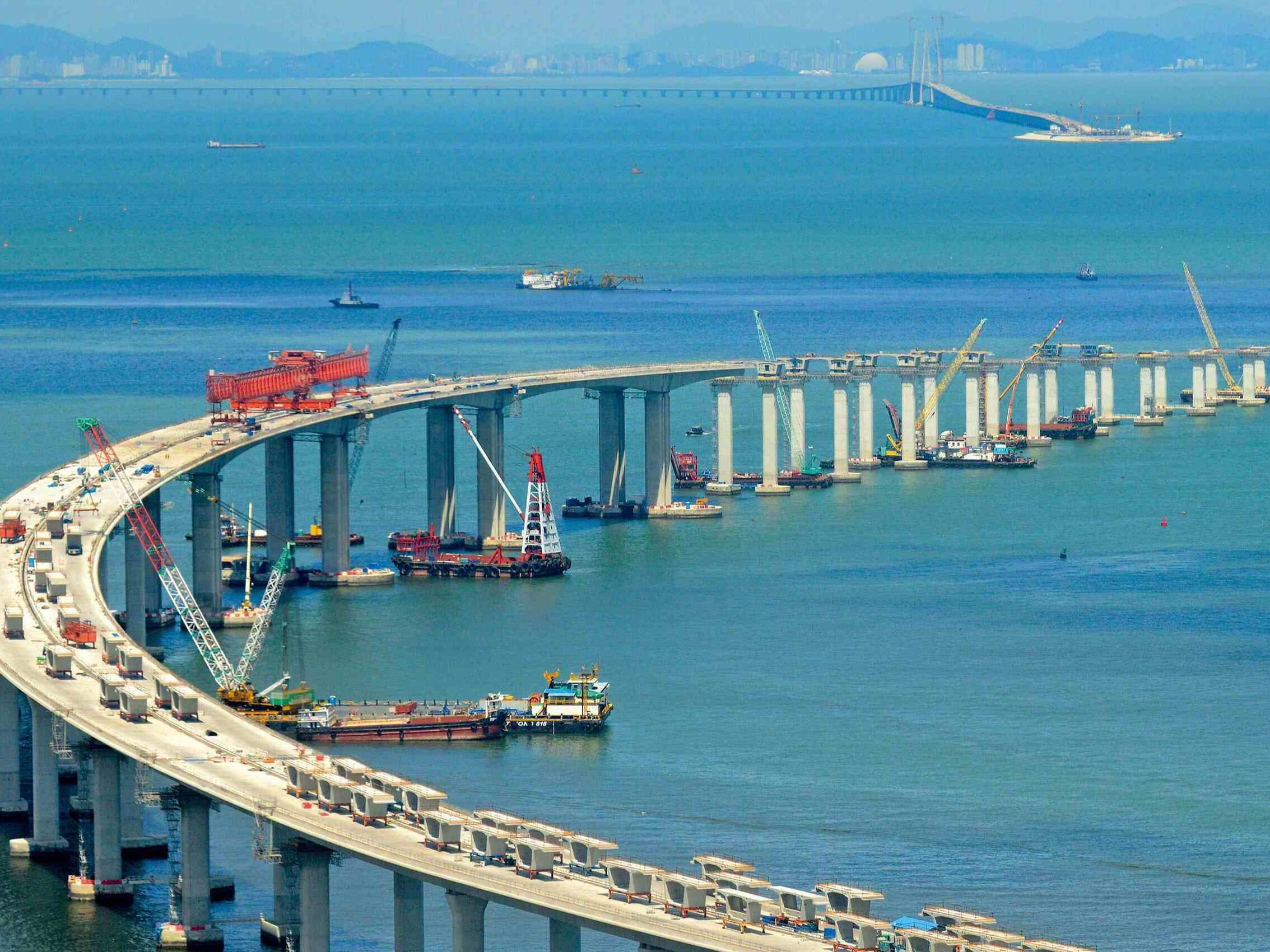
With the acceleration of the construction of the Guangdong-Hong Kong-Macao Greater Bay Area, the economic ties between the east and west sides of the Pearl River have become increasingly close. From the current point of view, Humen Bridge, Hong Kong-Zhuhai-Macao Bridge, and Nansha Bridge have played a very good role in interconnection. From the perspective of industry insiders, the characteristics of the industries on the east and west sides of the Pearl River are different. Promoting the interconnection between the two sides of the Pearl River Estuary can, to a certain extent, promote the establishment of more connections between industries on both sides of the strait and increase the radiation intensity of the entire province’s overall industrial clusters.
In addition to "hard connectivity", we must also use "soft connectivity." The "Plan" proposes to strengthen the traffic connection between the Mainland and Hong Kong and Macao. Speed up the construction of the transit highway in the eastern part of Shenzhen, give better play to the role of the Hong Kong-Zhuhai-Macao Bridge, and improve the level of transportation connectivity between Hong Kong and Shenzhen. Promote the realization of the convenient connection of inland high-speed rail, inter-city rail and Macau light rail at Zhuhai Station and Hengqin Station, and the connection of the Guangdong-Macao New Corridor (Qingmao Port) connection channel with the Guangzhou-Zhuhai Intercity Railway in Zhuhai Station, supporting Macau's integration into the national railway network.
Express Corridor: Guangzhou-Zhuhai (Macau) high-speed rail will be built
The "Planning" proposes that during the "14th Five-Year Plan" period, Guangdong will construct Guangzhou-Zhuhai (Macau) high-speed rail, Zhuhai-Zhaoqing high-speed rail and other projects, promote the Guangzhou-Shenzhen-Hong Kong high-speed rail and Guangzhou-Zhuhai intercity to enter the central city of Guangzhou, and study the Guangzhou-Shenzhen high-speed rail New corridors, the construction of Guangzhou-Shenzhen and Guangzhou-Zhuhai Express Corridors.
At the same time, Guangdong will also accelerate the construction of Foshan via Guangzhou to Dongguan intercity, Foshan Intercity-Foguan Intercity-Guanhui Intercity, Zhaoshun Nan Intercity-Zhongnan Tiger Intercity-Tangxia to Longgang Intercity, etc. Horizontal railway passage. In conjunction with the Shenzhen-Jiangmen Railway, the Zhongshan connecting line of the Guangzhou-Zhuhai Intercity Railway will be constructed simultaneously to form a direct railway passage connecting Zhuhai to Shenzhen via Nansha and the Pearl River Estuary.
Ouyang Great Wall said that in the future, rail transit will play a more important role than other transportation. In the future, rail transit in the Greater Bay Area is expected to form the overall goal of "one network, one ticket, and a chain of cities". "The core of the overall goal is to promote the rapid and free flow of production factors, living factors, and environmental factors in the Greater Bay Area through rail transit, and ultimately realize the integration of transportation to industry and life."
He judged that in the future within the Greater Bay Area, intercity railways will be operated as public buses, and residents of various cities can travel freely between urban nodes and central cities. At the same time, cities in the Bay Area will reach major external international hubs or important land hubs in about an hour through intercity and rail networks, realizing the travel convenience provided by homogeneous transportation hubs.
Not only to strengthen internal connectivity, the "Plan" also proposes to expand the coverage of high-standard railways so that the Guangdong-Hong Kong-Macao Greater Bay Area can connect with other urban agglomerations, so that the Guangdong-Hong Kong-Macao Greater Bay Area and the Yangtze River Delta, Beijing-Tianjin-Hebei, and Chengdu-Chongqing will form a "double". Channel" pattern.
How to promote the integration and development of the Guangdong-Hong Kong-Macao Greater Bay Area cities, Ouyang Great Wall believes that the first step is to establish and improve the Greater Bay Area rail transit coordination mechanism, which includes three levels of government, enterprises and industries. Secondly, it is necessary to establish a unified technical standard within the Greater Bay Area and build a network plan for interconnection in the Greater Bay Area.
Shenzhen-Zhuhai Cooperation: Accelerating Planning of Lingdingyang Channel
In order to further promote the integration of the two sides of the Pearl River Estuary, it is necessary to improve the layout of the passageway across the Pearl River Estuary. The "Planning" proposes to speed up the construction of highways such as the Deep-Zhongshan Passage, the Huangmao Sea Cross-sea Passage, the Lion Ocean Passage, and the Lianhuashan Passage, and simultaneously improve the supporting distribution roads on both sides of the strait. Promote the construction of railway passages such as the Shenzhen-Jiangmen Railway, the Foshan-Dongguan Intercity Railway, and the Zhongnanhu Intercity Railway, study and demonstrate the Lingdingyang Corridor with railway functions as the main function, and plan the Shenzhen-Zhongshan Intercity Railway.
The problem of connectivity between the east and west sides of the Pearl River. The existing cross-river passages cannot meet the increasing demand for passenger and freight transportation across the Pearl River Estuary. The Planning has also made a targeted layout and proposed a new solution to the problem.
The Lingdingyang Passage has always attracted much attention. The 2020 Zhuhai Municipal Government Work Report stated that Zhuhai will work with Shenzhen to advance the Lingdingyang Corridor planning. In the same year, Shenzhen Qianhai Administration also issued a bid-winning announcement for the "Shenzhen-Zhuhai (Lingdingyang) Channel Qianhai Connection Planning Study", clarifying the direction of the Shenzhen side, and it is expected that the Shenzhen Qianhai will reach Zhuhai in 30 minutes in the future.
At present, the east bank and west bank of the Pearl River Estuary lack more transportation channels. The straight line distance between Shenzhen and Zhuhai is less than 50 kilometers, but it takes about two hours to drive.
According to the plan, the Shenzhen-Zhuhai Corridor is a cross-sea bridge connecting Zhuhai and Shenzhen. It is located between the Hong Kong-Zhuhai-Macao Bridge and the Shenzhen-Zhuhai Corridor. It will assume two functions: high-speed railway and intercity railway. The channel starts in Shenzhen, crosses Lingdingyang to Zhuhai, and extends westward to Taishan and Yangjiang.
Some people are concerned that if the Hong Kong-Zhuhai-Macao Bridge is connected to Shenzhen, does the Lingdingyang Corridor make sense? Some insiders pointed out that the Lingdingyang Passage is approximately 20 kilometers away from the Hong Kong-Zhuhai-Macao Bridge, and the latter is dominated by railway functions.
It is expected that through five years of hard work, the newly built, relocated, rebuilt and expanded airports under the jurisdiction of the group in the province’s “5+4” backbone airport layout will be completed and put into use as planned, and the province’s civil airport system will operate in coordination; Baiyun Airport is an international aviation hub. Be in the forefront of the world and promote the development of a world-class airport cluster in the Guangdong-Hong Kong-Macao Greater Bay Area. Editor/Xu Shengpeng
Comment

 Praise
 Collect
 Comment

 Share
Share


Write something~