 Search


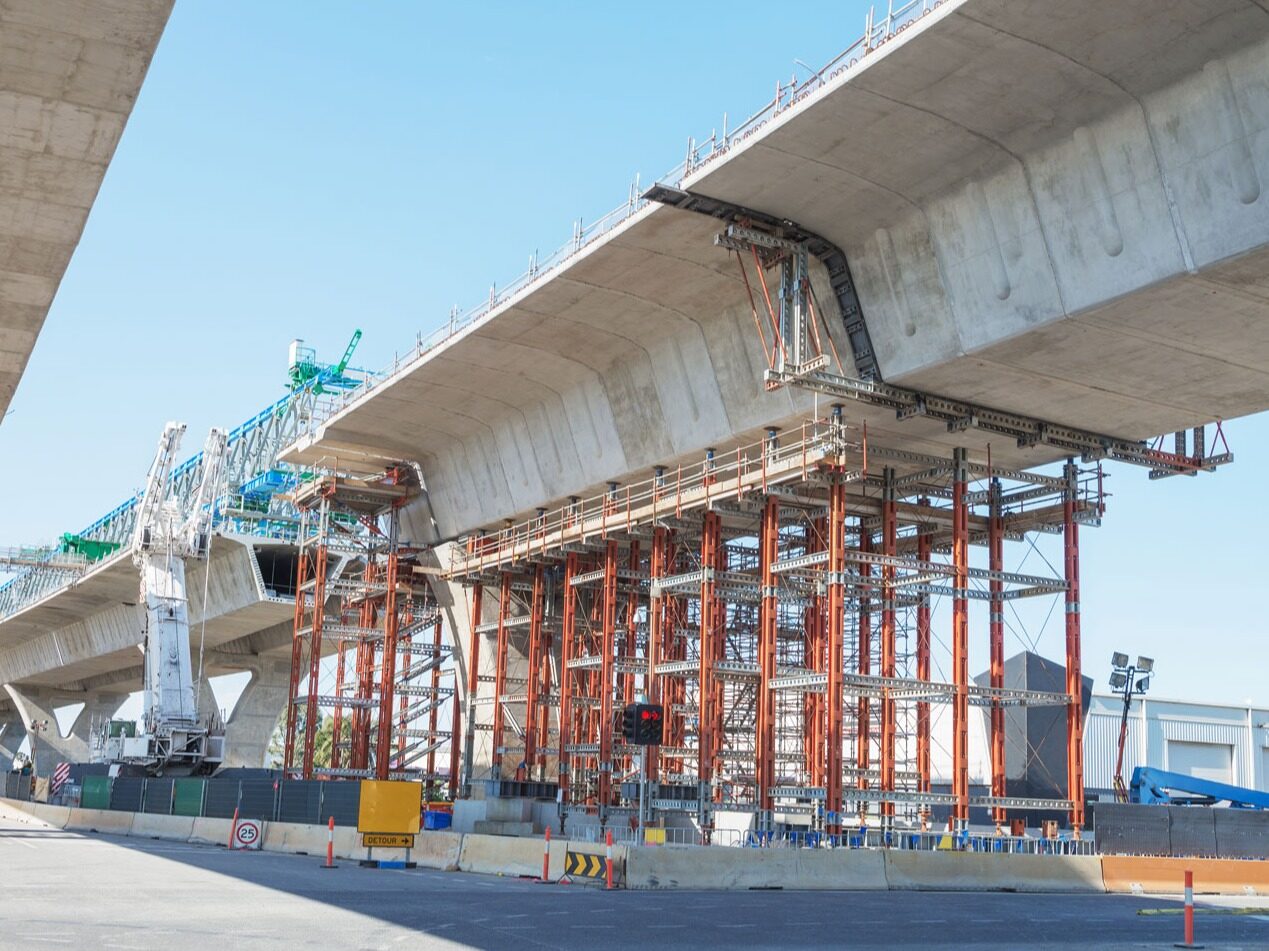
- It is estimated that between 2022 and 2030, the infrastructure construction industry will grow at an average annual rate of 3.2%
By 2020, the global infrastructure construction affected by the new crown epidemic will decrease by 2.7% year-on-year. In 2021, as governments of various countries actively introduce relevant stimulus policies, global infrastructure construction begins to recover, and Fitch expects to achieve a growth rate of 5.5%. However, the unfavorable factors such as rising construction materials and labor costs and the risk of the epidemic have also restricted the rapid recovery of the infrastructure industry. It is estimated that between 2022 and 2030, the industry will grow at an average annual rate of 3.2%.
1. Asia
Based on strong demand fundamentals and extensive government support for infrastructure, infrastructure construction in Asia will fully recover from 2021 and will continue to maintain strong growth in the next 10 years. It is expected that Asia will continue to be the most attractive region for infrastructure investment and show the greatest potential for growth.
Throughout Asia, Chinese contractors have shown obvious advantages. In the medium and long term, they may face increasingly fierce competition. From the perspective of regional markets, the Philippines, Singapore, Taiwan and Vietnam are open, diversified and attractive. Advantages: In terms of investment, public-private partnerships and preferential financing will play a key role in supporting project development, especially in emerging markets.
As the development of digitalization and smart cities continues to accelerate, Southeast Asia will make major investments in digital infrastructure and data centers. Data center construction continues to increase expectations for environmental sustainability, which will promote innovation in system installation such as architectural design, which is conducive to the development of clean energy and provides stronger long-term support for green and sustainable development.
Asia’s Fitch Infrastructure Risk/Return Index (RRI) has an average score of 55.6 (out of 100), which is higher than the global average of 50.0. It is the second largest region in the world, second only to North America and Western Europe, and far ahead Central and Eastern Europe with the third highest score.
2. Africa
In the Middle East and North Africa, contractors from the UAE and Saudi Arabia are relatively active, and the financial industry has a diverse competitive landscape. Development financial institutions (DFI) and commercial banks are actively participating in the market. As the Gulf Cooperation Council market participates in the Belt and Road Initiative, Chinese contractors play an important role in this market. In Sub-Saharan Africa (SSA), large economies such as Nigeria, Tanzania, and Ethiopia have experienced strong growth, and their infrastructure industries may grow faster than the rest of the world in the next decade.
(1) Railway construction field
The Egyptian National Tunnel Authority (NAT) and Siemens Mobile, Orascom Construction and Arab contractors announced the signing of a $4.5 billion contract for the Ain Sokhna-Marsa Matrouh High-Speed Railway (HSR) project. The prospects for the development of high-speed railways in Egypt are optimistic. The advancement of this project may encourage the Egyptian government to further develop a high-speed rail network construction plan and promote more projects in the next ten years.
The Jordanian government plans to build a standard gauge railway between the port of Aqaba and the capital to improve access to the port. The Saudi-Jordan Investment Fund announced its support for the development of the southern section of the line connecting the Ma'an Phosphate Mine and the Aqaba Phosphate Mine, making the long-term prospects for the construction of the southern and northern sections of the project more optimistic. The increasing cooperation between the Syrian and Jordanian governments and other governments in the region, as well as the reconstruction work in Syria, have contributed to the planned construction of a standard gauge railway linking Amman and Damascus, and will also increase the planned standard gauge railway between Amman and Saudi Arabia. The commercial feasibility of the railway between them will facilitate Saudi Arabia’s access to Jordan and Lebanon and Syrian markets. The possibility of long-term normalization of trade relations between Saudi Arabia and Israel is increasing, which will also have a positive impact on the long-term development of the railway between Haifa and Amman.
(2) Electric vehicle field
Affected by low income and low penetration rate of public charging stations for electric vehicles, the development of electric vehicles in Africa has been slow. The electrification of public transport in Egypt is developing relatively fast, because public transport operators have a lower cost burden for purchasing electric vehicles. The overall development of electric vehicles largely depends on whether the Egyptian government will provide consumer-centric incentives. In recent years, with the cancellation of gasoline subsidies, the cost of internal combustion engine vehicles has increased, which is conducive to the increase in sales of electric vehicles in the future.
(3) Energy construction field
The state-owned Qatar Petroleum Company (QP) plans to spend US$82.5 billion between 2021 and 2025 to expand Qatar’s existing oil and gas assets. In addition to seeking strategic ways to enter the European market, QP also listed India, Pakistan and Bangladesh as target markets for the sale of LNG. It is estimated that by 2030, the total LNG import demand of India, Pakistan and Bangladesh will increase from the estimated 51.3 billion cubic meters in 2020 to 112.6 billion cubic meters. Sustainability will remain a key part of QP's development and will help maintain Qatar's international competitiveness, of which $200 million will be used for the carbon reduction strategy of the flagship project North Field East expansion project.
(4) Risk/Return Index
The Middle East and North Africa region’s infrastructure risk/return index averaged 47.5, slightly lower than the global average of 50.0, and ranked fourth in the world, higher than Latin America and sub-Saharan Africa.
The average score of the SSA Infrastructure Risk/Return Index is 41.5, which is far below the global average of 50.0. At the bottom of the ranking, South Africa is the only country in the region whose risk level is close to the global average.
3. Europe and America
The dominant position in Europe is still local contractors. British, Spanish, Italian and French contractors are particularly active in the region. Among them, companies such as Strabag, Skanska, and WeBuild undertake a considerable number of projects and operate in many markets in the region. Diversified development in China. The EU and its related institutions play a key role in project financing in the region.
(1) Hydrogen construction field
Western Europe is developing emerging technologies and has become a hot spot for the construction of hydrogen infrastructure in the world. The capacity of hydrogen electrolyzer projects in this area is 39.4GW, accounting for 50.1% of the global 78.7GW. The European Union, especially the European Investment Bank, and other multilateral funds have provided the necessary funds in the initial stage of hydrogen infrastructure. The development strategies of existing gas operators in Western Europe are critical to the development scale and direction of hydrogen infrastructure, and their existing natural gas infrastructure capabilities provide a key first-mover advantage for the development of hydrogen infrastructure.
(2) Electric vehicle field
Although by 2030, internal combustion engine vehicles will still be dominant in Europe, due to increased support for electric vehicles at the national and regional levels, it is expected that European electric vehicles will increase from 3.1 million in 2020 to 2030. 57.4 million vehicles. However, Europe is likely to experience east-west differentiation in terms of electric vehicle use and electric vehicle charging infrastructure investment. Electric vehicles in the Central and Eastern European markets are relatively small, accounting for only 2% of the total number of electric vehicles in Europe, while the utilization rate of electric vehicles in the Western European market is relatively small. Has exceeded the deployment of electric vehicle charging infrastructure.
(3) Housing construction field
The "Heating and Building Strategy" issued by the British government in October 2021 encourages households and industry participants to gradually adjust their operations to minimize emissions during the entire life cycle of residential buildings. The government emphasized the use of heat pumps to replace gas boilers and provided funds for the transformation. However, due to the high installation cost of heat pumps and the relatively unfamiliar industry with the technology, there is a huge risk of delivery. At the same time, affected by financial, political and other factors, these measures are not enough to enable the United Kingdom to reduce its greenhouse gas emissions to net zero by 2050. The UK will continue to support the development of the use of hydrogen in residential building systems and strive to become a regional leader in hydrogen applications.
The Irish government's "Housing for All" plan has a positive impact on maintaining residential construction activities and solving the long-term sequelae caused by the bursting of the Irish housing price bubble. According to the plan, Fitch predicts that the average annual real growth rate of the Irish residential and non-residential construction industry from 2021 to 2030 is 3.5%, which is higher than the previous forecast of 2.2%. In terms of financing, the plan envisages direct funding for the supply of new housing, while at the same time extensive reforms to the planning system to stimulate the enthusiasm of house builders and solve the Irish housing crisis. The government will carry out demand-side reforms especially for first-time home buyers and low-income households, but the long-term improvement of the real estate market depends on the success of concurrent supply-side reforms.
(4) Risk/Return Index
The average score in the North American and Western European Infrastructure Risk/Return Index is 61.4 points, which is much higher than the global average score of 50.0 points, ranking first in the world. The region has extensive policy continuity, so it can continue to support public investment in infrastructure. The results of the elections in Canada and Germany confirmed this view.
The average score of the Central and Eastern European Infrastructure Risk/Return Index is 49.1, which is slightly lower than the global average of 50.0 and maintains its third position in the world. The overall return structure of the region has a wide range of advantages. With the improvement of the new crown epidemic in the region, the actual growth prospects of its infrastructure industry will improve.
4. Latin America
During the 2020 COVID-19 pandemic, infrastructure construction in most markets in the region has slowed sharply. Due to the low base in 2020, the growth rate of infrastructure construction in Latin America is expected to reach 13% in 2021. Beginning in 2022, growth will tend to be moderate. It is estimated that from 2022 to 2030, the infrastructure sector will grow at an average annual rate of 3.0%.
In some key markets, due to limited public spending in the field of infrastructure construction, coupled with rising political risks, growth will be lower than potential. In this region, the rate of recovery of the construction market is expected to change greatly in the next few years. Markets such as Panama, Argentina and Peru will have higher growth levels, while construction activities in other markets such as Brazil and Mexico will be relatively weak.
The Latin American infrastructure construction market is affected by the regional situation, and the investment scale is operating at a low level. The Latin America Infrastructure Risk/Return Index (RRI) has an average score of 43.6, which is only higher than the SSA region. High risks have weakened the attractiveness of the Latin American market. Chile's relatively low risk environment makes it the most attractive infrastructure market in Latin America. Editor/Xu Shengpeng
Comment





 Praise
 Collect
 Comment

 Share
Share


Write something~