 Search


- China implements digital China and other strategies, and new infrastructure construction has achieved remarkable results

The implementation of the new infrastructure plan for the 14th Five-Year Plan has been accelerating, and investment in many areas such as 5G operation has attracted much attention. The "14th Five-Year Plan" outlines the construction of new infrastructure as the focus of expanding investment space. Recently, many ministries and commissions have spoken out in succession, including speeding up the introduction of the "14th Five-Year Plan" new infrastructure construction plan, and increasing investment in accordance with the principle of moderate advancement. Localities are also actively using major projects to play a leading role. According to incomplete statistics from reporters, nearly 20 provinces including Beijing, Tianjin, Hubei, Zhejiang, and Anhui have issued local "14th Five-Year Plan" outlines to clarify 5G construction goals in the next five years. , To accelerate the construction of a number of major projects such as big data centers and industrial Internet. According to statistics from the China Academy of Information and Communications Technology, catalyzed by multiple policy dividends, investment in new infrastructure during the "14th Five-Year Plan" period is expected to exceed 10 trillion yuan.
A number of ministries and commissions are intensively planning a new round of support measures for the construction of new infrastructure. The National Development and Reform Commission stated that in 2021, the "14th Five-Year" new infrastructure construction plan will be issued to expand 5G applications and accelerate the construction of industrial Internet and data centers. The Ministry of Industry and Information Technology proposed that it will increase investment in accordance with the principles of demand traction, system layout, and moderate advancement, and continue to promote the construction of 5G, industrial Internet, and data centers to create a new type of high-speed, mobile, safe, and universal infrastructure. The State-owned Assets Supervision and Administration Commission recently proposed to accelerate the optimization of state-owned capital layout and industrial structure adjustment, focus on the development of the real economy, steadily promote strategic reorganization and professional integration, and increase investment in new infrastructure.
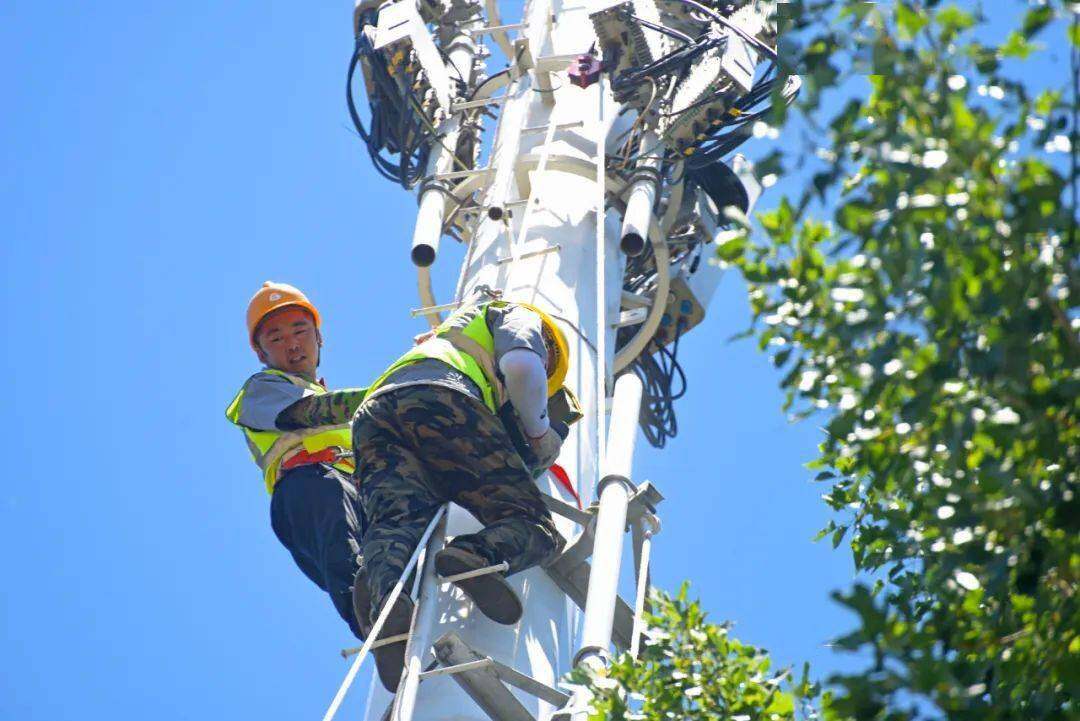
Local plans have also been stepped up. According to incomplete statistics from the reporter, nearly 20 provinces including Beijing, Tianjin, Shanghai, Chongqing, Sichuan, Hubei, Zhejiang, Jiangsu, and Anhui have issued local "14th Five-Year Plan" outlines to plan major new infrastructure projects and further clarify the future. The five-year 5G construction targets range from tens of thousands to hundreds of thousands. For example, Hubei Province’s "14th Five-Year Plan" outline proposes to build more than 130,000 5G base stations. Zhejiang proposed that by 2025, 200,000 5G base stations will be built in the province to achieve 5G network coverage of high-speed, high-speed rail and other transportation trunk lines in areas above administrative villages and in the province.
Intensively launching a new batch of major projects in many places, and accelerating the construction of new infrastructure is becoming an important option for expanding effective investment. On April 6, Henan issued a list of 2021 5G projects, with a total of 559 projects and a total investment of more than 58 billion yuan. Hunan recently released a list of 100 landmark projects for the "Digital New Infrastructure" in 2021, with a total investment of 21.606 billion yuan. The investment of a single project is basically more than 20 million yuan, of which 25 are more than 100 million yuan and 5 are more than 1 billion yuan. Two with a value of more than 3 billion yuan. Guangzhou released a plan for the "new infrastructure" in the field of science and innovation in 2021, with the first investment of 168.1 billion yuan. Among them, it is clear that in 2021, the construction of supercomputer centers, data centers and cloud computing centers will be promoted.

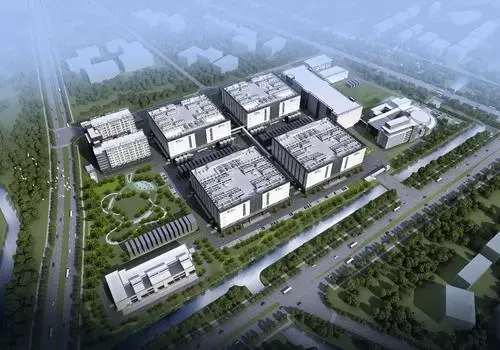
At the same time, a number of key projects have also been released focusing on key areas such as the industrial Internet and big data centers. Beijing proposes to implement new infrastructure support actions to accelerate the construction of industrial Internet identification analysis national top nodes, national industrial Internet big data centers; build artificial intelligence ultra-high-speed computing centers, integrated big data platforms, blockchain common platforms and other data intelligent infrastructures . Anhui proposed to implement the "New Infrastructure +" action, to build more than 200 industrial Internet platforms by 2025, and accelerate the construction of key projects such as Hefei Huayunxin Chuangyun Data Center, Huaibei Big Data Center, and Fuyang Big Data Center.
From the perspective of the industry, driven by a series of favorable policies, the new infrastructure in the next five years will bring large-scale and long-term new effective investment. The reporter learned from the China Academy of Information and Communications Technology that the estimated investment in new infrastructure in 2021 is about 1.78 trillion yuan, and the investment in the entire "14th Five-Year Plan" period is estimated to be about 10.53 trillion yuan.
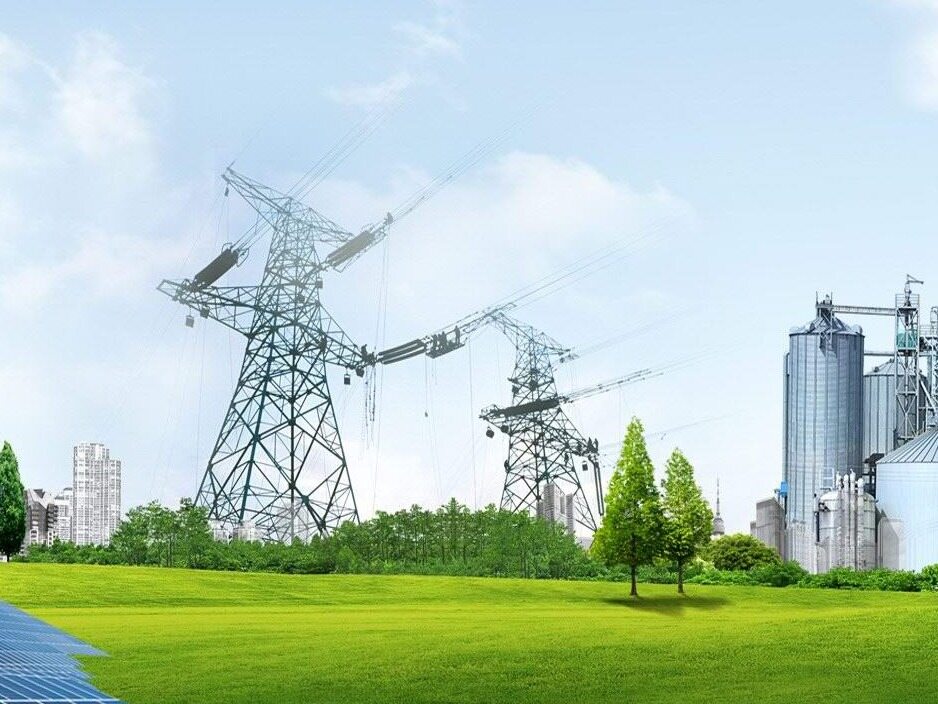
"New infrastructure is an important support for the development of high-end, intelligent, and green industries. Driven by the current intelligent upgrading and the strategic goals of carbon peaking and carbon neutrality, investment demand is huge." China Electronics Information Industry Development Research Institute Planning Institute Fan Meng, deputy director of the Industrial Investment Research Office, told reporters that new infrastructure serving the industrial field is expected to become the focus of investment deployment, including network infrastructure such as 5G, Internet of Things, and Industrial Internet; cloud computing, data centers, intelligent computing centers, etc. Power infrastructure, etc.
Zhang Yunyong, general manager of China Unicom’s product center, also told reporters that information infrastructure such as 5G and optical fiber networks will remain the focus of deployment. Integrated interconnection; on the other hand, virtual private networks for scenarios such as smart manufacturing and Internet of Vehicles will attract more investment as the industry upgrades. In the context of carbon neutrality and carbon peaks, the green development of new infrastructure has also become an important direction, such as 5G, data center energy conservation, and the integration and innovation of information networks and energy networks are expected to become bright spots.
In terms of funding sources, diversified investment channels will be further opened up. For example, the recently released "Three-year Action Plan for New-type Infrastructure Construction in Tianjin (2021-2023)" proposes to coordinate the use of special funds such as intelligent manufacturing, enlarge the guiding role of the Haihe Industry Fund and the Binhai Industry Development Fund, and leverage social capital Increase investment. Encourage financial institutions to increase support for credit funds, and encourage eligible projects to carry out pilot projects of real estate investment trust funds (REITs) in the field of infrastructure. Foshan also proposed to further increase the leverage of municipal and district financial funds, give full play to the role of the government in guiding the layout, and promote more social capital to participate in the construction of new infrastructure.
The capital investment of enterprises will also be further increased. Take 5G as an example. In 2021, the related investment of telecom central enterprises will increase steadily. According to the plans announced by the three major operators of China Mobile, China Unicom and China Telecom, 5G-related capital expenditure budgets totaled 184.7 billion yuan, a year-on-year increase of 2.44%. In addition, China Tower's 5G-related investment in 2021 is expected to arrange 18.4 billion yuan.
“New infrastructure has the characteristics of rapid technological iteration and many intangible assets, and it needs to continue to introduce incremental funds to provide support.” Fan Meng said that in the next step, the next step can focus on the characteristics of new infrastructure, focusing on future benefits, and explore development facility use rights order pledge financing, Financial products based on future earnings rights, such as pledge financing of government purchases of service rights and interests. At the same time, appropriately increase the proportion of new infrastructure in the overall investment of local government bonds, and support enterprises to revitalize their stock assets through the issuance of REITs, or realize future cash flow financing through asset-backed securities (ABS) and asset-owned notes (ABN).
PPP has gone through many years of practice and has entered a new stage. It promotes each other with government investment, which is conducive to the modernization of the government governance system and the rapid improvement of governance capabilities. Zhang Yunyong also said that the introduction of the PPP model and REITs model into the market investment of new infrastructure is expected Become the future development direction, and further utilize the advantages of social capital in planning, design, construction, investment promotion, operation, etc., and promote the innovative model of combining financial funds, government bonds and market-oriented investment. When planning new infrastructure projects, local governments need to evaluate the return on investment, integrated development, and continuous operation from multiple dimensions, taking into account efficiency and benefits, and attracting more medium and long-term funds to participate in the construction of new infrastructure projects. Editor/Xu Shengpeng
Comment

 Praise
 Collect
 Comment

 Share
Share


Write something~