 Search


- For this restructuring, in the market view, the real estate business is facing performance bottlenecks, and transformation is inevitable
- After the completion of this reorganization, the proportion of the company's power and related businesses will increase significantly, and the focus on energy business features is obvious
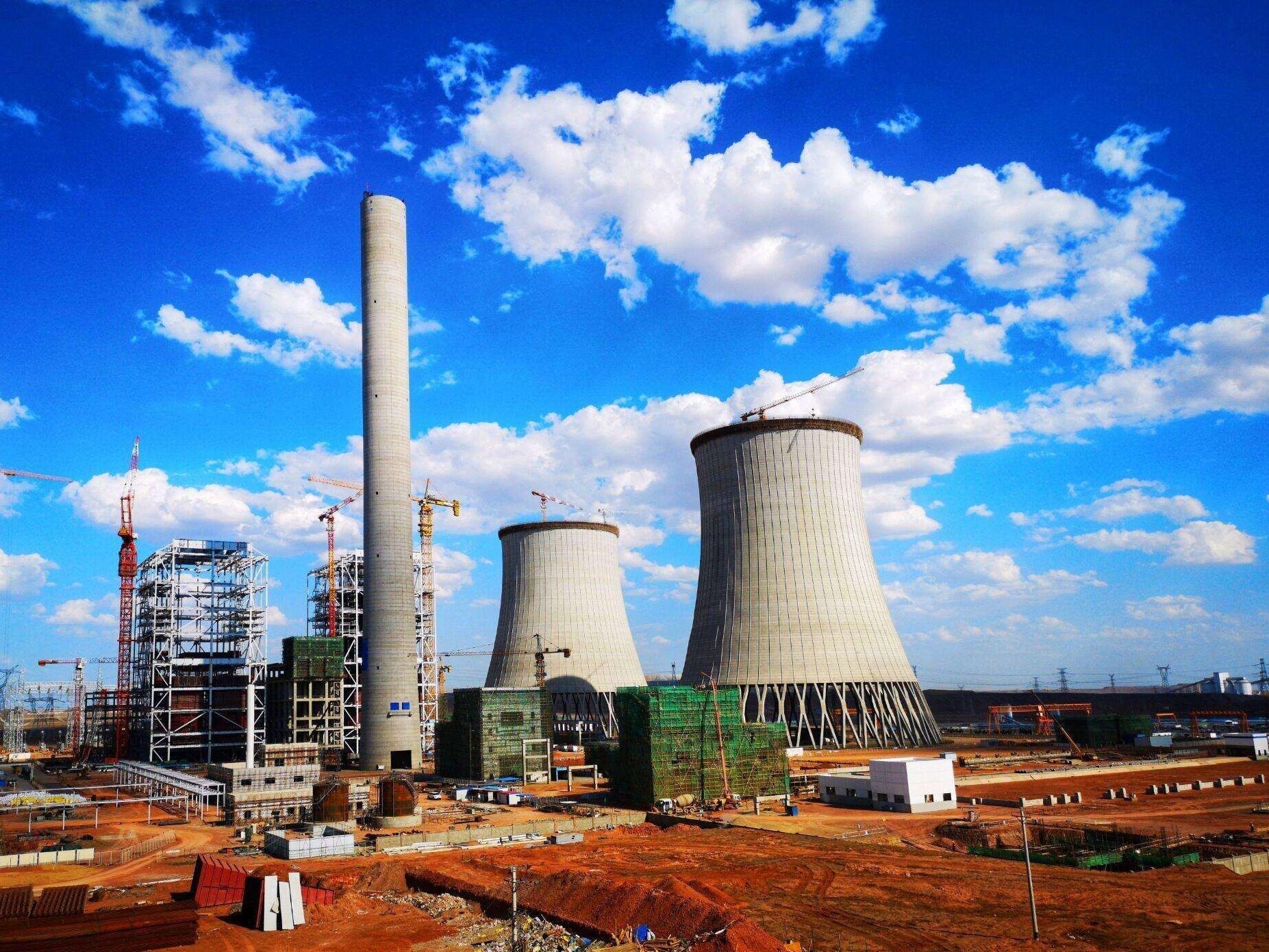
The dust has settled, the asset replacement has finally landed, and POWERCHINA has finally divested its real estate business, and A-shares will also usher in the first 10-billion-level asset restructuring case in 2022.
On the evening of January 6, 2022, POWERCHINA issued 14 announcements in a row, disclosing that it will carry out asset replacement with the controlling shareholder China Power Construction Group Co., Ltd.
The announcement shows that in order to solve the problem of horizontal competition between the two parties, China Power Construction plans to replace the real estate sector assets valued at 24.718 billion held with the 24.653 billion high-quality power grid auxiliary industry-related assets held by Power Construction Group; the difference during the period is 65.3426 million Yuan, which will be paid by POWERCHINA to POWERCHINA in cash.
The market has already anticipated this. As early as September 2021, China Power Construction disclosed to the outside world its idea of planning an asset replacement with its controlling shareholder. Before that, China Electrolysis had tried to use its Power Construction Real Estate to restructure its assets with Nanguo Real Estate (SZ: 002305), a veteran real estate company in Wuhan, to realize the divestiture of Power Construction Real Estate. ”, after a year of hard work, it failed to materialize.
For the smooth progress of this asset replacement, in December 2021, China Power Construction also paved the way in advance to implement a "debt-to-equity swap" for one of its real estate subsidiaries, involving a capital of 16.3 billion. China Power Construction, which is determined to "check out", has solved the problem of competition with the Power Construction Group in the same industry, and has also been able to control real estate investment, and will focus more on the energy industry in the future.
It is planned to purchase 24.653 billion high-quality power grid auxiliary assets
According to the asset audit report disclosed by POWERCHINA, the assets it intends to purchase are its holdings of POWERCHINA Real Estate, Beijing Feiyue Linkong Technology Industry Development Co., Ltd. and Tianjin Haifu Real Estate Development Co., Ltd. (hereinafter referred to as "Tianjin Haifu"). ”) and other 3 companies with 100% equity.
The corresponding assets to be placed by POWERCHINA are its holdings of China Power Construction Group Huazhong Electric Power Design and Research Institute Co., Ltd., China Power Construction Group Hebei Electric Power Survey and Design Research Institute Co., Ltd., Sichuan Power Design Consulting Co., Ltd., Shanghai Power Construction Group Co., Ltd. 18 companies including Electric Power Design Institute Co., Ltd.
Among them, the net book assets of Shanghai Electric Power Design Institute as of August 31, 2021 are about 671 million yuan; the corresponding evaluation value is 1.969 billion yuan, the evaluation method adopted is the income method, and the evaluation value-added rate is 193.21%.
In this regard, the announcement explained that the company has stable profit sources and cash inflows in the future, and the use of the income method to evaluate can truly reflect the market value of its entire shareholders' equity on the evaluation base date. Therefore, the company's evaluation value-added rate of more than 100% is reasonable. sex.
In response to the relatively high appreciation rate of Shanghai Electric Power Design Institute, Power Construction Group made a performance commitment that the company needs to achieve a cumulative net profit of not less than 455 million yuan in 2022-2024; For the part of the net profit, POWERCHINA will be compensated in cash at the transaction price of 50% of Shanghai Electric Power's equity in this transaction.
The entire transaction is planned to be carried out by means of non-public agreement transfer. As of August 31, 2021, the appraisal base date of the real estate assets purchased by China Power Construction has a total value of 24.719 billion owners' equity (excluding perpetual bonds); the corresponding power construction The estimated value of the related assets of the group's power grid auxiliary industry is 24.653 billion yuan; the difference will be paid by the Power Construction Group in cash.
From the perspective of equity relationship, POWERCHINA directly holds 8.926 billion shares of POWERCHINA, accounting for 58.34% of the total share capital of POWERCHINA, and is the controlling shareholder. Therefore, the transaction is also a related party transaction.
China Power Construction believes that the injection of high-quality assets by Power Construction Group that competes with it in the same industry will not only enhance the independence of listed companies, but also help listed companies to further optimize company assets and improve the company's industrial structure.
Asset replacement history
For the smooth progress of this asset replacement, in December 2021, POWERCHINA implemented a “debt-to-equity swap” for Tianjin Haifu, a wholly-owned subsidiary involved in this replacement.
According to the audit report, as of June 30, 2021, POWERCHINA’s other receivables from Tianjin Haifu amounted to 22.573 billion yuan, while the final negotiated amount of POWERCHINA and Tianjin Haifu’s equity conversion claims amounted to 16.3 billion yuan.
From the perspective of the industry, since the introduction of the "Guiding Opinions on Market-Based Bank Debt-to-Equity Swap" on October 10, 2016, various market-oriented "debt-to-equity" projects have been launched one after another. Means are also often used in corporate asset reorganization programs.
For example, the merger and reorganization case of "North and South Ships" hotly debated in the capital market, China Shipbuilding Industry Corporation has also proposed that the company's wholly-owned subsidiaries Dalian Shipbuilding Industry Group Co., Ltd. The company increased its capital; the capital increase amounted to 21.868 billion yuan, and the target of the capital increase was 8 state-controlled investors including China Cinda Asset Management Co., Ltd.
According to POWERCHINA, after the completion of the "debt-to-equity swap" transaction, Tianjin Haifu is still its wholly-owned subsidiary. In other words, POWERCHINA converts the Tianjin Haifu creditor's rights it holds into equity according to the market price, and changes the original "principal and interest payment" into "share-based dividends", which to a certain extent is equivalent to completing a Capital increase action.
The industrial and commercial registration information shows that Tianjin Haifu was established in August 2017. However, the announcement stated that "As of now, Tianjin Haifu has not actually carried out business activities." From this point of view, "Tianjin Haifu" seems to be tending to the role of a "shell platform", and POWERCHINA positions it as an asset platform that can be loaded into its own real estate business for asset replacement with POWERCHINA Group .
From a long-term perspective, China Power Construction has already had the idea of building real estate assets. Before planning the asset replacement with Power Construction Group, China Power Construction's initial plan was to reorganize the assets of its Power Construction Real Estate and Nanguo Real Estate, which is also controlled by it.
Nanguo Real Estate was established in 1998 by Xu Xiaoming, the former vice president of Baoan Group. The company's first real estate project originated from Baoan Group. During Baoan, Xu Xiaoming presided over the operation of the first merger and acquisition case in the history of China's securities - Baoan's acquisition of Yanzhong Industrial. With the help of Baoan Group's Dongfeng, Nanguo Real Estate was successfully listed in 2009.
In 2012, Xu Xiaoming, together with his brother Xu Xianming, transferred 29.75% of the shares of the listed company to the then China Hydropower Real Estate Company (the predecessor of Power Construction Real Estate), and Power Construction Real Estate became the second largest shareholder of Nanguo Real Estate.
That year, Xu Xiaoming also transferred his 100% stake in Wuhan Xintiandi Investment Co., Ltd. to Power Construction Real Estate as a whole. Then, in 2014, Power Construction Real Estate acquired an 11.39% stake in Nanguo Real Estate through a tender offer, holding a total of 41% and became the major shareholder of Nanguo Real Estate.
Nanguo Real Estate, which is under the control of Power Construction Real Estate, has indeed followed the same path. In 2016, it clarified the development strategy of "one body and two wings", and built itself into a commercial real estate development and operation platform under Power Construction Real Estate in terms of business layout. .
In June 2020, Nanguo Real Estate disclosed that it plans to absorb and merge 100% equity of Power Construction Real Estate by issuing shares and paying cash. The specific operation is that Nanguo Real Estate issues shares and pays 1.2 billion in cash to the shareholders of Power Construction Real Estate, China Power Construction (91.25% shareholding ratio) and China Power Construction (8.75% shareholding ratio), and the estimated final transaction price is about 10.98 billion yuan. .
This plan was called Nanguo Real Estate's "sub-swallowing mother" by the market; after the transaction, China Power Construction Tong became the controlling shareholder of Nanguo Real Estate, and Power Construction Real Estate became a past tense and merged into Nanguo Real Estate's "curve" listing.
At that time, in order to facilitate the plan, Power Construction Real Estate also signed a gambling agreement with Nanguo Real Estate, promising to achieve a cumulative net profit of not less than 2.826 billion yuan after deduction during the performance commitment period, that is, from 2020 to 2023.
In September of the same year, Nanguo Real Estate stated that the aforementioned plan had been approved in principle by the State-owned Assets Supervision and Administration Commission of the State Council and was approved at the internal shareholders meeting. However, for nearly a year or so after that, the two sides have not notified or mentioned the results or details of the progress of the plan.
Until September 26, 2021, Nanguo Real Estate and China Power Construction both issued announcements, saying that the aforementioned restructuring plan would automatically expire upon expiration, and the two parties decided to terminate the transaction, citing "changes in the macro environment."
The market has not yet reacted. Two days later, POWERCHINA quickly announced a new plan, which is the current asset replacement with POWERCHINA.
The revenue contribution ratio of real estate development business has dropped to 5.43%
In fact, from the perspective of financial data, both Nanguo Real Estate and Power Construction Real Estate are facing transformation difficulties and performance bottlenecks. Under the "weak and weak merger", it is difficult to conclude whether the future performance growth and scale development can meet expectations.
The financial report shows that the total revenue of Nanguo Real Estate in 2020 will drop by 36.8% year-on-year, and the loss in the first nine months of 2021 will be as large as 44.33%; from 2019 to the first September of 2021, Nanguo Real Estate will lose all non-net profit, with a cumulative loss of 1.295 billion. Yuan.
The audit report disclosed by China Power Construction shows that from 2019 to the first eight months of 2021, the total revenue of Power Construction Real Estate was 23.726 billion yuan, 21.066 billion yuan, and 11.36 billion yuan respectively, a year-on-year decrease of 11.37% in 2020; In March, the net profit loss attributable to the parent was 1.132 billion yuan.
At present, with the cooling of the real estate industry environment, facing an industry that can no longer make quick money and high profit margins, there is not much room for enterprises to quickly improve. At this point in time, POWERCHINA will divest these assets to the parent The company is not surprising.
The latest financial report shows that in the first three quarters of 2021, China Power Construction achieved operating income of 315.4 billion yuan, a year-on-year increase of 22.3%; net profit was 6.36 billion yuan, an increase of 8.4% year-on-year.
According to previous financial reports, from 2017 to 2019, the real estate development business of China Power Construction achieved revenue from 18.481 billion yuan to 23.279 billion yuan, but its contribution to total revenue has dropped from 6.95% to 6.69%.
In 2020, the revenue of this segment was only 21.79 billion yuan, a year-on-year decrease of 6.39%; its contribution to total revenue also dropped to 5.43%; in addition, the gross profit margin of this segment has been declining since 2018, from The 22.55% level fell to 19% at the end of 2020.
China Power Construction also wrote in its announcement on January 6, "The overall profitability of the placed assets in this transaction is higher than that of the placed assets, which is conducive to increasing the company's return on equity and earnings per share, and improving the company's profitability. profitability and asset quality.”
POWERCHINA landed on the Shanghai Stock Exchange in October 2011. According to information on its official website, the company is a comprehensive and super-large construction group that provides full-industry chain integration and overall solution services for the global energy and power, water resources and environment, infrastructure and real estate fields. From the perspective of future development, asset replacement is also in line with the direction of policy guidance, and control of real estate investment is also conducive to POWERCHINA's investment in energy structure transformation. Keywords: engineering construction, engineering construction, central enterprises
POWERCHINA finally divested its real estate business, ushering in the first 10-billion-level asset restructuring case in 2022. The stock price information shows that the overall increase of POWERCHINA in 2021 will reach 113.11%. The first trading day after the announcement of the asset replacement plan, that is, on January 7, closed at 8.71 yuan, an increase of 4.19%; during the period, the stock price rose as high as 9.2 yuan, hitting the daily limit. Editor/Sang Xiaomei
Comment

 Praise
 Collect
 Comment

 Share
Share


Write something~