 Search


- After the completion of the demonstration project, it will provide a steady stream of green water for desert vegetation
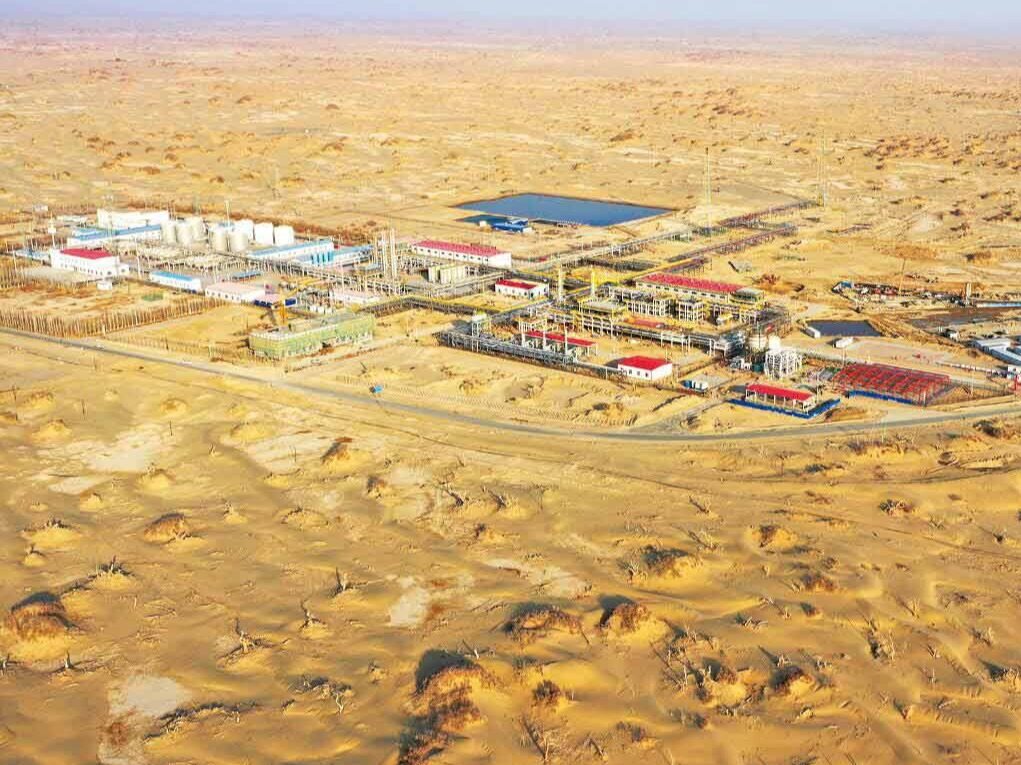
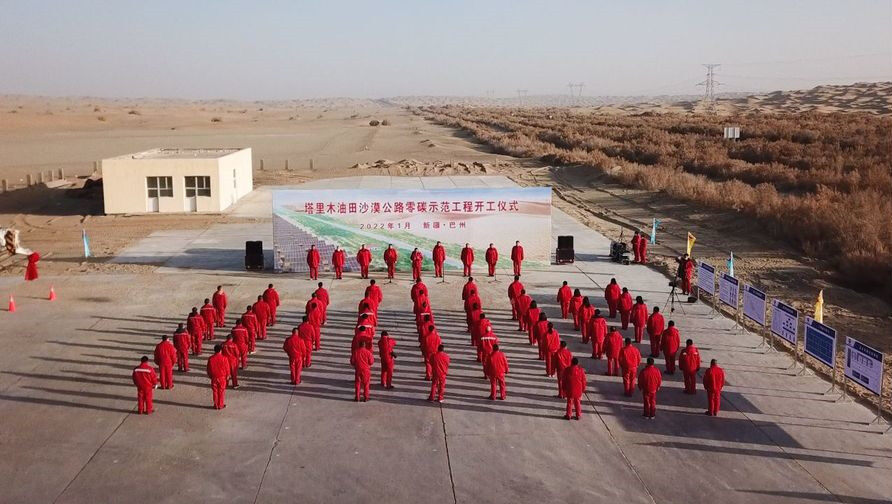
On January 9, 2022, the zero-carbon demonstration project of the Taklimakan Desert Highway, which was constructed by the Tarim Oilfield Branch of PetroChina Co., Ltd., officially started construction and is expected to be in March 2022.
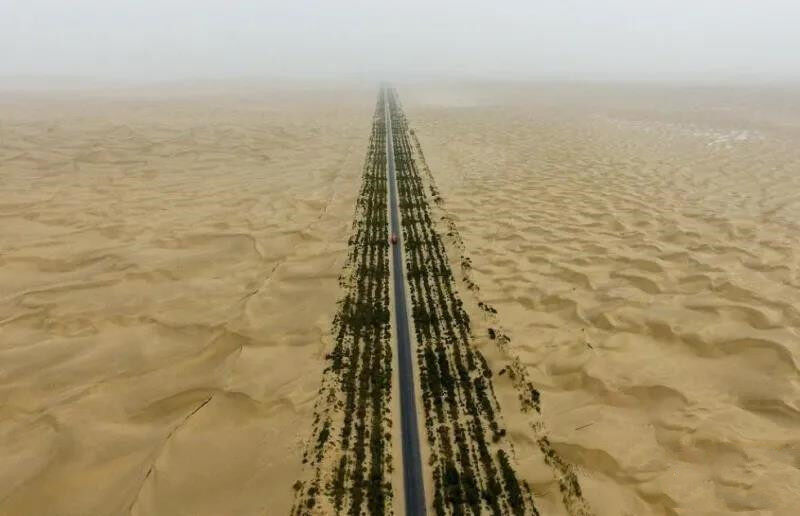
The total length of the Taklimakan Desert Highway is 566 kilometers, and there are 436 kilometers of green ecological protection forest corridors on both sides, which play an important role in ecological sand control and improvement of local ecological environment. For a long time, Tarim Oilfield is responsible for greening and irrigating the shelterbelts on both sides of the road. There are 109 water source wells built along the whole line of the shelterbelt.
In 2010, Tarim Oilfield built 12 photovoltaic power generation irrigation demonstration stations on a pilot basis, realizing the replacement of diesel engine power generation for irrigation. In addition, 11 water source wells rely on Tazhong Oilfield power grid for power supply, and 86 water source wells use diesel engines to generate electricity for irrigation.
Focusing on the goal of carbon peaking and carbon neutrality, Tarim Oilfield will fully promote the construction of the remaining 86 photovoltaic power plants in 2022, and build a comprehensive system of solar photovoltaic power generation and scientific management and protection for desert highway shelterbelts. After the project is completed and put into operation, all 109 water source wells along the desert highway will be irrigated by electric pumping, realizing the zero-carbon emission operation of the desert highway protection forest maintenance line, which will reduce diesel consumption by 1,082 tons and carbon dioxide emissions by about 3,410 tons every year.
The total area of the shelterbelt on the Taklimakan Desert Highway is 3,128 hectares. According to the average annual capture of 6.4 tons of carbon dioxide per hectare by sand-fixing plants, the shelterbelt can capture about 20,000 tons of carbon dioxide per year, and the negative carbon part can neutralize the carbon emissions of vehicles passing on the desert road. The first zero-carbon mobile desert road in China.
The Tarim Basin is rich in solar energy resources. Adhering to the concept of developing a block, building an oasis and supporting a blue sky, Tarim Oilfield will carry out the planning and construction of a photovoltaic base in the Taklimakan Desert, and establish a number of green energy special zones in the Taklimakan Desert, known as the "Sea of Death", to build on-board power generation. , under the plate planting, sand control and soil improvement, comprehensive utilization of water resources and other multi-integrated circular development models, to achieve coordinated development of oil and gas development and ecological protection.
The Taklimakan Desert Highway was completed in 1995. The highway starts from Luntai County, Bayingoleng Mongolian Autonomous Prefecture in the north and Minfeng County in Hotan Prefecture in the south. After the desert highway was opened to traffic, Tarim Oilfield implemented ecological shelterbelt construction projects along the road, gradually replacing windbreaks and sand-fixing grass grids and grass fences, and built a desert ecological shelterbelt with a total length of 436 kilometers. It is known as the first desert green corridor in the world. Editor/He Yuting
Comment


 Praise
 Collect
 Comment

 Share
Share


Write something~