 Search


- The No. 2 ancient ship at the mouth of the Yangtze River was a trading ship during the Tongzhi period of the Qing Dynasty.
The largest and most well-preserved wooden shipwreck discovered in China's underwater archaeology, with a huge number of cultural relics on board - the ancient ship "Yangtze River Mouth No. 2", officially began to salvage on March 2, 2022. The archaeology and cultural relics protection work of the "Yangtze River Estuary No. 2" ancient ship started at the same time.
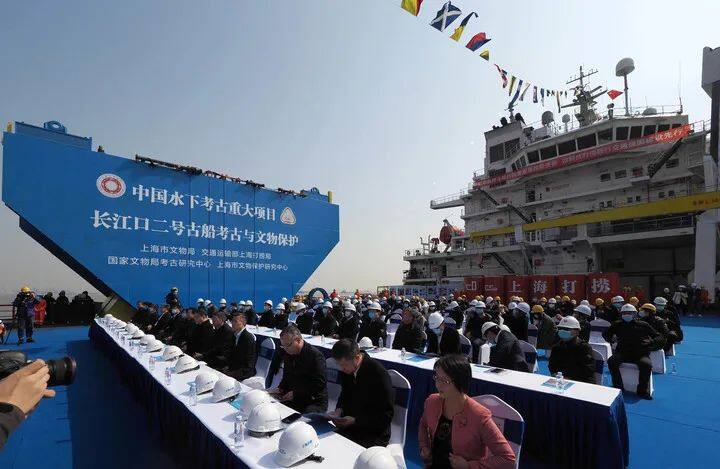
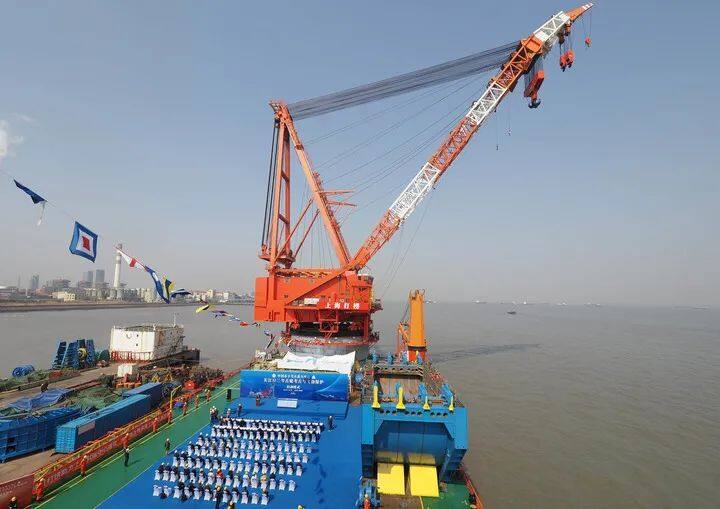
On March 2, 2022, the launching ceremony of the "Yangtze River Estuary No. 2" ancient ship salvage was held at Shanghai Waigaoqiao Wharf
The ancient ship "Yangtze River Mouth No. 2" was a trade ship during the Tongzhi period of the Qing Dynasty. At present, it is sleeping underwater in the Hengsha Shoal in the northeast of Hengsha Island, Chongming, Shanghai, and the hull of the ancient ship is buried 5.5 meters under the seabed. Archaeological investigations show that the Qing Dynasty ancient ship is about 38.5 meters long and 7.8 meters wide at the center.
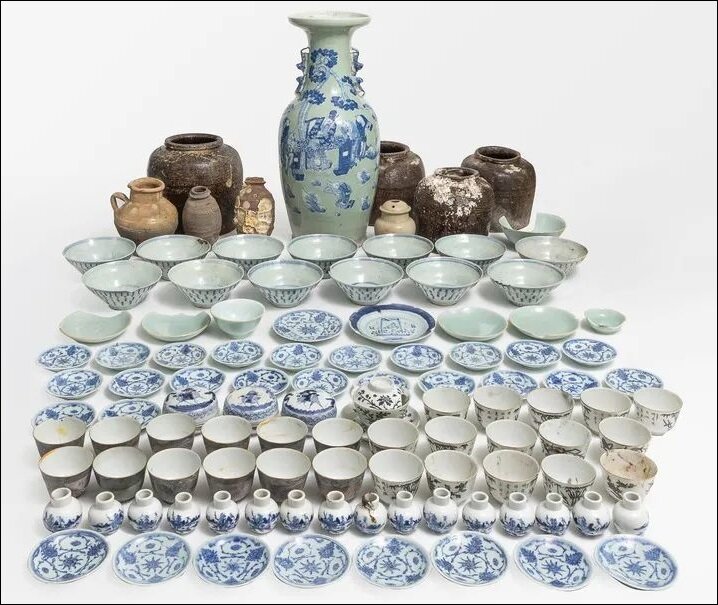
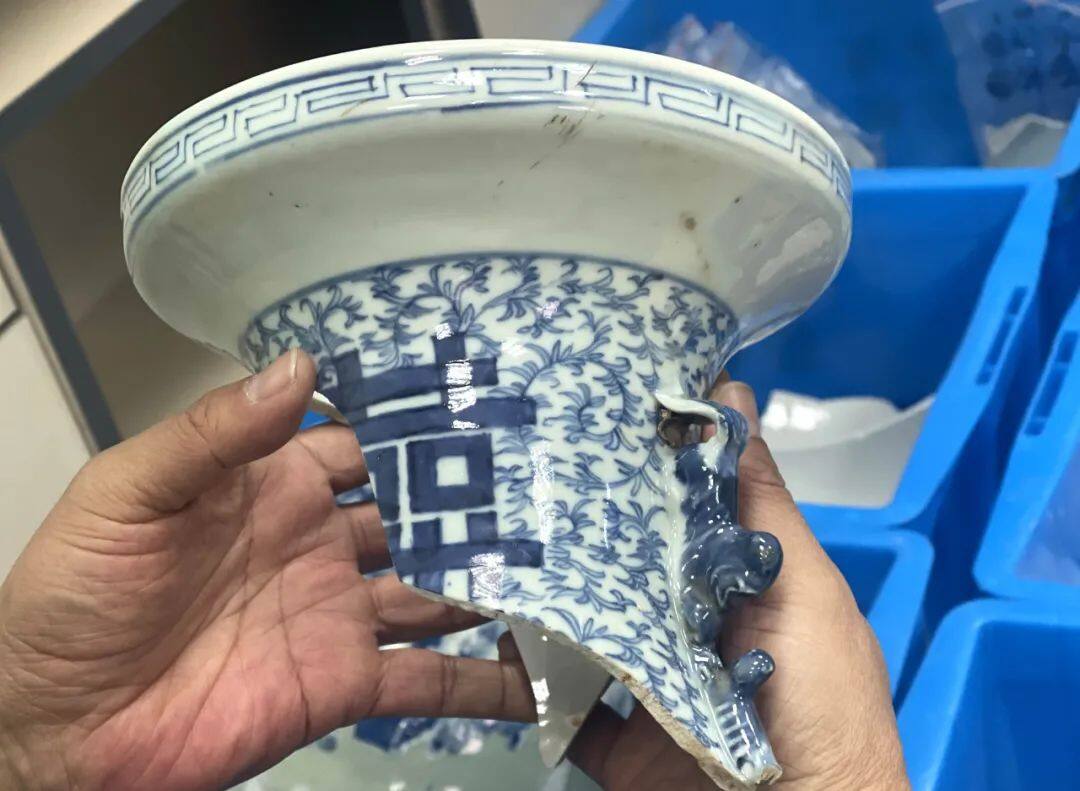
Some cultural relics from the ancient ship "Yangtze River Estuary No. 2"
Shanghai is one of the important ports on the Maritime Silk Road. At the beginning of modern times, it has rapidly risen into a well-known international metropolis and a major port in the world. Combining the strength of the national underwater archaeology elite soldiers, after more than 10 years of underwater exploration, archaeological excavation and proper protection, the ancient ship "Yangtze River Estuary No. 2" is expected to "break the waves" by the end of 2022.
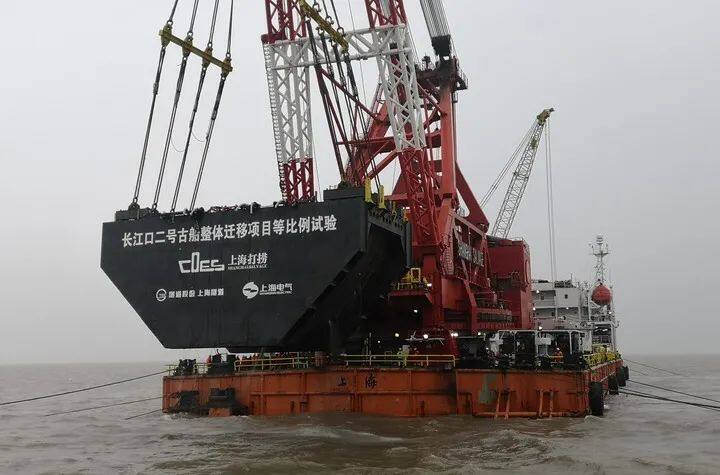
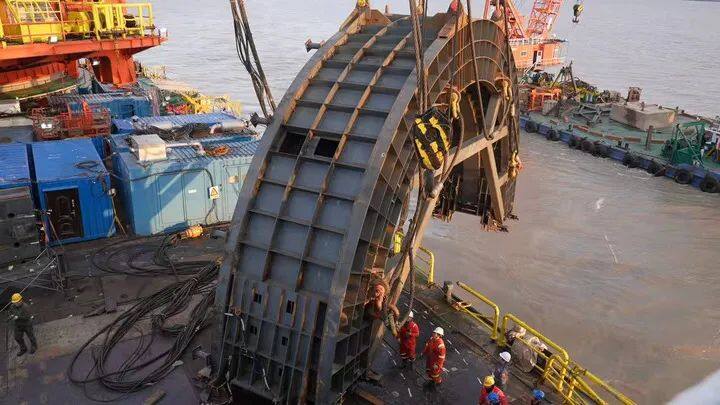
The scale test site of the overall relocation project of the "Changjiang Estuary No. 2" ancient ship photographed on January 26, 2022
Li Qun, deputy minister of the Ministry of Culture and Tourism and director of the State Administration of Cultural Heritage, said that the newly revised Regulations of the People's Republic of China on the Protection of Underwater Cultural Relics will be implemented soon. The cultural relics protection project is also the world's first archaeological and cultural relics protection project in which the archaeological excavation of ancient ships, the overall relocation, the protection of cultural relics and the construction of the museum are implemented simultaneously. It marks a major breakthrough in China's underwater archaeology and contributes Chinese technology, Chinese experience, Chinese plan.
This is the first time after a lapse of more than ten years that China has once again launched a large-scale underwater archaeological operation to salvage ancient wooden shipwrecks and carry out related cultural relics protection work. Previously, the ancient ship "Nanhai No. 1" of the Song Dynasty was salvaged in 2007 and caused a sensation in the world.
"The ancient ship 'Changjiangkou No. 2' is a physical testimony of Shanghai's role as a trade and shipping center in East Asia and even the world and an important node in the Belt and Road. The historical reliability enriches the historical connotation and revitalizes the historical scene." said Fang Shizhong, director of the Shanghai Municipal Bureau of Cultural Relics.
Shanghai will adopt an unprecedented innovative solution - "curved beam non-contact overall salvage technology for cultural relics" to salvage this wooden ancient sailboat. Wang Wei, chairman of the Chinese Archaeological Society, believes that the world's most advanced high-tech underwater archaeology program has truly realized the integrated development of cultural relics protection and technological innovation, and has contributed to the construction of archaeology with Chinese characteristics, Chinese style and Chinese style.

Composite image of multi-beam sonar scanning of the ancient ship "Changjiangkou No. 2" in 2021
The underwater archaeological operation to salvage the ancient ship "Yangtze River Mouth No. 2" is expected to be completed by the end of 2022. Once the ancient ship is salvaged from the water, it is quickly lifted into a special salvage engineering boat and embedded in its open cabin.
Afterwards, the engineering ship sailed the ancient ship "Embrace" and "Yangtze River Estuary No. 2" to the No. 1 Dock of the Former Site of Shanghai Shipyard in Yangpu Binjiang, Shanghai. In the future, the old dock, also built during the Tongzhi period of the Qing Dynasty, will be transformed into a shipwreck archaeological base and an ancient ship museum, where archaeologists will gradually uncover the many mysteries of the ancient ship's life experience.Editor/Ma Xue
Comment





 Praise
 Collect
 Comment

 Share
Share


Write something~