 Search


- The first subway vehicle in the renovation project of Metro Line 1 of the Mexican capital made by a Chinese company goes offline
- The two urban rail transit lines to be built in Kuching use smart trams made by CRRC Zhuzhou
- The total length of the Makati Metro Transit Project is nearly 11 kilometers
Recently, good news has come from Mexico, Malaysia and the Philippines. Chinese urban rail enterprises have gone abroad to make their voices heard in the fields of equipment, vehicles and operations!
Chinese Enterprises Help Modernize the Metro in Mexico's Capital
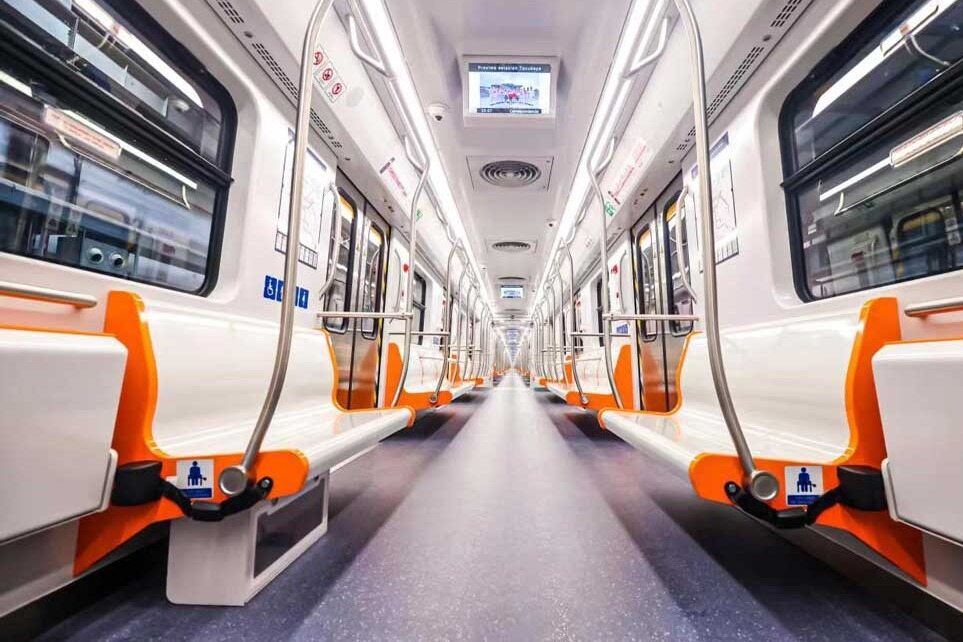
On July 18, the ceremony for the first train of subway vehicles in the renovation project of Metro Line 1 in the capital of Mexico, manufactured by a Chinese company, was held in Mexico City. Subway vehicles from China will boost the modernization of local rail transit.
Mexico City Mayor Claudia Hinbaum said at the ceremony that the modernization project of Metro Line 1 in the capital includes the construction of 29 new trains. The first train was developed and produced by CRRC Zhuzhou Electric Locomotive Co., Ltd. under CRRC. After the line is unveiled, it will be shipped to Mexico, and the remaining 28 trains will be jointly produced by the two countries. At present, China has trained 150 Mexican technicians. She said the project will provide local technical experience and create jobs.
Chinese Ambassador to Mexico Zhu Qingqiao said at the ceremony that China's high-end rail transit equipment can serve the people of Mexico City just around the corner. More and more Chinese enterprises are optimistic about the Mexican market, speed up the pace of investment and business in Mexico, and promote Mexican industrialization and local employment. Mexico City is the first choice for many Chinese enterprises to invest in Mexico. Chinese enterprises represented by CRRC will contribute more "Chinese power" to the local economic and social development.
It is reported that these trains are composed of 9 cars, with a maximum operating speed of 80 kilometers per hour. Using new materials, new technologies, and new designs, these trains have lower noise, stronger safety and lower energy consumption than older trains.
CRRC won the contract for the overall modernization project of Mexico City Metro Line 1 in December 2020. The content of the project involves investment and financing, new vehicle construction, as well as the comprehensive modernization and upgrading of existing vehicle communication signal systems, lines and electromechanical systems, and system-wide maintenance.
CRRC Smart Rail launched overseas for the first time
On July 18, Kuching, Sarawak, Malaysia announced that after international bidding, the two urban rail transit lines to be constructed in Kuching were determined to be independently developed and manufactured by CRRC Zhuzhou, a subsidiary of CRRC. Smart Tram. The winning of the bid means that CRRC Smart Rail, as a representative of China's high-end manufacturing, has landed overseas for the first time.
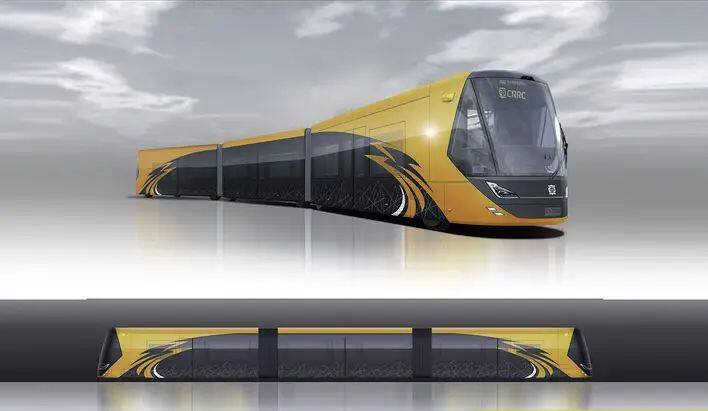
Smart Rail is an innovative intelligent rail transit system, which was pioneered by CRRC Zhuzhou in the world. It integrates the advantages of rail transit and public transit, and adopts the original independent guidance and track following technology. Therefore, it has the advantages of low investment cost, short construction period, Features such as strong scene adaptability, flexible operation and scheduling, and low-carbon environmental protection represent a direction and choice for future rail transit. Since its first launch in June 2017, CRRC Smart Rail has been launched in Yibin, Zhuzhou, Suzhou, Xi'an, Harbin and other domestic cities, and more than 40 domestic and foreign cities are interested in introducing Smart Rail.
The Kuching project in Malaysia belongs to the first batch of projects launched overseas by Smart Rail. This time, CRRC Zhuzhou won the bid for 2 lines, with a total length of 52 kilometers, a total of 28 stations, and 38 smart trams will be selected.
According to the technical staff of CRRC Zhuzhou Institute, the color design of the smart rail vehicles serving Malaysia this time combines the colors of the Sarawak state flag, and the shape resembles a bridge, implying a bridge and link for communication between China and Malaysia. This project is also the first time that CRRC Smart Rail adopts the hydrogen energy power supply method, which is more energy-saving and low-carbon, and is in line with the local green energy policy.
After the project is completed, Kuching will be the first city in Malaysia to implement a hydrogen energy urban transportation system, and is expected to become a leader in hydrogen energy public transportation in Southeast Asia.
Shanghai Metro's first overseas operation and maintenance project cooperation memorandum signed
On July 14, in order to further promote the steady and long-term development of Shanghai enterprises' "going global" and promote the high-quality development of Shanghai's foreign investment and cooperation, the Shanghai Municipal Commission of Commerce issued the "Compliance Operation and Protection of Rights and Interests of Overseas Enterprises under the Background of the Normalization of the Epidemic". ” as the theme of the city’s “going out” enterprise symposium, and held an online centralized signing ceremony for the “going out” project. Zong Ming, vice mayor of Shanghai, attended the meeting. The symposium was chaired by Gu Jun, director of the Municipal Commission of Commerce. The heads of relevant commissions and bureaus and some "going out" enterprises attended the meeting.
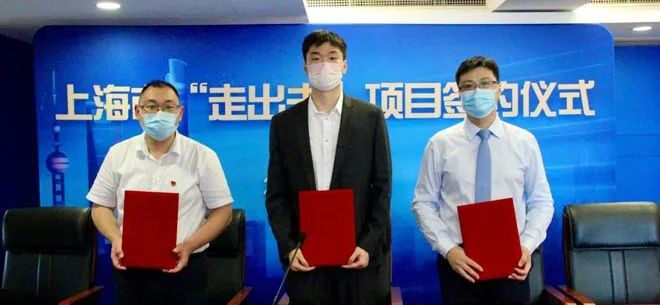
At the meeting, two companies under Shanghai Shentong Metro Co., Ltd.: Shanghai Shenkai Public Transportation Operation Management Co., Ltd., Shanghai Shendiantong Rail Transit Technology Co., Ltd. and Makati City Metro Co., Ltd. Memorandum of Understanding on Metro Operation and Maintenance Cooperation.
Makati Metro Transit Project
The project was signed at the 2nd Belt and Road Summit in 2019. It is the first overseas PPP project invested by a Shanghai enterprise. It has been recommended by China State Construction Engineering Corporation and the Shanghai Municipal Development and Reform Commission to be included in the National Belt and Road Key Project Library.
The project is the first subway project under construction in the Philippines. The total length of the project is nearly 11 kilometers. The total length of the first phase is finally determined to be about 8 kilometers. It will connect the core area of Makati and serve Makati City, Pasay City and Manila. City, Ortigas City, Mandaluyong City and BGC City, there are a total of 7 underground island stations, 1 vehicle base and 1 control center.
This project is one of the three Belt and Road rail transit projects of China in the Philippines, and it is also the first Belt and Road rail transit project jointly launched by Shanghai enterprises. This project is the first overseas rail transit project that adopts Chinese design, Chinese standard, Chinese manufacturing, Chinese construction and Chinese management. Editor/He Yuting
Comment


 Praise
 Collect
 Comment

 Share
Share


Write something~