 Search


- At the end of 2022, he came to Yunnan for a one-year collaborative research project
- This program was launched in 2013 and is an important part of China's Science and Technology Partnership Program
In the wheat new technology R&D and innovation team of the Grain Crop Research Institute of the Agricultural science in Yunnan, China, there is an Egyptian figure. He is Ahmed Erfana, a researcher in the wheat research department of the Field Crop Research Institute of the Egyptian Agricultural Research Center. At the end of 2022, Ahmed Elfana arrived in Yunnan for a one-year collaborative research project.
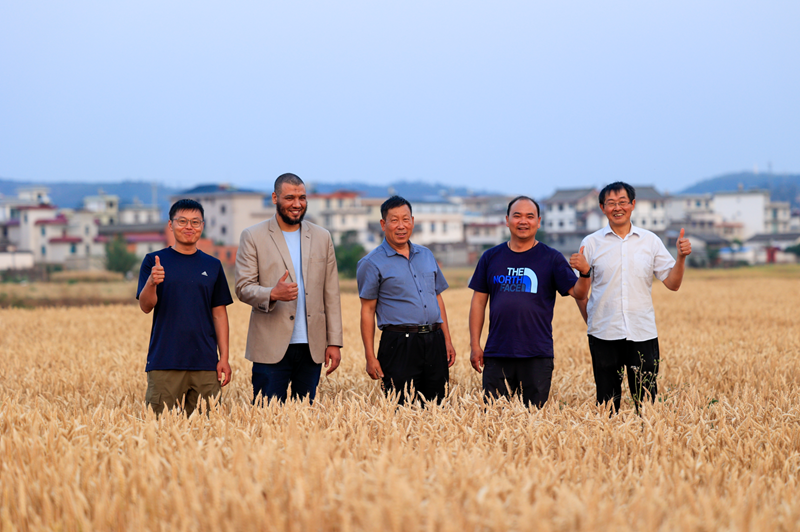
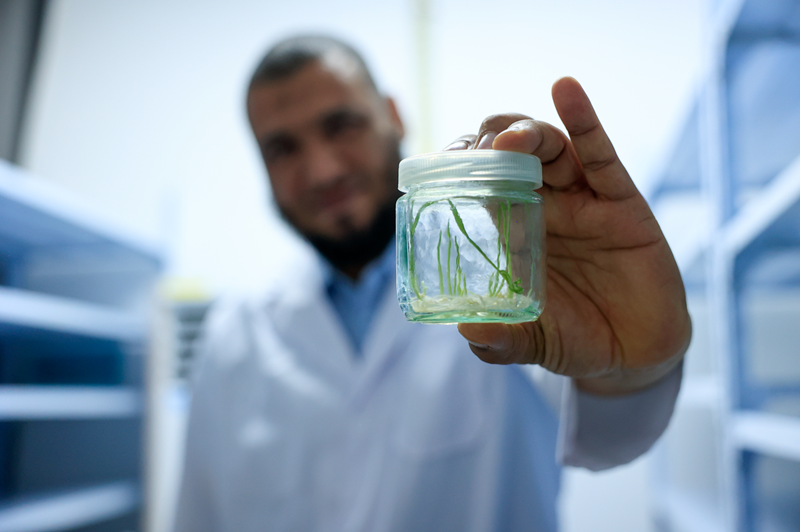
My trip to China is to learn about China's DH technology (wheat) × Maize hybridization produces wheat double haploid technology, improving wheat breeding technology in Egypt Ahmed Elfana is full of anticipation for this trip.
"DH technology is to shorten the cycle of breeding new wheat varieties from 8 to 10 years to 4 to 5 years by crossing wheat and maize," said Yang Mujun, a researcher at the Institute of Grain Crops and a wheat breeding expert of the Agricultural science of Yunnan Province.
Ahmed Elfana was able to achieve this trip to China thanks to the work plan of outstanding young scientists from developing countries. Launched in 2013, this plan is an important part of China's Science and Technology Partnership Plan, which aims to implement the the Belt and Road Initiative for Scientific and Technological Innovation, promote scientific and technological people to people exchanges between China and other developing countries, cooperate in training young scientific and technological leaders, and promote international scientific and technological cooperation.
Yang Mujun introduced that the application cost of DH technology is relatively low and can be promoted and applied in major wheat producing countries such as South Asia and Africa. With the in-depth implementation of the the Belt and Road Initiative, since 2015, many young scientists from Bangladesh, Pakistan, Egypt, Ethiopia and other countries have come to the wheat new technology R&D and innovation team of the Agricultural science of Yunnan Province to learn DH technology.
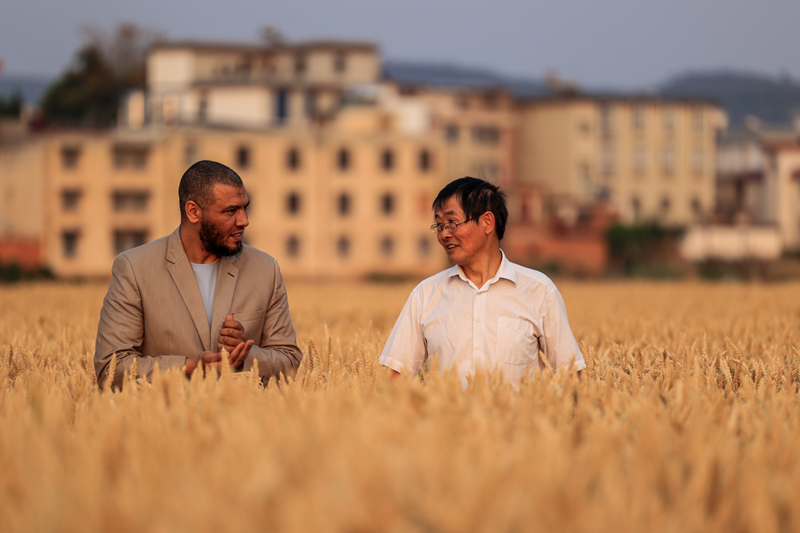
During his study in Yunnan, Ahmed Erfana, as a team member, directly participated in the scientific research work of the team. At the same time, he also used his own scientific research materials and the laboratory and technical platform of the Agricultural science of Yunnan Province to cultivate breeding materials suitable for his country. Editor/Xie Li
Comment





 Praise
 Collect
 Comment

 Share
Share


Write something~