 Search


- This marks the first time that a Chinese company has won a bid for an EU infrastructure project.
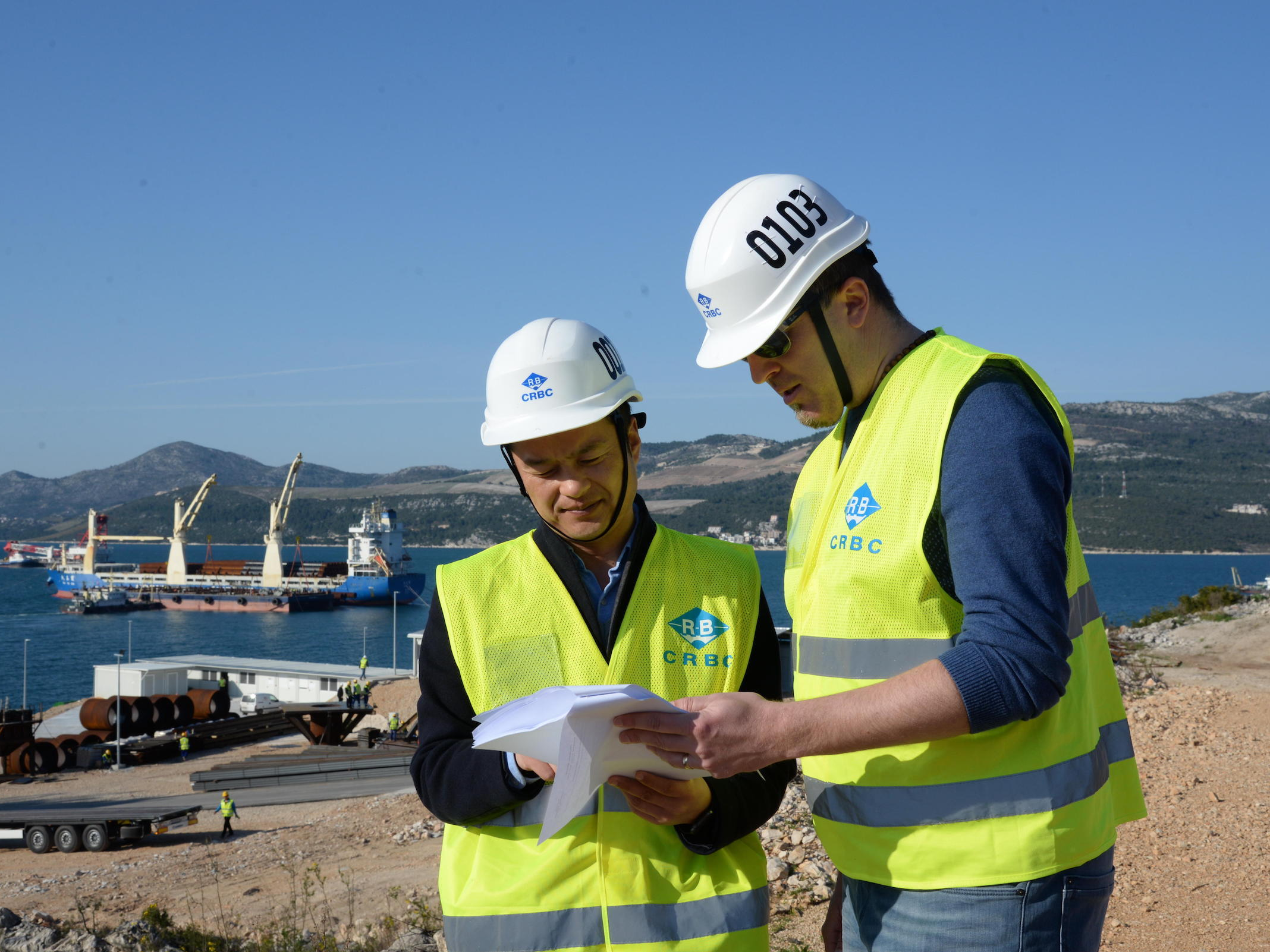
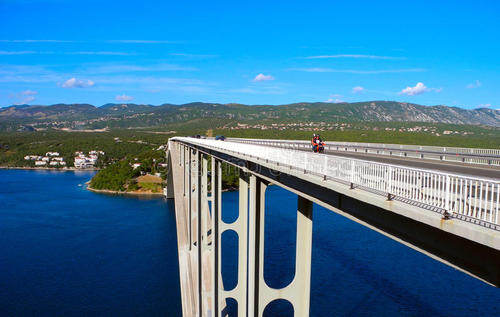
In 2017, the Croatian EU Coordination Policy Fund allocated 357 million euros to the Peresac Bridge project, accounting for 85% of the cost of the bridge. In January 2018, the consortium led by China Road and Bridge Engineering Co., Ltd. was the largest in Croatia. The infrastructure project won the bid. The Peresac Bridge connects Dubrovnik, the southernmost tourist resort of Croatia, with the northern waterfront The movement of goods and people increases the territorial cohesion of the country.
Controversy and reality
Lucrezia Poggetti, a researcher at the Mercator China Institute who mainly studies Sino-European relations, said that for China, the Pelesac Bridge project is a successful case of the Belt and Road Initiative, but this time the winning bid does exist Controversy, because several European companies also participated in the bidding, but in the end they lost to a Chinese state-owned enterprise with a lower bid.
The Austrian company Strabag, which had participated in the bidding, complained about the current contractor of the bridge, China Road and Bridge Engineering Co., Ltd. (CRBC), on the grounds of dumping prices. As a result, the Peljesac Bridge project has been subject to rigorous scrutiny. The Croatian National Public Procurement Supervision Committee rejected their complaint. Strabag subsequently filed a lawsuit in the administrative court of the capital Zagreb. The case is still under consideration.
Excluding the value-added tax, China Luqiao's bid was the lowest at 279 million euros, while Strabag and Astaldi offered 351 million euros and 343 million euros, respectively. According to Strabag’s complaint, the Croatian “Morning News” reported that the quotation of the waterproof treatment of the asphalt surface of China’s roads and bridges (to ensure that the deck is protected from moisture) was 428,000 euros, and the cost of excavation disposal was 75,700 euros. Strabag's two offers are close to 3.1 million euros and 1.9 million euros. Strabag confirmed these figures to China Dialogue and commented: In our opinion, they reflect the cost of implementing the project in compliance with all environmental regulations.
Although some people worry that the lower bid price of China's roads and bridges will be translated into high environmental costs, but since the start of construction in January 2019, the project has not found any wrongdoing. Vjeran Piršić, director of the Croatian environmental organization Eko Kvarner, said oyster farmers in Stone Bay south of the bridge had worried that the construction would affect water quality. But so far, the worry has not happened, he said. One of Croatia’s most active environmental organizations, Zelena Akcija (Operation Green), confirmed in an email that they did not find any environmental violations related to bridge construction.
Gateway to the EU market
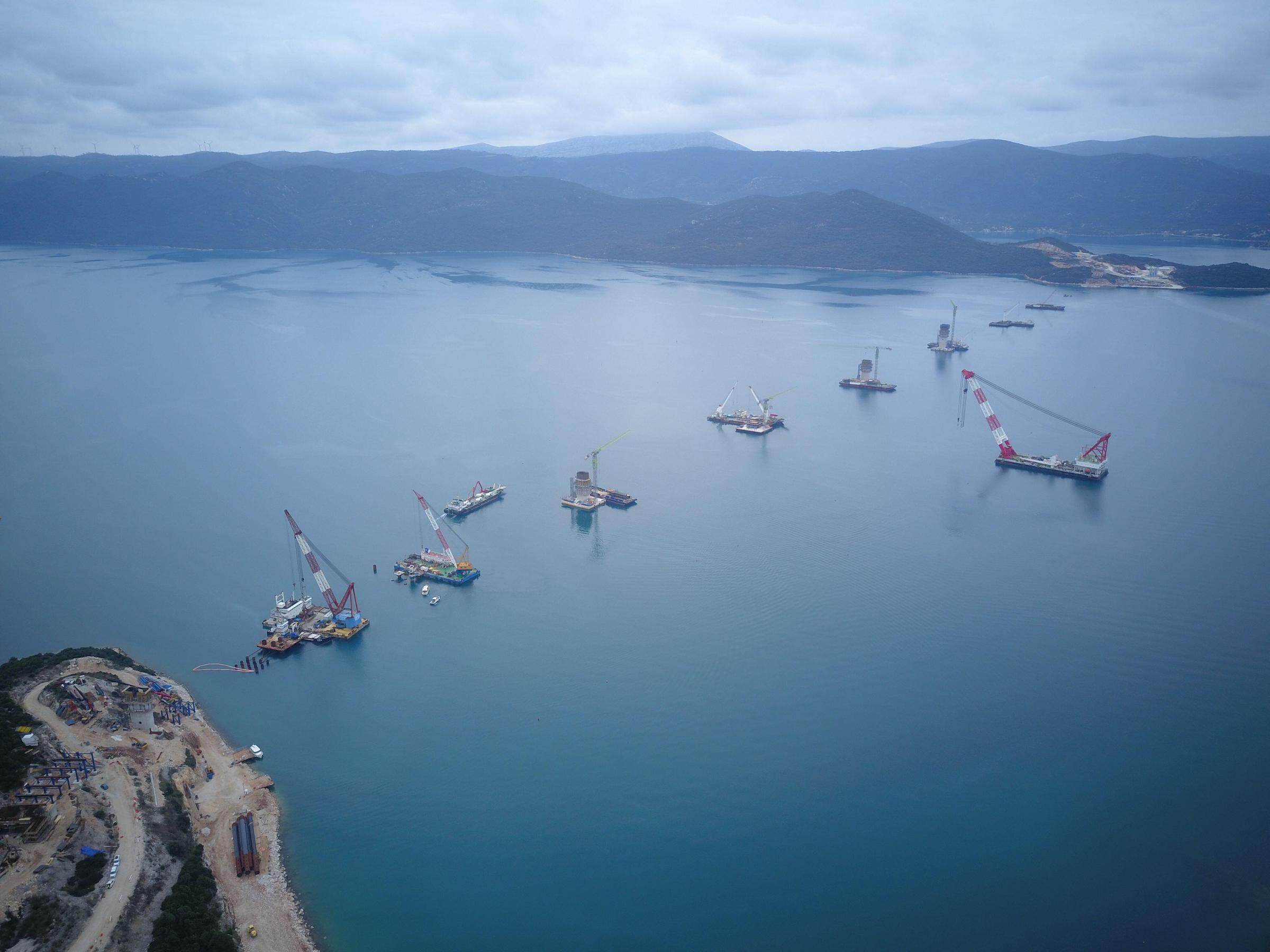
The efficient and fast construction speed of Chinese roads and bridges is widely praised in Croatia. The bridge components are prefabricated in China and assembled on site. When China Dialogue visited the project site in February 2019, the Croatian chief engineer responsible for construction supervision, Jeroslav Šegedin, described the process as building blocks. These bridge towers are nearly 129 meters high and weigh 230 tons. The floating crane used to install and fix it on the seabed is the largest in the world. He also claimed that no European company can complete such a project in such a short time. Siniša Malus, head of communications at the China Southeast European Business Association (CSEBA) in Zagreb, believes that (the organization aims to promote Chinese investment in Europe and Central Asia), the project is not for profit , But to enter the EU market. He claimed that they wanted to prove their ability. He added that CSEBA helped China Road and Bridge to prepare the tender documents. In the future, in the bidding process of large Chinese companies, especially in the bidding process in Europe, this partnership with local service providers may be crucial in order to win contracts.
Matt Ferchen, head of global China research at the Mercator China Research Institute, explained that as far as he knows, many projects are not doing well because the Chinese side is at the legal level, public relations level, or Reluctant to cooperate with competent local partners in environmental impact assessment and other aspects. He added: However, recently, we have seen more Chinese companies willing to devote more energy to the local situation, the legal environment and the concerns and interests of local communities. Toulouse Business School professor Louise Curran studied the cooperation between China and Europe in renewable energy. He said that many Chinese companies choose localized management and adopt a non-interference strategy, especially for investments in cutting-edge technologies. "Europe is a leader in certain industries, such as wind energy. It also has advantages in the solar energy field. Therefore, it is entirely reasonable for China to invest in these fields. They trust local management, do not interfere, and eventually learn how to further integrate the process. She explain.
After successfully bidding for the Peresac Bridge project, many Chinese companies have also expressed interest in several other Croatian projects, such as the construction and upgrading of railways, the acquisition of hotel groups, and the concession of a freight station in Rijeka, the country’s largest port Management rights, etc. Malus also pointed out that the wine and health tourism industries are also areas of interest to Chinese investors.
So far, these investments have not entered a substantial stage, and business activities in Croatia have also been interrupted by the pandemic of the new crown epidemic. However, state-owned road management company Hrvatske Ceste confirmed in an email that the global crisis did not stop the construction of the Peresac Bridge. The bridge will still be completed as scheduled by February 2022. Editor/Chai Yue
Comment


 Praise
 Collect
 Comment

 Share
Share


Write something~