 Search


- New breakthroughs in the China-Europe Express train become a necessary step in the process of strengthening the mechanism
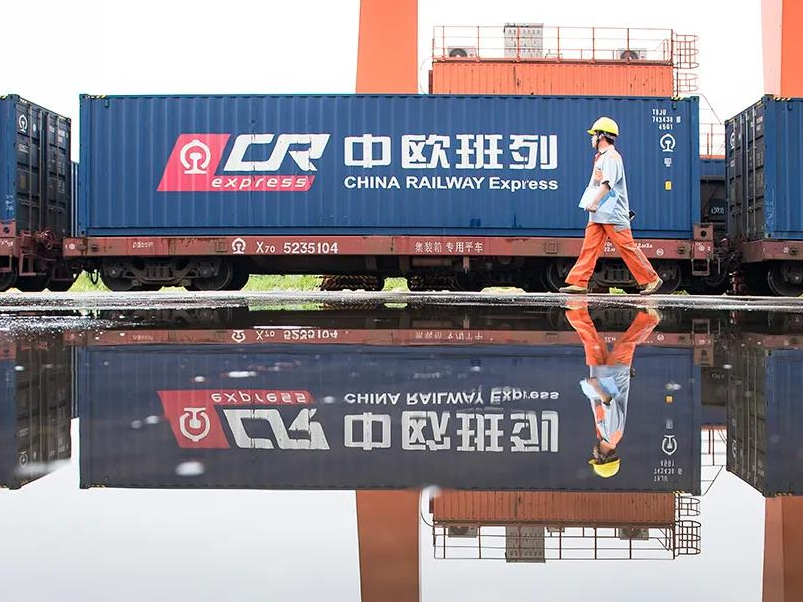
In order to fully unleash the potential of the China-Europe freight train logistics channel, continued incremental business and maritime competition for customer resources have become issues that need to be considered.
"The opening of the China-Europe Railway Express has reached a ceiling. Where is the way forward?"
At a seminar at the end of August, Wang Yanqing, deputy director and researcher of the Academic Committee of the Comprehensive Transportation Research Institute of the National Development and Reform Commission, raised the above questions.
The current development method of China-Europe Express has transitioned from the initial “competition for new customers” to the stage of “stabilizing old customers and exploring new additions”. In the first half of 2020, the number of China-Europe freight trains exceeded 5,000. Customers on land have been fully explored. To continue to have incremental business, it is necessary to compete with shipping for customer resources. Looking around the neighboring countries, Japan and South Korea have become the "new passengers" most likely to board the China-Europe Express.
From the perspective of traditional transportation methods, the trade of goods between Japan, South Korea and Europe mainly relies on traditional shipping services. Although some goods are transported to Mongolia and Russia by road and rail after landing at coastal ports in eastern China, they are transported via land channels. Shipping to Europe is very rare.
Now, China-Europe Railway Express is competing for this market.
"From the perspective of timeliness, the time for Japan and South Korea's cargo to travel through China-Europe Express is much shorter than that of ocean freight. With the relevant subsidy policies, the price gap between rail and ocean freight is not large, which has become a potential advantage. "A participant of the aforementioned seminar said.
However, a key point cannot be ignored. If the China-Europe Express trains are to gain access to Japan and South Korea, the linkage with coastal ports is indispensable, that is, to leverage the long-term transportation relationship between the seaport and Japan and South Korea to attract part of the goods to be transferred to rail transportation.
In this regard, many ports in Shandong Province have begun to cooperate with inland cities. Zhang Haiqiang, deputy general manager of Qingdao Port International Logistics Co., Ltd., said that Shandong Port is at the center of the Northeast Asian port cluster and is an important window for China to open to Japan and South Korea.
"At present, there are 58 direct routes from Shandong port to Japan and South Korea, with more than 50 ports of call. Among them, there are 29 routes to Japan, and 31 ports in Japan. There are 23 routes from South Korea and 10 ports. There are 6 routes between Japan and South Korea, calling a total of 29 ports. It should be said that the initial construction of sea buses between Japan and South Korea has been completed." Zhang Haiqiang said.
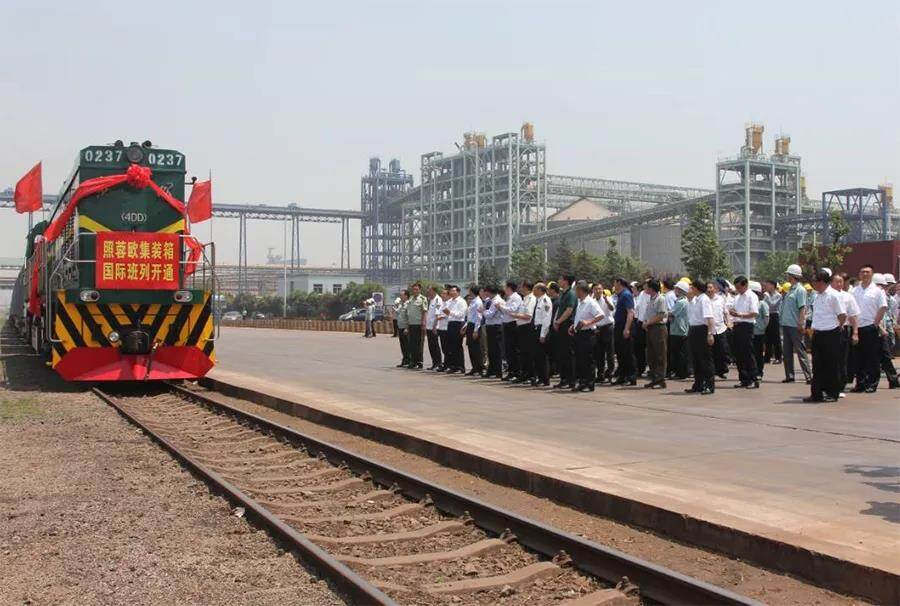
In terms of cooperation with inland cities, in May 2017, Rizhao Port, Jinan Road Bureau and Chengdu Road Bureau jointly created the "Zhaorong Europe" international container train, which became a model of sea-rail combined transportation at the port. The train departs from Rizhao Port in Shandong Province, turns to Alashankou via Chengdu, and passes through countries such as Kazakhstan, Russia, Belarus, Poland and Germany.
According to the relevant person in charge of Rizhao Port, the "Zhaorongou" train has a total distance of about 11,200 kilometers and runs for about 15 days, which is significantly shorter than the 60 days required for sea transportation.
Recently, a return train from "Zhaorongou" also successfully carried return goods from Europe to South Korea. From the perspective of operation, this channel is in line with the established plan. That is, starting from Schaffmark Station in Wroclaw, Poland, passing through Belarus, Russia, Kazakhstan and other countries, entering at the Alashankou port in Xinjiang, marshalling in Chengdu, arriving at Rizhao Port, and finally arriving by sea Pyeongtaek Port, South Korea.
In addition to Chengdu, on September 4, Xi’an Railway Xinzhu Station sent the first China-Europe Express (Chang’an) "Korea LG Special Train". The special train is equipped with 42 containers of semi-finished materials such as LCD panels, electrodes, and aluminum foil paper produced by LG Group in South Korea. It passes through Kazakhstan, Russia, Ukraine, and finally arrives in Slawkow, Poland. It is expected to be delivered to LG Europe in about 10 days. factory.
The reporter was informed that since July 2019, South Korea’s LG Group has shipped about 1,100 containers of products through the China-Europe Express Chang’an. The transportation method is to ship Korean goods to Qingdao Port by sea, and then send them to Xi’an by road. The China-Europe Express (Changan) arrives at its factory in Poland.
Su Guofeng, deputy director of the Management Committee of Xi’an International Port District, introduced that Xi’an has extensively cooperated with coastal ports such as Qingdao, Ningbo, and Lianyungang, attracting transit cargoes from Japan and South Korea to use the China-Europe Express Chang’an to develop third-party international markets and seamlessly connect with the world. Shipping system.
According to the plan, Xi'an and Tangshan will also jointly develop international trade exchanges and international logistics channels in Northeast Asia such as Japan and South Korea, so as to realize the deep integration of the supply chain and the industrial chain and the benign interaction between the industrial chain and the value chain.
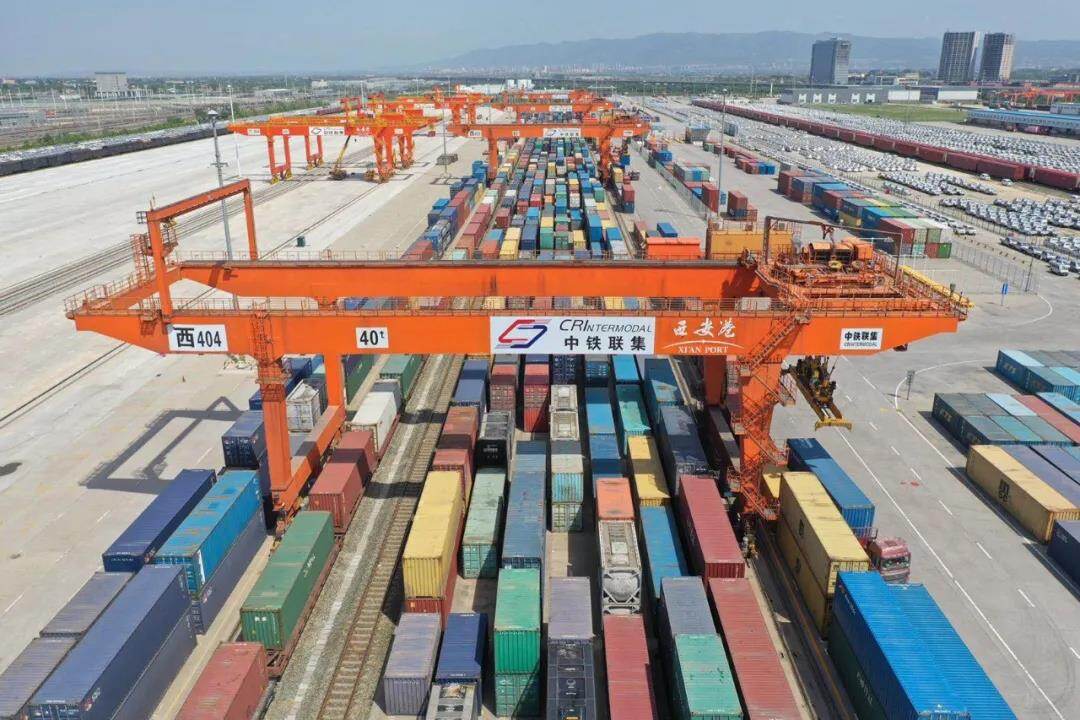
It is worth mentioning that not only the inland cities have taken a fancy to the huge trade volume of Japan, South Korea, and Eurasian countries, but the eastern ports also have related plans to open up new multimodal transport routes.
In June 2020, Lianyungang first launched the "Japan-Lianyungang-Mongolia" train, which used sea-rail combined transportation to send Japanese goods to Mongolia through the Erlianhot port. The main mode of operation is to transfer the railway boxes from the domestic coastal ports to Japan. After loading the goods, they will be sent from the Osaka port of Japan to Lianyungang. After landing, they will be transported by rail to the border of Erenhot and finally arrived in Ulaanbaatar, Mongolia. This is also after the three ports of Horgos, Alashankou and Kashgar, Lianyungang has added another cross-border transportation channel.
Zhang Jin, the dean of the School of Logistics of Southwest Jiaotong University, has visited Japan many times. He told reporters that the current construction of the eastbound route for the China-Europe Railway Express aimed at the Japanese and South Korean markets is still hot inside and cold outside. "The Japanese and Korean markets and companies do not know much about it, and the response is not very obvious. Therefore, we must adopt a multi-pronged approach. We must gradually improve the understanding and recognition of the significance, role and value of channel construction by governments, enterprises and private people in various countries and regions. Communication between Japanese and Korean companies in China, etc."
At the above seminar, news from Chengdu said that in the context of relevant trains, Chengdu International Railway Port is optimizing the route between Japan and South Korea. At present, Chengdu International Railway Port has done too much with Japanese partners such as Toyota. Round of communication and testing. From Shanghai to Chengdu, and from Chengdu to Shanghai, there are very stable trains every week or even every day. According to customer needs, you can also apply and report to the railway department to provide customized train services.
Wang Yanqing believes that connecting Japan and South Korea with the China-Europe express trains through sea-rail combined transport will be a practice of the domestic and international dual cycle of "two-way mutual aid between east and west, and linkage between land and sea inside and outside."
"The construction of this large channel can reshape the layout of the international production network, improve the status of inland cities in the global market and the ability to participate in value distribution, strive for industrial upgrading and value-added space, and reshape the layout of the international production network." Wang Yanqing said.
Wang Yanqing believes that if it is possible to connect Japan, South Korea and Europe by means of sea-rail combined transportation, the inland ports may become "the third generation of international dry ports." Wang Yanqing said that the first generation is to solve the problem of transportation; the second generation is to solve the problem of industry. We are now in the state of industrial agglomeration of the second generation of dry ports, mainly the allocation of elements; the third generation of dry ports is more from the system Starting from above, it will become the innovation center of the system.
In the future, if part of the shipping business can be transferred to China-Europe Express, how much can the latter increase?
Previously, Li Muyuan, Executive Vice President and Secretary-General of China Container Industry Association, predicted in an interview that although China-Europe Express cannot completely replace shipping, as long as it can share 1% of international shipping business, it will also promote the huge development of the entire industry. .
"At present, my country's international freight business mainly relies on shipping. If 1% of the shipping business can be transferred to the China-Europe freight train in the future, the latter's annual freight volume will reach 3 million TEUs. The total freight volume of the China-Europe freight train is expected to be 9 years old. Around 1.8 million TEUs." Li Muyuan said. Editor/Sang Xiaomei
Comment


 Praise
 Collect
 Comment

 Share
Share


Write something~