 Search


- Latin America has huge development potential in renewable energy fields such as solar, wind, and bioenergy
- It is hoped that the enterprises of the two countries can further develop new energy cooperation, realize complementary advantages, and contribute to the joint promotion of green, low-carbon and sustainable development
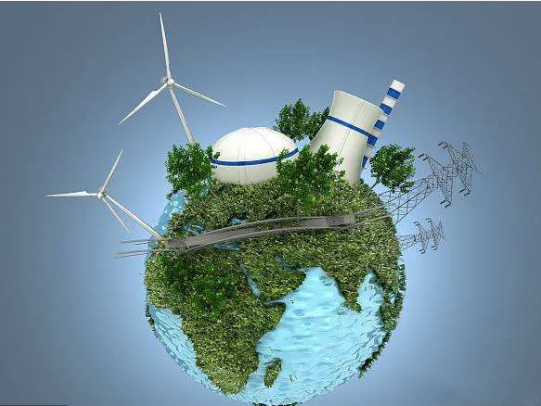
For Latin America on the opposite corner of the earth, the Chinese feel remote and unfamiliar. In the past few years, China and distant Latin America have become increasingly close due to the increasing mutual understanding, and China's influence in the region has gradually expanded. For China, Latin America is an important region for China's South-South cooperation and an emerging growth pole in the layout of foreign relations.
Chinese investment in Latin America is rising steadily
Latin America is an important participant in China’s Belt and Road Initiative. So far, China has signed the “Bilateral Belt and Road Cooperation Agreement” or “Memorandum of Understanding on the Joint Construction of the Belt and Road Initiative” with 19 Latin American countries, and has become a Latin American infrastructure construction and financing credit The country’s largest source of funds.
At present, China has more than 10 branches in Latin America, including Industrial and Commercial Bank of China, Bank of China, Construction Bank, and Bank of Communications. In addition, two Chinese policy banks (China Development Bank, Export-Import Bank of China) and two China-Latin America Funds (China-Latin America Cooperation Fund, China-Latin America Capacity Cooperation Investment Fund) have also started operations in Latin America. Therefore, the prospects for China's energy investment in Latin America are still good and stable, no matter from the perspective of policy or funding.

According to Ernst & Young’s “Overview of China’s Overseas Investment in 2019” and the “Report on China’s Direct Investment in Latin America and the Caribbean in 2020” on the China Academic Network in Latin America and the Caribbean, China’s investment in Latin America has continued to increase since 2016.
Overall, China's investment in Latin America in 2019 has four characteristics: First, the amount of direct investment has risen against the trend. In 2019, China's direct investment in Latin America increased by 16.5% from 2018, reaching US$12.85 billion. However, the number of transactions has declined, reaching only 19 transactions. Second, M&A investment continued to be consolidated. In 2019, M&A investment accounted for 65.16% of China's total direct investment in the region. Third, the investment destination countries are diversified. Before 2017, Argentina and Brazil alone accounted for 50.22% of China's total direct investment in the region. In 2019, Chile, Peru, and Mexico were active. These three countries received 69.6% of China's total direct investment in the region in 2019. Chile has become the most important destination country for Chinese investment in Latin America and the Caribbean from 2017 to 2019 (accounting for 31.1% of the region's total direct investment from China). Fourth, state-owned enterprises occupy a dominant position in direct investment. In 2019, Chinese state-owned enterprises invested 11.2 billion US dollars in Latin America, accounting for 86.9%, concentrated in mining, power, transportation and other industries.
Clean energy, new investment opportunities
As the new crown pneumonia epidemic rages around the world, Latin America's economy has suffered heavy losses. According to data from the United Nations Economic Commission for Latin America, Latin America’s economy is expected to decline by 9.1% in 2020, with per capita GDP retreating to the level of 2010, becoming the “lost decade” of Latin America.
However, with the negative impact of the game between China and the United States and the superimposed crisis of the new crown epidemic, opportunities for clean energy investment in Latin America are gradually emerging.
Although the economy of Latin America is underdeveloped, it is at the forefront of the world in responding to climate change and energy transition. Colombia, Ecuador, Bolivia, and Chile have formed the "Four-Andean Alliance" that has always been an active advocate for the global response to climate change issues. Chile is the first country in the world to propose a "carbon neutral" plan, and at the same time announced that it will achieve 70% of clean energy in primary energy consumption by 2035, and will completely withdraw from coal power.
And another thing worth mentioning is that in the early 1970s, Latin America was the first region to put forward the concept of energy integration. The Andean power interconnection system, the "North Arc Four Nations" interconnection, the China-US six-nation interconnection system, etc. The interconnected regional cooperation mechanism has many similarities with the global energy Internet concept advocated by China, and it also continues to play a role in the optimization and balance of clean energy deployment on a regional scale.
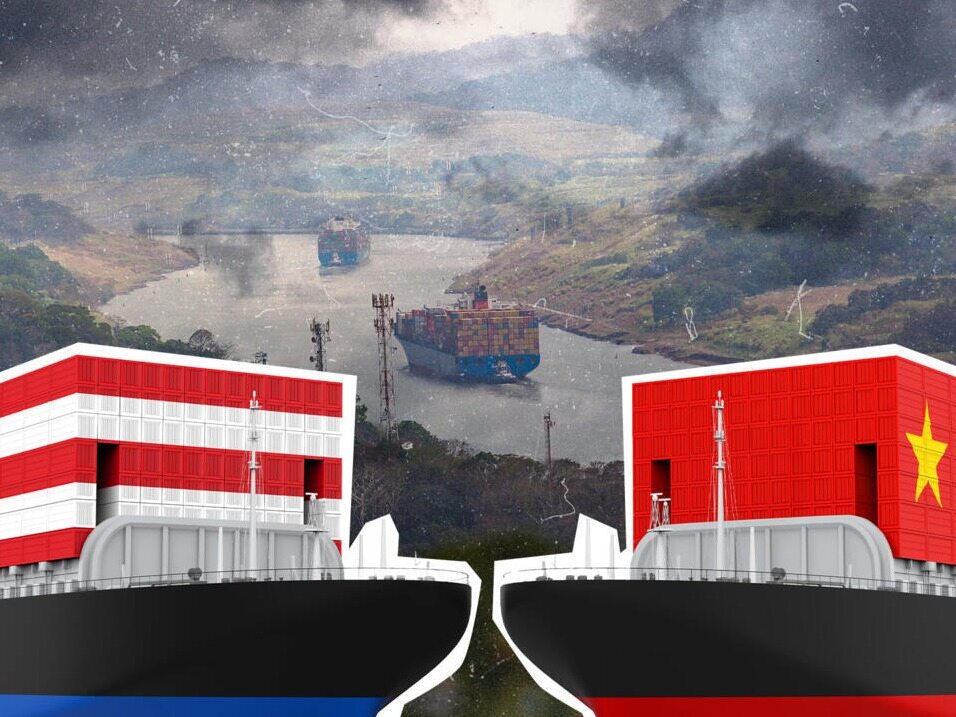
In addition, the severe international situation has also brought more clarity to clean energy investment opportunities. After the Trump administration came to power, the U.S. policy toward Latin America showed a stronger self-interest and a stronger xenophobic orientation. In this context, the direct investment and foreign aid of the United States in Latin America has decreased year by year in recent years, which has made room for the entry of Chinese capital.
However, although the entry of Chinese funds has filled the gap, in reality most of these gaps are not in the hands of Latin Americans. Therefore, from the perspective of Latin American countries, it is not considered that the Chinese have taken away the living space of local enterprises. Even if Chinese companies do not take over, capital from other countries will enter.
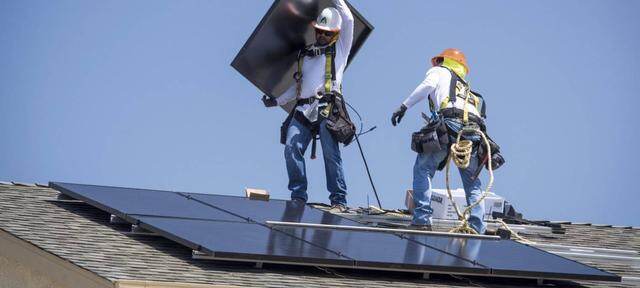
In this context, in order to prevent risks similar to the “dual reverse” investigations of Chinese photovoltaic products in the United States, Europe and other countries in 2018, investing and building plants in Latin America has become a risk aversion plan for many domestic new energy companies. At present, with good resource conditions, Latin America has become the second largest destination for renewable energy investment in the world, second only to Europe. Since 2019, it has ushered in a new round of growth. Among them, Chile, Mexico, and Colombia are the cleanest destinations for Latin America in 2019. The three countries with the most energy investments have investments of US$6.5 billion, US$4.9 billion and US$2.5 billion respectively. The sum of the three countries accounted for 84% of Latin America's clean energy investment in 2019.
According to Fitch Ratings data, the rest of Latin America except Brazil has not been significantly affected by the new crown pneumonia epidemic. Although the epidemic has delayed the construction of renewable energy projects, the investment momentum in the renewable energy industry in Latin America will continue in 2020, and many Latin American countries will Renewable energy investment is an important means to promote economic recovery after the epidemic. According to the International Energy Agency's "2020 Global Energy Review", taking the epidemic into account, the global renewable energy power generation in 2020 is still expected to increase by 5% year-on-year.
The Amazon rainforest fires, the Australian bushfires and the frequent extreme weather around the world show that the response to climate change is urgent. Coupled with the double impact of the new crown pneumonia epidemic in early 2020 and oil price fluctuations, traditional oil and gas energy companies have begun a "zero-carbon" strategic transformation. Petrobras, the Brazilian national oil company, said it plans to sell 4 thermal power plants. The Colombian national oil company Ecopetrol will be in October this year. Build large-scale photovoltaic power plants.
The transformation of the traditional oil and gas industry urgently requires cooperation with renewable energy companies, and China has a comparative advantage in this regard: First, through years of rapid development, China has the highest installed capacity of solar photovoltaic and wind power in the world, and has formed a certain scale and international competition. Powerful industrial chain and technical reserves. Secondly, China's large number of solar power generation and wind farm construction has enabled Chinese companies to accumulate world-class farm construction and operation management experience. Finally, the relatively surplus production capacity and the overall environment of China-Latin America cooperation provide a strong internal impetus for China's clean energy industry to "go global." Editor/Sang Xiaomei
Comment




 Praise
 Collect
 Comment

 Share
Share


Write something~