 Search


- Istanbul-Tehran-Islamabad (ITI) freight train service will complement China's One Belt One Road strategy
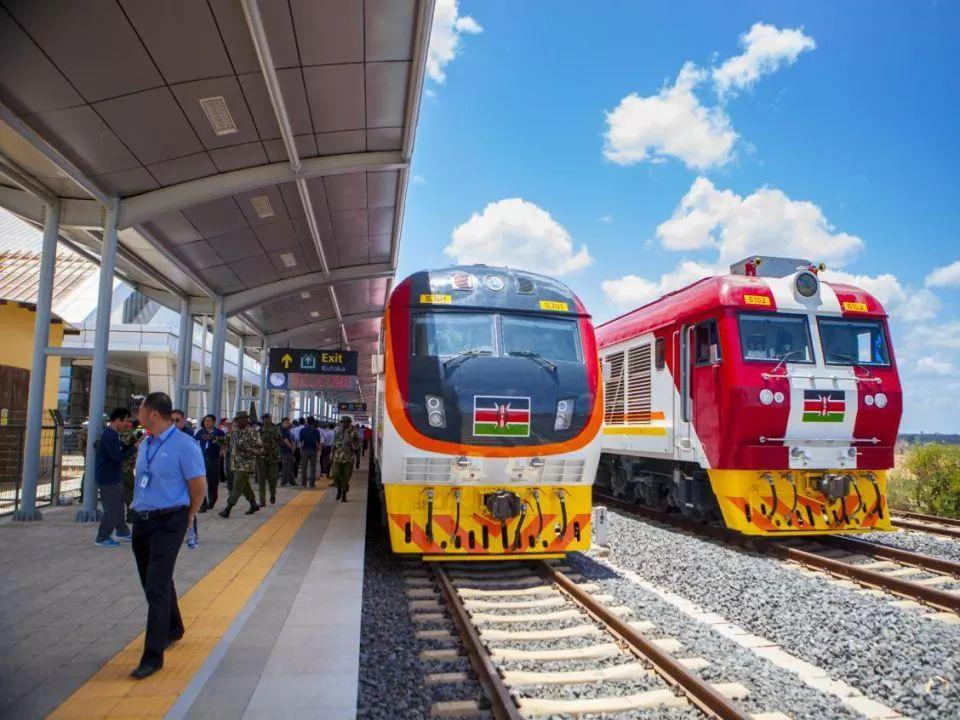
Imagine that the train journey in 2025 takes place on a transnational railway extending from Karachi to Kazan, Russia, thanks to a transportation corridor that traverses at least 12 economic centers in Europe and Asia. When the member countries of the Economic Cooperation Organization (ECO) negotiated the Istanbul-Tehran-Islamabad (ITI) freight train service, this hypothetical European train journey is now no longer an illusion because of the various aspects of this cross-border railway puzzle. The parts are finally put together. After ensuring uniform tariffs, eliminating quotas, and comprehensive trade liberalization, this international trade and transportation railway may form a potential trilateral economic group.
At the same time, Pakistan is promoting a deal with Uzbekistan and Afghanistan for cross-border railway projects. Uzbekistan and Afghanistan are also part of the OECD; therefore, these two separate transactions will obviously lead to a stronger, more balanced, and freer trading bloc, which is comparable to any global trade bloc such as the United States, Russia, China, Japan or India. The major trading countries are not consistent.
Historically, Uzbekistan is not part of the Eurasian Economic Union led by Russia, but only participates in the Eurasian Economic Union as an observer. However, if this new agreement is passed, Uzbekistan can certainly enter new markets through Pakistan and quickly advance its application for membership in Eurasian member states. Recently, Uzbekistan has also joined the China-Kazakhstan-Turkmenistan-Iran Railway Corridor. Previously, Uzbekistan agreed to a complex set of customary rules, which will definitely bring huge dividends, just like it became China’s “new silk railway”. Part of it was done for Kazakhstan.
However, all of these infrastructure developments have a geopolitical background, and they only happened after the US government gave up the geopolitical space in Asia. Now, under the leadership of the Biden administration, multilateral projects with Iran are also expected to be approved. In the ever-changing geopolitical environment, the Istanbul-Tehran-Islamabad (ITI) freight train service initiative of the Economic Cooperation Organization is a pilot project. If successful, it may lead to the second railway project with Uzbekistan, Pakistan and Afghanistan. Phase integration. When OECD countries use local currencies for transactions, it will ensure a balanced trade account, and a potential OECD free trade agreement will further reduce transaction costs and heavy burdens in multilateral transactions. In addition, the network will provide alternative trade routes to Beijing through OECD member countries, complementing China’s One Belt One Road strategy, rather than competing.
Pakistan's railway infrastructure is weak
However, the key strategic points of such master plans should be based on alleviating trade bottlenecks (hardware (infrastructure) and software (policy blueprint)). For example, although Iran and Turkey have rail infrastructure to transport heavy freight trains, Pakistan’s Karachi-Peshawar railway line is in chaos. As part of the China-Pakistan Economic Corridor (CPEC), the technical and financial feasibility of the Karachi-Peshawar railway upgrade project has been delayed several times due to various issues.
Pakistan Railways delayed the project for two reasons: First, although the line capacity of ML-1 will increase five times, this increased capacity will still be underutilized in the next 20 years. Second, the Ministry of Finance and the Planning Commission hope to use the assets of the Pakistan Railway Company as a guarantee for the Chinese loan of ML-1, but the railway company hopes to transfer the loan service responsibility to the center.
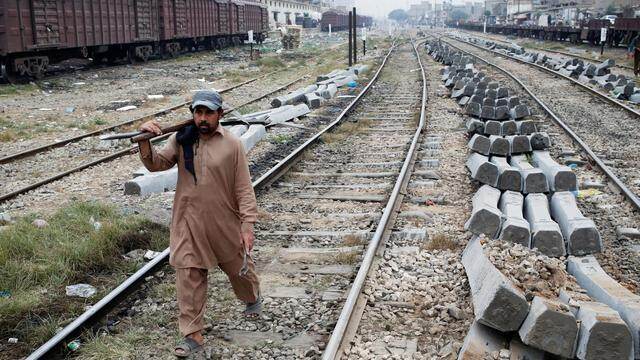
In addition, Pakistan’s railway infrastructure has shortcomings in realizing the ITI vision, and it also faces "software" shortcomings, such as weak institutions, courts and regulatory agencies. Pakistan’s trade policy is still very strict in general, and labor mobility remains an urgent issue so far. Unless Pakistan signs trade agreements with other neighboring countries, including Iran and Afghanistan, it cannot expect to see the fruits of regional integration.
In short, investment in railway infrastructure sounds like a convenient policy lever that can be used to create aggregate demand and stimulate growth in a recession. However, these investments should also come from the private sector, because only multilateral participation can sustain such ambitious projects in the long run.
If this happens, Pakistan Railways can use many private sector financing tools-loans, bonds, equity, leases-as well as PPP and BOT (build operation transfer) models as project delivery mechanisms. Editor/Huang Lijun
Comment




 Praise
 Collect
 Comment

 Share
Share


Write something~