 Search


- Syria is a paradise for archaeologists. Here are some ancient civilizations and the best-preserved treasures of ancient civilizations
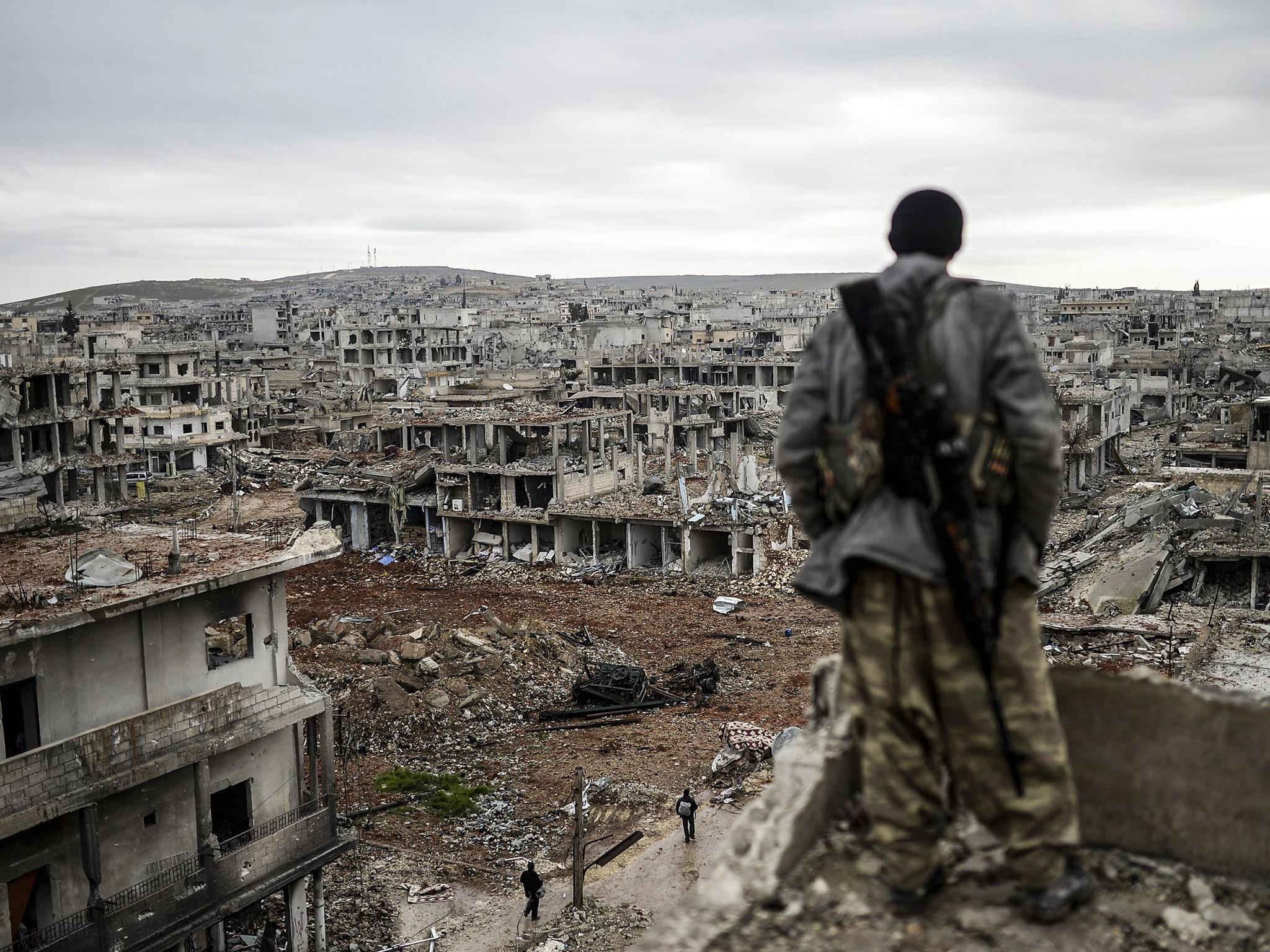
From a humanitarian point of view, the devastating conflict that broke out in 2011 can be said to be the worst conflict so far in the 21st century, but the wanton destruction of a country’s heritage may be the worst conflict for generations.
The ten-year war not only destroyed Syria’s present and poisoned its future, but also destroyed some of its legendary past beyond repair.
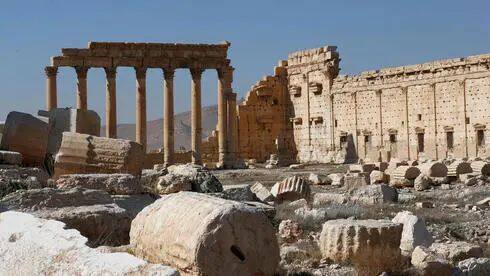
The damaged Temple of Palmyra and surrounding columns in the ancient city of Palmyra in Syria
On the humanitarian level, the conflict that broke out in 2011 can be said to be the worst conflict in the 21st century so far, but the wanton destruction of heritage may be the worst conflict in generations.
In a few years, the archaeological site was destroyed, the museum was looted, and the old city was razed to the ground.
Khalil al-Hariri stands in front of a restored artifact in the Palmyra Museum he has run for 20 years, recalling when they fell into the hands of the so-called Islamic State group Must escape the pain of this desert city and its treasures.
He said: "I have had many difficult days. We have been surrounded by museums many times." He recalled how he and his team stayed behind as late as possible in order to transport the artifacts to safety.
"But the hardest day of my life was the day when I returned to Palmyra and saw broken artifacts and chaotic museums," said Hariri, 60.
"They smashed and smashed all the faces of the statues left in the museum that we were unable to preserve. Some of them could be restored, but others were completely collapsed."
"Sands Venice"
Palmyra is a majestic ancient city whose influence reached its peak at the end of the Roman Empire and was ruled by Queen Zenobia in the 3rd century.
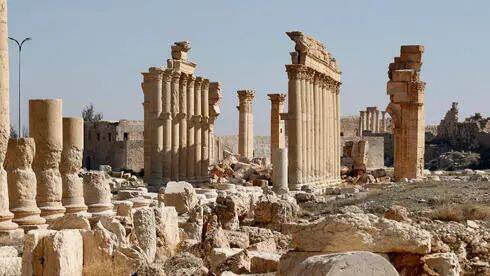
The damaged triumphal arch and surrounding pillars of Palmyra in Roman times
Its majestic kilometer promenade is unique and one of the most recognizable landmarks in Syria.
In May 2015, when IS jihadists stormed into Palmyra to expand the "caliphate" they announced in parts of Syria and Iraq a year ago, the protests were global.
The contrast provided by the splendor and superb architecture of Palmyrene is the background of the barbaric behavior of the messy gunmen jihadists, which has attracted the imagination of the world.
The website became a stage for public executions and other serious crimes, and some of the photos were displayed and distributed in IS propaganda.
IS militants also displayed the headless body of the chief archaeologist Khaled al-Asaad, who had tortured him and asked him to reveal where the artifacts from the site had been moved.
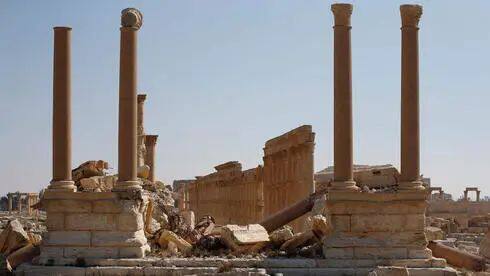
The picture shows a partial view of the damaged four pylons. The four pylons are a 16-column structure marking one end of Palmyra's colonnade.
Void jihadists succumbed to their cultural genocide, manipulating Palmyra's famous Baal Shamin shrine and blowing it up.
They also destroyed the Bell Temple, blew up the Arc de Triomphe, looted what they could provide from the museum, and defaced the statues and sarcophagi that were too large to be dismantled.
This ancient city, known as the "Venice of the Golden Sands," was looted, and it was on par with the destruction of the Bamiyan statue by the Afghan Taliban in 2001.
By the time the government forces regained control of Palmyra in 2017, it had been irreversibly destroyed.
"Complete destruction"
Palmyra is just one of the irreversible losses to Syria’s heritage in a war that has not spared any part of the country.
The writer and historian Justin Marozzi said: "In two words, this is a cultural revelation."
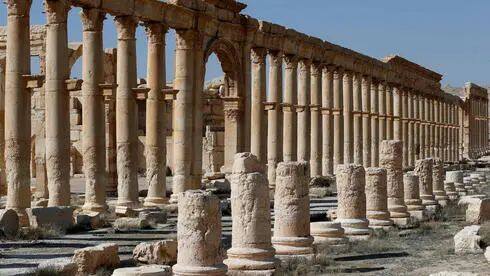
The ruins of the ancient city of Palmyra in the Roman era in Syria
The hereditary destruction launched by Syria in the past decade can be traced back to another era, when the Mongol Empire founded by Gengis Khan raged and slaughtered.
Maroz, author of "Islamic Empire: Fifteen Cities That Define Civilization," said: "Especially in Syria and the Middle East, I can't help but immediately think of Timur or Timur, who released hell here in 1400. ""
When thinking about the fate of Aleppo, the economic center of Syria before the war, it is inevitable to mention the Mongol conquerors, and Aleppo was once one of the best-preserved ancient cities in the world.
Tamerlane pushed the city to the sword six centuries ago, but the destruction that Aleppo has suffered in the past decade is not the work of foreign invaders.
When the most serious damage occurred from 2012 to 2016, Maamoun Abdel Karim was the head of Syrian cultural relics.
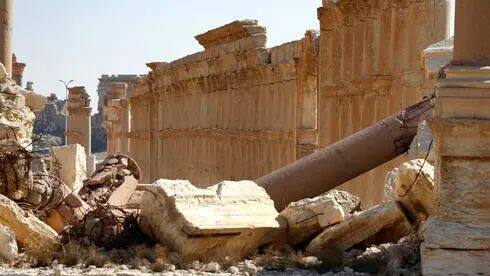
The great colonnade is damaged in the ruins of Palmyra
He said in Damascus: "In the past two thousand years of Syrian history, nothing worse has happened than during the war."
He said: "Total and complete destruction. We are not talking about an earthquake in one place or a fire in another place-or even a war in a city-but the destruction of Syria as a whole."
robbery
Before the war, the northern city of Aleppo was considered one of the longest continuously inhabited cities in the world, with markets, mosques, caravans and public baths.
But the brutal siege of the insurgents disfigured it.
The Russian government, which has benefited from Russian military power since 2015, has relied heavily on air power to retake the territory.
Abdel Karim said: "I will not forget the day when the minaret of the Umayyad Mosque in Aleppo fell, or the day when the fire engulfed the ancient markets of the city. "
Like the minaret in the 11th century, other buildings that survived Tamelane can be preserved for centuries, but these buildings have disappeared forever.
The former head of cultural relics said: “About 10% of Syria’s cultural relics have been destroyed, which is very high for a country with so many cultural relics and historical monuments.”
A report published last year by the Gerda Henkel Foundation and the Paris-based Association for the Protection of Antiquities (S Syria) stated that since the outbreak of the war, more than 40,000 artifacts have been collected from museums and archaeological sites. Looted.

Syrian government forces deployed near the Damascus-Aleppo highway in southern Aleppo province in northern Syria
Trafficking in "conflict antiquities" has created millions of dollars in revenue for the Islamic State, smaller rebel groups, government forces, and loosely organized smuggling networks and individuals.
IS has a dedicated department to manage archaeological excavations on its territory, which shows that although it has never been accurately quantified, the profits can be considerable.
The chaos that swept Syria at the height of the war caused more active fragments such as coins, figurines and mosaic fragments to spread across the world through the black market of antiques.
Although some measures have been taken to prevent illegal trade, and in some cases, stolen handicrafts have even been shipped back to Syria and Iraq, the losses have been huge.
"The wound of all mankind"
For Syria's future, the economic benefits are also huge. The country’s heritage wealth is the main attraction of a tourism industry. Although this tourism industry has been stagnant, it has huge potential.
Syria has six sites on the UNESCO World Heritage List, all of which suffered some damage during the war.
In addition to Palmyra and Aleppo, the ancient cities of Damascus and Bosra were also affected. The spectacular Krakow Knights' Crusader Castle was also trapped in the battle, and some ancient villages near the Turkish border are also known as "dead cities".

People who fled the Idlib area due to the ongoing civil war
Other major heritage landmarks have also been severely damaged, such as the Apamea ruins, a Roman-era city on the Orontes River, famous for its colonnades longer than Palmyra.
Palmyra was a symbol of diverse civilizations in its glorious period, a commercial hub on the Silk Road, and a crossroads of culture.
Its architecture is a blend of ancient Roman and Greek, Persian and Central Asian influences.
What was destroyed during the Palmyra war and throughout Syria is a testament to a multicultural past, a certain civilizational ideal.
Marozzi said: "All of us should be concerned about destroying Syria's heritage, because these ancient sites, cities and monuments are not only Syria and Arabia, but also part of our common cultural heritage."
"Places like Palmyra have universal meaning and value. They are part of our world civilization. They are milestones in human history. Therefore, any behavior that destroys them is a wound to all mankind." Editor/Xu Shengpeng
Comment







 Praise
 Collect
 Comment

 Share
Share


Write something~