 Search


- China’s water control activities have a long history, and water conservancy can bring huge benefits to the people and the country
Water control activities in China have a long history, and water control activities are often summarized in the name of water conservancy. The term water conservancy can be found in Sima Qian's "Historical Records".
In 132 BC, the Yellow River, which had been plagued since the Warring States Period, burst its dyke in Huzi (now southwest of Puyang City, Henan Province). Twenty-three years later, Emperor Wu of the Han Dynasty came to the scene of the breach in person, commanding civil and military officials under the general to carry engineering materials to block it. Among them was Sima Qian, who was then a doctor. This special experience directly prompted him to open up a chapter in "Historical Records" in "Historical Records", combing through the magnificent history of the Chinese ancestors in preventing floods and developing and using water resources from the time of Dayu to Emperor Wu of the Han Dynasty, and used the term water conservancy. .
As we all know, the names of many industries and disciplines in modern China are translated or borrowed from foreign words. Even if its etymology comes from ancient Chinese, most of its meanings are quite different from ancient to modern, such as economics and physics. However, the term "water conservancy" maintains a considerable consistency with the meaning of Sima Qian in "Historical Records · River Qushu". "Historical Records · River Channel Book" focuses on a series of water control activities of the Western Han Dynasty, especially since Emperor Wu of the Han Dynasty succeeded to the throne, including the blockage of Huzi, the canal project from Chang'an to Tongguan, the construction of mountain canals that connect the Han River and Weishui River Basin, Construction of irrigation channels in the southwest of Shanxi and the eastern part of the Guanzhong Plain. Sima Qian introduced the decision-making background and the actual benefits after completion in more detailed pen and ink: "After self-righteousness (the success of the urn), the users argue about water conservancy." The "water conservancy" argued by the "users" in Sima Qian's era is actually Contains three important aspects, namely flood control represented by the mainstream of the Yellow River, river improvement with canal construction as the mainstay, and irrigation business with canal system construction as the core. To this day, flood control, river (navigation) management and irrigation are still the main contents of modern water conservancy.
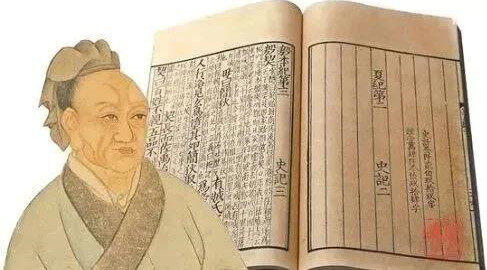
Sima Qian and "Historical Records".
As early as before Sima Qian, written records on flood control, river (navigation) control and irrigation activities had been found in various documents. In terms of flood control, the book "Zuo Zhuan" at the end of the Spring and Autumn Period recorded that Qi State had "chipped the gate and guarded it" when resisting the offensive of the Jin State. Scholars believed that the "prevention" here was the flood control dam on the south bank of Jinshui. Regarding river (navigation) management, the "Shangshu", which was generally considered to be written in the Warring States Period, records the situation of Dayu's dredging and digging of rivers in various places in "Yugong". In terms of irrigation, the "Baihua" in "The Book of Songs·Xiaoya" has a sentence of "the north flow of the lake, soaking the rice fields", which probably means artificial channels. Documentary records can be mutually confirmed with the relics and relics of China's early water control achievements that have been continuously revealed in archaeological discoveries. In Sima Qian's writings, flood control, river (navigation) management and irrigation are unified under the name of "water conservancy", and the term "water conservancy" is thus given a clear connotation. Therefore, the modern Chinese water conservancy industry has long referred to the "Historical Records. "Hequ Shu" as the source of the term "water conservancy".
After Sima Qian, the use of the term "water conservancy" changed, and in many cases it specifically referred to irrigation. For example, in the "Tong Dian" compiled by Du You in the Tang Dynasty, there is a "Water Conservation Field" under the "Code of Commodities", which specifically introduces the construction of channels and irrigation areas in the past dynasties. During the Northern Song Dynasty Wang Anshi's reform, the "Farmland Water Conservancy Law" was specially promulgated. Here, "water conservancy" also specifically refers to irrigation. In fact, flood control, river (navigation) management and irrigation are often an inseparable whole. Sima Qian has a clear understanding of this, so he unified the three under the name of "water conservancy." This is very similar to the relevant understanding of the modern water conservancy industry. Today's broad-based water conservancy and water conservancy disciplines have added content such as river basin management, water and soil conservation, water resources protection, water environment management, and water landscape construction, and the cross-integration of the content of each branch is getting deeper and deeper. It can be seen that Sima Qian in the Western Han Dynasty had already paid attention to the richness of the connotation of water management and the inherent unity in his writing.
The scale of the flood control, river improvement and irrigation projects in the Han Dynasty Emperor Wu's era has far surpassed the early water conservancy projects such as Shaobei, Dujiangyan, Zhengguo Canal, and Ling Canal. Naturally, the cost of civil and material resources has also become huge. Sima Qian realized that water conservancy can bring huge benefits to the people and the country, and it is necessary to pay a certain amount of manpower and material resources for this; but on the other hand, we must also pay attention to the relationship between cost and benefit. In his view, the "benefit" of water not only refers to the "benefit" of water as a resource, but also refers to the "benefit" that water control activities bring to the country and people.
Now, China's water conservancy industry has made remarkable achievements, which is a logical continuation and development of China's water governance history. It is meaningful to review the profound connotation of Sima Qian's term "water conservancy". Editor/He Yuting
Comment





 Praise
 Collect
 Comment

 Share
Share


Write something~