 Search


- The Belt and Road Initiative is not only investment in economy and infrastructure, but also people’s livelihood exchanges such as health
- In the context of the 70th anniversary of the establishment of diplomatic relations between China and Pakistan, China and Pakistan will continue their exchanges and cooperation in the field of liver transplantation
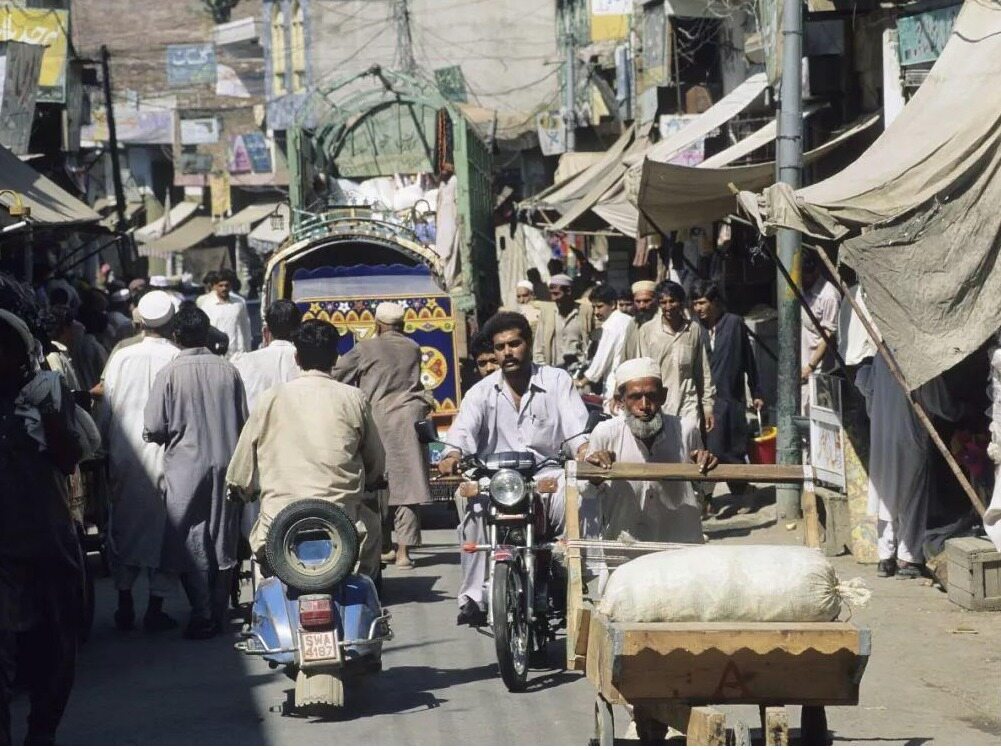
The first time I saw Director Zhu Zhijun was on a plane to Islamabad, the capital of Pakistan, in November 2019. On that day, a passenger on the plane suddenly fell into a coma, and the flight attendant used the on-board broadcast to find medical staff to treat the passenger. In a moment, Zhu Zhijun and Wu Kas, a Pakistani doctor, walked over and said, "Where is the patient? I am a doctor." The two then conducted a methodical diagnosis and first aid on the patient. Twenty minutes later, the patient was out of danger. Zhu Zhijun and the flight attendants confessed a few words and then wiped the corners of their foreheads and sat back in their seats, closing their eyes and resting.
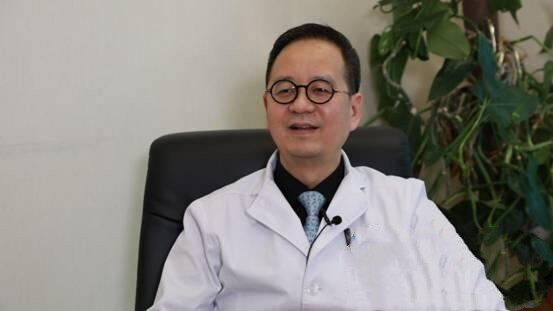
It turned out that Zhu Zhijun was the director of the Liver Transplant Center of Beijing Friendship Hospital affiliated to Capital Medical University, and Wu Kas was a doctor at the center. They go to Islamabad every month to perform liver transplants for local patients for four days, without charging a penny for the operation. The China-Pakistan International Medical Cooperation Project led by the Liver Transplant Center of Friendship Hospital has entered its sixth year since its inception in 2015.
Twists and turns
One day in 2003, Zhu Zhijun, who was working at Tianjin First Central Hospital, took over a Pakistani patient with end-stage liver failure. What he didn't expect was that he had forged an indissoluble bond with Pakistan ever since. “At that time, hospitals in Beijing rarely performed liver transplants. Most of the domestic liver transplants were in Tianjin, so he (the Pakistani patient) was transferred. When we took over, the patient had hepatitis C cirrhosis and end-stage liver failure. There was a large amount of ascites, and the internal medicine department was unable to treat it and was facing serious life-threatening," Zhu Zhijun recalled, "but fortunately, after surgery, the patient recovered very well."
It became famous in World War I, and news of Chinese doctors' superb liver transplantation skills spread like wildfire in Pakistan. Pakistan is also a country with a high incidence of liver disease. The incidence of hepatitis C and hepatitis B are both high. However, Pakistan can complete no more than 200 liver transplants each year. Therefore, the Pakistani government urgently needs to train local talents for liver transplantation.
After many communications and long-term contacts, and after many visits to Pakistan to participate in liver disease conferences, in 2015, Zhu Zhijun received an official invitation from the Pakistani Embassy in China. "The Pakistani Embassy came to our hospital and asked if we could cooperate. The first was to help train doctors in Pakistan, and the second was to let us perform operations on Pakistani patients," he recalled.
Because liver transplantation involves many problems and complicated procedures, how to perform operations on Pakistani patients has become a big problem. However, Zhu Zhijun still decided to face the difficulties. He said: "Liver transplantation is very special. It has no alternative treatment. Unlike kidney transplantation, which can be replaced by dialysis, the heart can be used as an artificial heart. Faced with life-threatening. At that time in Pakistan, I saw that many patients did not receive treatment, and the disease was in the advanced stage, with severe ascites, itching and jaundice, and finally liver failure. This made me very sorry and distressed because these diseases are actually not technically available. It is treatable."
After a long coordination and communication, the teams of China and Pakistan finally decided that Pakistan would provide hardware facilities and Chinese doctors would go to Pakistan to perform operations, which was officially launched in 2018.
Go to Pakistan to practice medicine
Since then, Zhu Zhijun and his team have started to go to Pakistan regularly to perform operations on local patients. The work of the hospital itself is very busy, and they have to travel across oceans to Pakistan for surgery. They can only reduce their rest time. Zhu Zhijun said: "In the beginning, family, colleagues, and friends around us felt that this would involve a lot of our energy. We had to go at least once a month, and we would go there for about 4 days at a time. Not to mention the six-hour one-way flight time on the road. After arriving in Pakistan, we still have to do more than ten hours of work every day, which is really hard. Especially we have a few colleagues whose children are very small, and they can’t take care of the family after they join this project."
Even so, this project still got the support of family and hospital. Zhu Zhijun said with satisfaction: "Everyone understands that we are for the China-Pakistan medical technology exchange. We help Pakistani patients recover their health, and at the same time help them develop skills and talents. Everyone has a sense of honor and mission. Our hospital also specially supports it. The leaders of the hospital have been helping us to contact and coordinate, so as to reduce our worries."
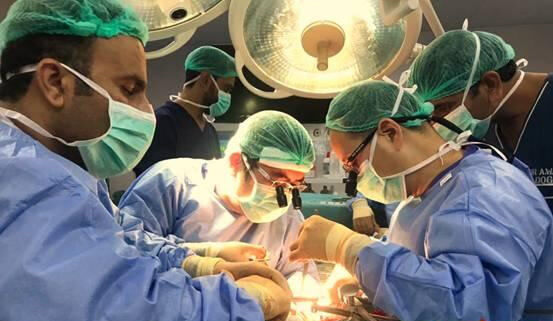
So far, Zhu Zhijun and his team have performed more than forty liver transplants for Pakistani patients. The patients recovered well after the operation. Many of them have returned to normal life and work. However, the condition of one patient really made Zhu Zhijun sweat.
This case is an active Pakistani soldier. It is his younger brother who donated the live liver to him. The soldier is tall and weighs over 90 kilograms, while his younger brother is thin. Zhu Zhijun recalled: “This is facing the problem of insufficient liver donation. If you cut too many livers, you may face insufficient liver damage, and your brother’s health will be threatened. Under this background, guaranteeing the safety of donors is the first priority. I would rather not Don’t let the donor make a mistake.” After careful design and multi-party consultation, the operation was successfully carried out, and both the patient and the donor were safe. Zhu Zhijun and his team worked with Pakistani medical staff to create a miracle of life.
Due to the global outbreak of the new crown pneumonia, Zhu Zhijun and his team were forced to suspend their medical practice in Pakistan, but they did not let the Pakistani patients go for this. Zhu Zhijun said: “The feature of organ transplantation is 100% lifelong follow-up. We can’t go to Pakistan now, so we can only contact Pakistani doctors to understand the patient’s condition. Pakistani medical staff will send us the patient’s information so that We help them make a diagnosis and make an idea. Of course, we will feel more at ease if we see the patient with our own eyes."
At the beginning of 2021, the first female army lieutenant general in Pakistan's history, the Chief of the Army Medical Division sent a letter to Zhu Zhijun. In the letter, Johar expressed his hope that the epidemic will end as soon as possible and the China-Pakistan liver transplantation project will resume as soon as possible.
Teach people how to fish
In addition to performing liver transplants for Pakistani patients for free, Zhu Zhijun and his team are more focused on cultivating local medical talents and improving local medical standards. Since the start of the project, the local doctors will be present to observe and learn when they go to Pakistan for liver transplant operations. After class, they will give lectures and meetings for the Pakistani medical staff, and let them practice on the model.
In 2019, the Pakistani Military Hospital sent 8 doctors to China to learn techniques from doctors in the Liver Transplant Center of Friendship Hospital. Zhu Zhijun introduced: "During the learning process, they watch us manage patients, evaluate preoperatively, and perform operations every day. During this period, we are also constantly communicating, as long as it is a transplant-related meeting in our hospital, including surgery, anesthesia, etc. On the one hand, we will all take them to participate."
Pakistani doctors have grown rapidly in this kind of theoretical and practical learning. "Although they have also studied in European and American countries before, they rarely have the opportunity to actually operate on stage there. We went to the Pakistani hospital for surgery and tried our best to give them the opportunity to practice. At the beginning, we were in the main position. They act as assistants, and slowly they can do some steps that are not particularly critical. Until now, we don’t have to be on stage from the beginning. They can go up first, and we will watch from the side," Zhu Zhijun said, "There are two more. In three years, the skills of these doctors are almost mature, and we can safely let them perform liver transplantation independently without us."
Zhu Zhijun also stated that the next focus of the project will be on technologies such as cavity mirrors and genetic testing. Endoscopic minimally invasive technology has become increasingly mature in our country, which will reduce the trauma of the operation to the donor and shorten the recovery period. Pakistan is very interested in this technology, and Zhu Zhijun hopes to introduce this technology to Pakistan in the next step.
Liver transplantation involves not only surgical techniques, but also follow-up examinations. Zhu Zhijun said: “Pakistan still has some inspections that cannot be done, such as genetic analysis of inherited metabolic diseases. They do not have this technology and can only rely on clinical judgment. Compared with current genetic testing technology, clinical judgments, There is still a big gap. So we think that the next step is to help Pakistan introduce this special test during follow-up."
Zhu Zhijun said: "As a Chinese doctor, we are responsible for the friendship between China and Pakistan. We should maintain and further promote it. We have been to Pakistan so many times in recent years, and we can deeply feel the respect and love of the Pakistani people for us. . Therefore, we also hope that under the Belt and Road Initiative, in the context of the 70th anniversary of the establishment of diplomatic relations between China and Pakistan, the two countries can overcome the epidemic as soon as possible and resume our exchanges and cooperation in the field of liver transplantation, so that more patients can benefit. The Belt and Road is not only about it. It is investment in economy and infrastructure, and also includes exchanges in health technology and other aspects of people’s livelihood. Just like our old predecessors in the field of transplantation, Professor Huang Jiefu, the former Deputy Minister of Health, encouraged us to say, “We must exchange China-Pakistan liver transplantation. Keep doing this and strive to train more Pakistani doctors.' The exchange is a win-win situation, and we also hope that in the future more in-depth cooperation, medical workers in China and Pakistan can make progress together." Editor/He Yuting
Comment





 Praise
 Collect
 Comment

 Share
Share


Write something~