 Search


- Many ancient traffic rules have pioneered modern traffic rules

The red light stops at the green light, the pedestrians go to the right, and the super-speed is subject to fines. These are modern traffic rules. However, these traffic rules are not modern patents. In ancient times, there were also traffic rules. Although not as perfect now, many It is all the pioneering work of the ancients. A road from the ancient traffic rules is coming, please pay attention to check.
Which side do you rely on?
Where do the ancient people go? The answer to this question is different in different periods.
During the pre-Qin period, the male right-winged women were left, that is, the roads for men and women were different. "Book of Rites. The king system records: "The road, the man is from the right, the woman is from the left, the car is from the center." To put it bluntly, on the road, the man must go right, the woman must go left, and the vehicle is in the middle of the road. Pass.
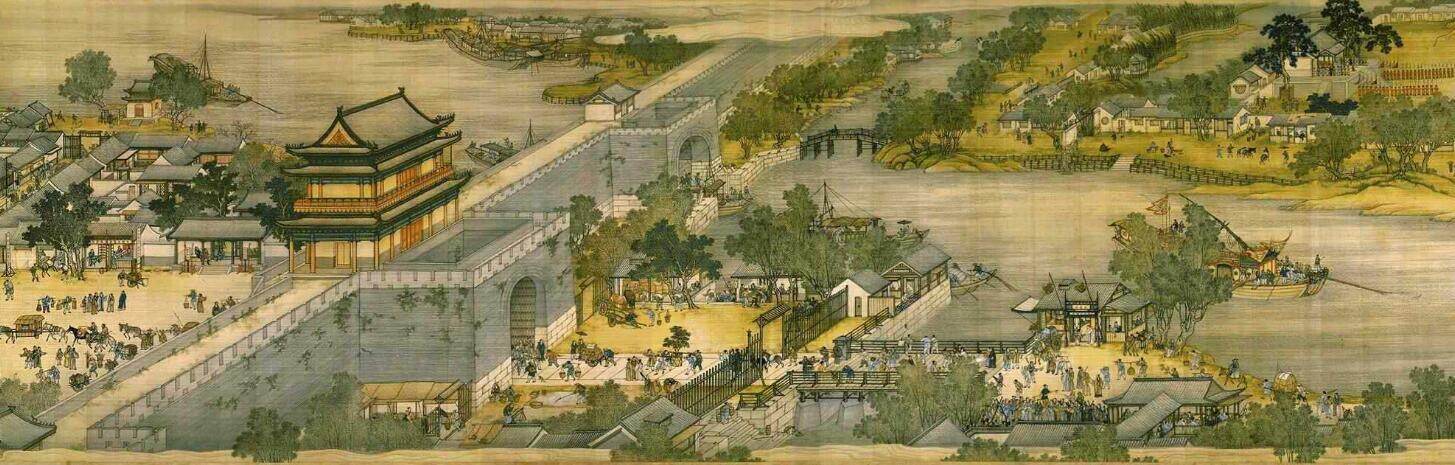
Because the early records were not comprehensive and there were great regional cultural differences, China did not have a completely unified walking standard at this time, but with the gradual unification of the country, the twists and turns were slowly formed.
Emperor Taizong is a well-known emperor in history. After hearing about this situation, he has been ignoring this matter, and he has never thought of a good response. It doesn't matter if you can't think of it yourself. You can't let these people eat white and don't work. Tang Taizong asked a group of ministers to find a way. At this time, Ma Zhou raised his hand.
Ma Zhou is an orphan. The family is poor, but the people are very diligent and talented, and they are appreciated by Emperor Taizong. Later, the officials also did a lot. In his life, he did a lot of things that were conducive to the political stability and economic development of the Tang Dynasty. One of them was to propose "go left and go right", stipulating that when people enter the city, they should go to the left and return to the right.
In fact, for the same person, they are all on the right side, which is convenient for the defending soldiers to check and relieve the traffic pressure. This move has a positive meaning and is already on the right side of our current pedestrians. However, this regulation is often limited to use when entering and leaving the city, and is not widely used in road traffic.
Speeding overload, being carefully spanked
Yes, you are not mistaken, it is spanking. The population of the Tang Dynasty has exceeded one million, so the formulation of traffic rules is very important. According to "Tang Law" speeding overload is to be spanked, this is not a joke. In the absence of public and private reasons, in the streets, alleys, fast driving or driving, you must be punished by bamboo.
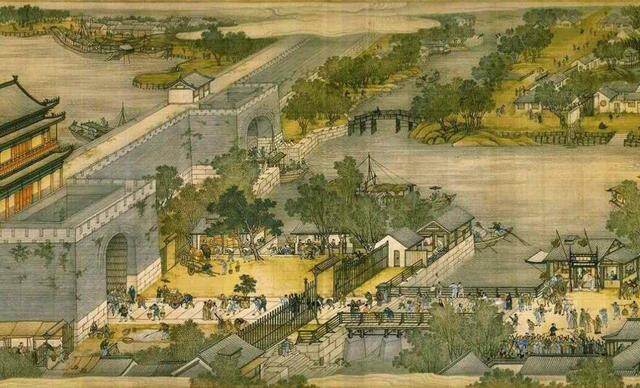
However, because the back is a place where the meridians gather, it is easy to fight if you accidentally do not die. Therefore, after changing the back to spanking, it can serve as a warning, and it will not be too heavy to punish people. However, if you have serious consequences due to speeding, such as casualties, it is not as simple as spanking. It is necessary to reduce the punishment according to the crime of killing people by fighting.
Of course, there may be exceptions, such as the execution of official duties, the specific content is the official document delivery, the court order is issued, or there is an emergency to find a doctor, there are things to chase people, but also excusable. In these cases, you can be exempted from punishment, but the fine still has to be paid. In addition to these circumstances, other situations are exempt.
Besides overloading, the Tang Dynasty also has clear provisions on overloading. However, there are no passenger cars or trucks in the Tang Dynasty. Generally, the transportation responsibility is water transportation, that is, passenger ships and merchant ships. If the ship exceeds 50 pounds of cargo, even if it is only one person, the ship is mainly hit with 50 boards. By analogy, how much is going to be, how many boards are needed. If there is too much overload, then it will be a matter of fact, it will no longer be a board, but it will take two years of work. It can be seen that the ancients pay less attention to this aspect than we do, and the intensity of the attack is still great.
Post-training
What are we most afraid of driving out now? Most afraid of driving without a license. In the ancient coachman this profession is not good. The so-called six art refers to the number of ritual music shots. One of them refers to the art of imperialism, and the other is the technology of driving vehicles that we talk about today. Although not like our current driver's license, the ancient driver is not anyone who can do it. Only after special training can you get a job.
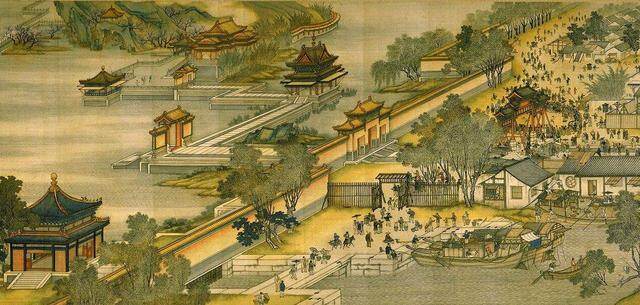
The Qin Dynasty's "Destruction Law" has a relevant record. In today's words, if the royals are not technically closed four times, they will be fined for four years and fined. And only those who have outstanding skills can be selected as the driver of the nobility. Don't underestimate the ancient driver's industry. If you do well, and you want to find a favorite of the royal family, you may be a big official.
Prayer first
To be precise, the ancient Chinese traffic rules are largely based on ethics, that is, with ritual as the basic principle. "To avoid expensive, to avoid long, to avoid heavy, to avoid." This is the content of the Tang Dynasty "Implementation Order." After the Song Dynasty, the "Instrumental Order" was engraved on a stone tablet or wooden board and stood in the middle of the road to remind vehicles and pedestrians.
In modern society, despite the perfect traffic rules, traffic accidents and traffic disputes are still emerging one after another. Many of them are due to the lack of courtesy on both sides, and they would rather collide and not let one point. If everyone can uphold the "good first" attitude, many traffic disputes can be avoided. Although "avoiding expensive" is the performance of the feudal hierarchy, except for its negative aspects, the value principle of "goodness first" is still useful for modern society.
It is precisely the prosperity of the economy and the stability of society that provide the possibility of the emergence of ancient traffic rules. Although from a modern perspective, many ancient traffic rules cannot be completely equivalent to what we are talking about today. Because it is neither systematic nor arbitrary, it is even impossible to get rid of the color of feudalism. But it is undeniable that some rules have indeed created a precedent for modern traffic rules.
Through these ancient traffic rules, we can see the unique imprints of that era, reproduce the prosperous economic scene at that time, and the continuation of ancient Chinese ethical culture. This is also the historical significance and cultural value of studying ancient traffic rules. Editor / Zhao Jing
Comment



 Praise
 Collect
 Comment

 Share
Share


Write something~