 Search


- China independently researches and develops the world's largest LNG storage tank to achieve carbon peak and carbon neutral goals
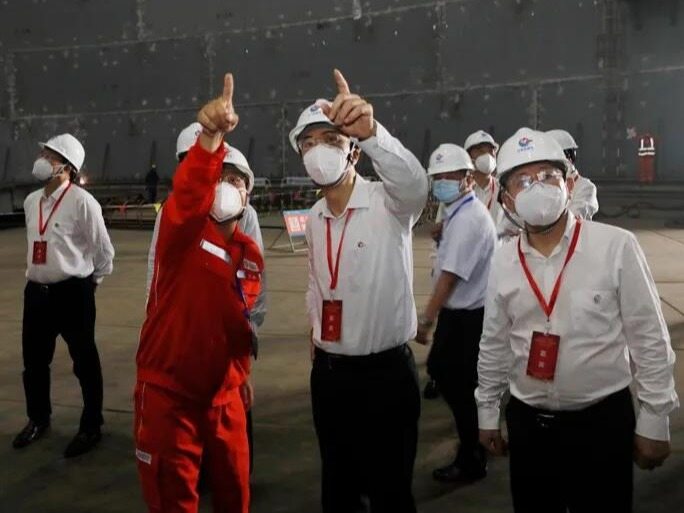
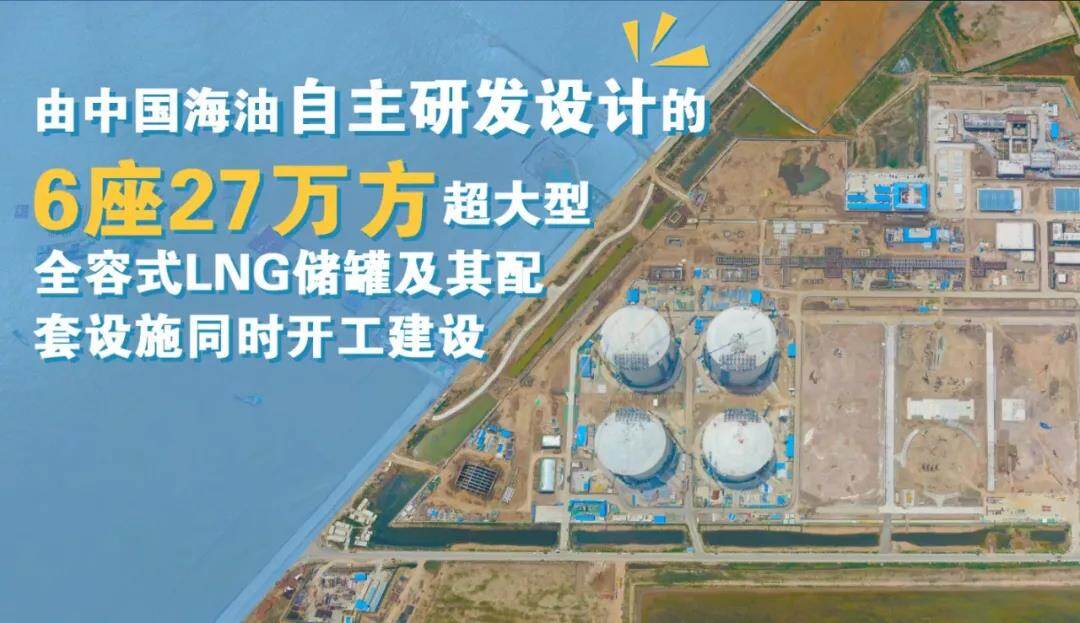
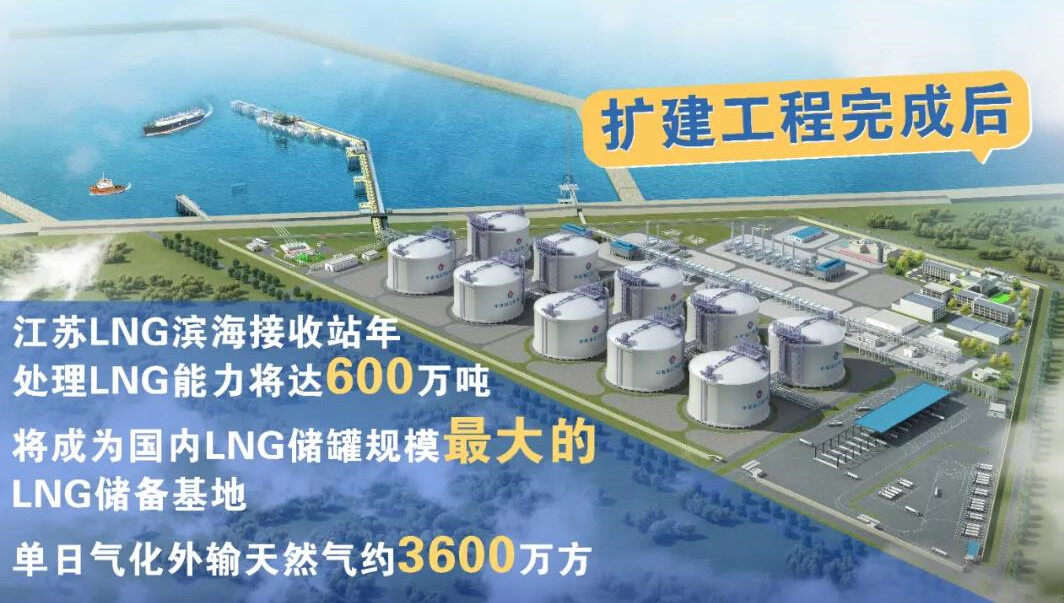
On June 9, 2021, 6 LNG (liquefied natural gas) storage tanks with the largest volume in the world independently developed and designed by CNOOC officially started construction in Binhai Port Industrial Park, Yancheng, Jiangsu. This marks the design and construction technology of China's super-volume LNG storage tanks. Achieve a comprehensive breakthrough.
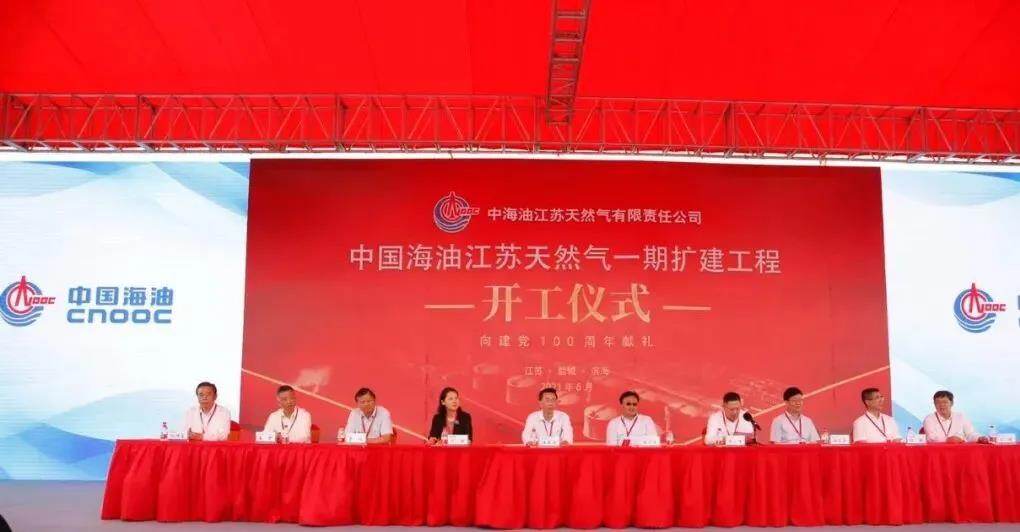
The first phase of Jiangsu LNG expansion project is carried out on the basis of 4 LNG storage tanks of 220,000 cubic meters, and 6 new ultra-large full-capacity LNG storage tanks of 270,000 cubic meters and supporting facilities will be added. This is the first time in China. It will be completed and put into production at the end of 2023. After the completion of the expansion project, the Jiangsu LNG Binhai Receiving Station will have an annual LNG processing capacity of 6 million tons, becoming the largest LNG storage base in China. It will transport approximately 36 million cubic meters of natural gas per day, which can provide nearly 4 million gas for Jiangsu’s civilian life. Tian, to provide sustainable and stable clean energy for the Yangtze River Delta and even East China.
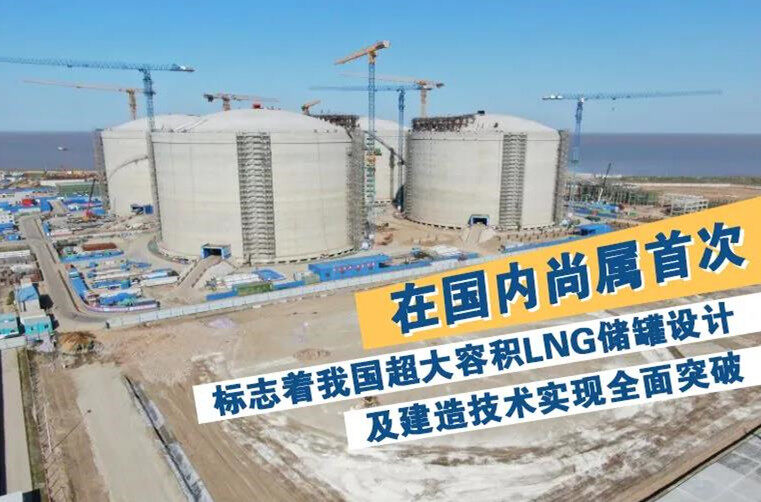
After years of scientific research, CNOOC successfully solved the design problems of large-scale storage tanks such as the stability analysis of long-span thin-shell structures and the design of ultra-high shear wall seismic isolation, and achieved many technological breakthroughs in the field of LNG storage tanks. , Making China one of the few countries in the world that can carry out the design and construction of super-large LNG storage tanks.
At the same time, the project is of positive significance for optimizing the energy structure, protecting the ecological environment, and accelerating the industrial transformation of the Yangtze River Economic Belt. Compared with energy such as coal and petroleum, 6 million tons of LNG can reduce 18.82 million tons of carbon dioxide and 334,000 tons of nitrogen oxides, which is equivalent to planting 40 million trees. The green and low-carbon effect is significant.
Wang Dongjin, Secretary of the Party Leadership Group and Chairman of CNOOC, said that the Jiangsu LNG Phase I expansion project is a major infrastructure project implemented by CNOOC in the spirit of the important instructions and instructions of General Secretary Jin Ping and the decision and deployment of the Party Central Committee. . In order to actively conform to the new pattern of “dual cycle” of my country’s economic and social development and new trends in energy development, CNOOC, as a leader in the domestic LNG industry, will continue to increase clean energy supply and strive to build Jiangsu LNG into a national-level LNG receiving storage. The transportation center uses practical actions to reflect CNOOC’s responsibility and responsibility as a central enterprise, and contributes to CNOOC’s efforts to build a beautiful China and help my country achieve its carbon peak and carbon neutral goals. Editor/He Yuting
Comment


 Praise
 Collect
 Comment

 Share
Share


Write something~