 Search


- Lan-Zhang Railway helps the Silk Road embark on the fast track of high-speed rail
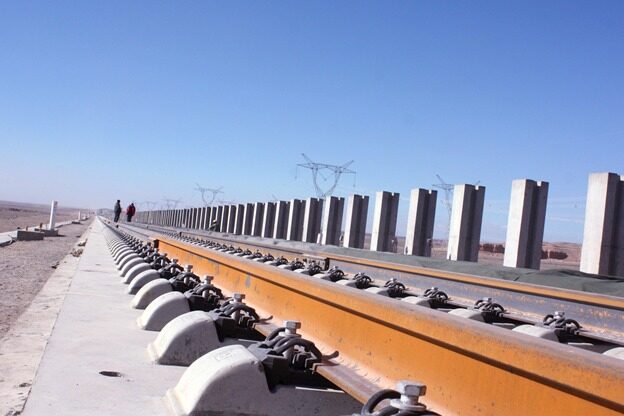
Since the opening of the Hexi Corridor by Emperor Wu of the Han Dynasty to the Western Regions, after more than two thousand years of feudal society, this ancient road of the Western Regions has become an important hub for exchanges between the land of China and the Western Regions. While the coastal areas are developing rapidly, the economy of the Northwest has been developed. It has become an important area of national economic strategy, as the saying goes: "If you want to be rich, you must first build roads." National highways, expressways, and high-speed railways are necessary prerequisites for the development of the Northwest.
On December 26, 2014, the Lanzhou-Xinjiang high-speed railway with a total length of 1,775.779 kilometers from Lanzhou West Railway Station to Urumqi Railway Station was opened for operation, bringing Zhangye into the era of high-speed rail. The time from Zhangye to the capital of Lanzhou has been 10 hours from the previous It was shortened to 4 hours. Wuwei, who was also in the Hexi Corridor, was not so lucky.
The most important role of China's high-speed railway network planning "eight verticals and eight horizontals" is to connect important cities and solve the problem of inconvenience caused by dense population. The Hexi Corridor, the high-speed railway should be built to connect Wuwei and take the old road, or should it enter Xining to connect the provincial capitals of Qinghai and Gansu, with the inaccessible Gobi on one side and the winding mountainous area on the other. The construction of this high-speed rail is inevitable. Include all factors such as population, economy, and construction difficulty. The population base determines the direction of the high-speed rail. According to investigations, Wuwei had a population of less than 1.82 million and Jinchang had a population of less than 470,000. The sum of the two was not as large as Xining (less than 2.34 million). Therefore, the country chose Lanzhou, Xining, and Urumqi high-speed rail. Xining.
In addition, Xining, Lanzhou, and Urumqi are the capitals of three provinces or autonomous regions. The high-speed rail connection strategy is of great significance. Before the big national strategy, small and medium cities could not be compared. Moreover, before the high-speed rail was passed, the Qinghai Railway could only go around Lanzhou, and reach Xinjiang from Hexi, and the Lanxin line from Xining to Zhangye, which complemented the shortcomings of Qinghai’s rapid entry into Xinjiang. Moreover, the only cities bypassed by the high-speed rail are Wuwei and Jinchang. There are also electrified double tracks. Although it is inconvenient without high-speed rail, the impact will not be strategic. At the same time, Xining is the capital of Qinghai Province and the largest city on the Qinghai-Tibet Plateau. The role of the leader plays an important role in driving the economic development of Qinghai as a whole. The high-speed rail has an obvious effect on the inflow of external funds and the flow of business personnel. If Xining is abandoned, Qinghai's economy will be abandoned. If you give up Wuwei, Jinchang, but give up Gansu Province and the two prefecture-level cities in eastern Hexi.
The proposal of the new Lanzhou-Zhangye third and fourth line railway plan made up for this shortcoming of Wuwei, and also broke the history of no high-speed rail in the hinterland of Gansu. Lanzhou-Zhangye Line 3 and 4 Railway, also known as Lanzhang Line 3 and 4 Railway, Lanzhang Railway, leads from Lanzhou West Station in Lanzhou City, passes through Wuwei City, Jinchang City, and finally leads to Zhangye West Station in Zhangye City. The length of the whole line is about 518 kilometers, and the design speed target value is 250km/h. The construction of the Lanzhou-Zhangjiakou Railway is of great significance to the interconnection of the node cities along the line and the inclusion of the "high-speed rail economic circle" with Lanzhou as the hub.
Newly built Lanzhou-Zhangye third and fourth line railway
On February 18, 2019, the National Development and Reform Commission held the 8th Railway Construction Project Preliminary Work Consultation. The meeting studied and deployed the railway projects to start construction in 2019, and plans to officially start the construction of the Lanzhang Third and Fourth Line Railway in March 2019 , It will be completed and opened to traffic on June 30, 2024. To speed up the external development of the Hexi Corridor, the Lanzhou-Zhangjiakou Railway passes through the four cities of Lanzhou, Wuwei, Jinchang, and Zhangye, and the two ends are connected to the Xulan High-speed Railway and the Lanxin High-speed Railway. The Lanzhou-Zhangye 3-4 line is roughly parallel to the Lanzhou-Zhangye section of the existing Lanzhou-Xinjiang Railway. The main line is 518 kilometers long, which is about 29 kilometers shorter than the Lanzhou-Zhangye section of the existing Lanzhou-Xinjiang Railway. After the Lanzhou-Zhangye third and fourth lines are completed and opened to traffic, the ancient Hexi Corridor will be connected to the high-speed railway network, and will become an important "Eurasian Continental Bridge" of the Belt and Road Initiative. It is a convenient way for my country to reach Central Asia, the Middle East, and Europe. aisle.
The newly-built Lanzhou-Zhangye third and fourth line railway project integrates Lanzhou Zhongchuan Airport, which will realize the "seamless connection" of air and railway, and help the rapid formation of a "2-hour living circle" from Lanzhou to cities and counties in the province.
Fighting Wushaoling
As a natural barrier of the Hexi Corridor, Wushaoling has been the east gate of the Central Plains and the Guanzhong Plain into the Hexi Corridor since ancient times. It is also a must pass through the ancient Silk Road. It is also called the Silk Road along with the Gulang Canyon under the Qilian Mountains. Portal. Here is high cold and lack of oxygen, the air is thin, the main peak is 3562 meters above sea level, the annual average temperature is -2.2 degrees Celsius, the temperature difference between day and night is large, the climate is volatile, and the natural environment is harsh. There is a historical record of Wushaoling with "midsummer snow and cold bones". Moreover, Wushaoling has complex geological conditions and many fault zones, making it known as the "Geological Museum".
The Lanzhou-Zhangye third-fourth railway line under construction will traverse this lofty mountain range. Among them, the Wushaoling Tunnel, which is constructed by the China Railway Third Bureau of China Railway Group, is the key section to realize this grand feat. On June 30, 2019, the construction of the new Wushaoling extra-long tunnel from Zhongchuan Airport to Wuwei officially started. Construction, this also marks the Lanzhang third and fourth line railway has entered the implementation stage. The section from Zhongchuan Airport to Wuwei is a high-speed passenger dedicated line with a design speed of 250 kilometers per hour and a main line of 195.2 kilometers. With a total length of 17 kilometers, the Xinwushaoling Tunnel is the longest tunnel on the entire line. It is also the first high-speed railway tunnel in China that utilizes the existing tunnel inclined shaft facilities in the selection of the route across the mountains.
Immediately looking at Qilian, Qifeng peaks high into the sky; westward to Jiayu, there is no blue cloud on lectin. Chinese railway people went forward and succeeded, determined to forge ahead, and used more intelligent and efficient technical means to forge immortal monuments on the vast Wushaoling. While restoring the Silk Road to its former glory, it also continued to contribute the wisdom and strength of China Railways to the development of China's railways.
The Qingshuihe Bridge on Lanzhang Third and Fourth Line Railway is located in Liangzhou District, Wuwei City, Gansu Province, with a total length of 8.507 kilometers and a total of 259 piers and abutments. At 5:23 a.m. on June 25, 2020, with the concrete pouring of the last side, the construction of pier 62# of the Qingshuihe Bridge in front of the Lanwu section of the newly built Lanzhang 34th and 4th railway station was successfully completed. This is also Lanwu. The first bridge pier column to be poured in the section marked a new breakthrough in the construction of the entire Lanwu section and entered the express lane. In order to ensure the efficient progress of the construction of the Lanzhang Third and Fourth Lines, governments at all levels have consolidated responsibilities, decomposed tasks, and refined measures, and at the same time promoted various constructions with high quality, and cooperated with local cities, districts, counties, towns and villages through multiple channels Actively coordinate and communicate, work together with offices, and focus on efforts to efficiently promote the construction of the Lan-Zhang third and fourth line railways, and press the "fast forward button" for the complete completion of the Lan-Wu section.
If you ask where the plum blossoms fall, the wind blows all over Guanshan all night
Walk west along the Lanzhou-Zhangzhou Railway to Jinchang, a city in the hinterland of Gansu. This is a young city. It is called the "Nickel Capital of the Motherland" because it is rich in nickel. Today, more than 30 years later, the "Nickel Capital" as we know it has transformed into a "Flower City". Here are the ruins of the ruins of the triangular city, allowing you to touch the pre-Qin era; here is the winding Yushan Gorge, where the famous Silk Road temples are hidden; there is also an unbreakable bell tower, which witnesses the history here. This is a city that was not considered when the Lanxin Line was built. As an important node city along the One Belt and One Road, the absence of high-speed rail in modern society means traffic congestion. While restricting urban development, it is also very important for being located in the depths of the Gobi. For the Jinchang people, this is also a major pain point. This time, the Lan-Zhang Railway set up Zhuwangbao Station and Jinchang South Station in Jinchang, officially incorporating Jinchang into the national high-speed rail network. With a population of nearly 3 million in Jinwu, Lanzhou-Zhangjiakou High-speed Railway, as the second channel of Lanxin High-speed Railway, is not only related to the economic development of Jinchang-Wuwei City, but also related to the operational efficiency of Lanxin High-speed Railway and the development vision of the entire Hexi Corridor and Xinjiang! The Jinchang high-speed rail is unavailable, and the Lanxin high-speed rail network is not connected. The constraints are multifaceted. As the so-called "pull the whole body", whether from a strategic point of view or from an economic development point of view, the entire line of the Lanzhang high-speed rail line from the Jinchang-Wuwei section Synchronous construction is the top priority of the whole paragraph.
"The Lanzhang Third and Fourth Line Railway Project is a major livelihood project. It is of great significance for improving regional infrastructure construction, alleviating traffic pressure, and enhancing railway passenger transport capacity. As a participating unit, China Railway First Bureau, in the construction process, Based on the construction of high-quality projects, adhering to the courage and will of building roads in the mountains and building bridges with water, this project will become a famous brand in the railway market." He Liang, the builder of the first bureau, told us. The construction of the Lan-Zhang Railway will play a huge role in improving the layout of the national and regional high-speed railway network and opening up the Hexi Corridor, the new “Silk Road” high-speed railway channel. It will also add new momentum to the high-quality development of Gansu, adding luster to it and giving it a new look. Vitality.Editor/Baohongying
Comment

 Praise
 Collect
 Comment

 Share
Share


Write something~