 Search


- The bronze galloping horse is regarded as the messenger and symbol of humanistic and commercial exchanges on the ancient Silk Road
Horses were an important means of transportation, military equipment and animal power for agricultural production in the Han Dynasty, and were widely used in transportation stations, defense of the Great Wall, military operations, ethnicity and kinship. The bronze galloping horse, a national treasure-level cultural relic of the Eastern Han Dynasty hidden in the Gansu Provincial Museum, is considered to be the messenger and symbol of cultural exchanges between the East and the West, especially the cultural and commercial exchanges on the ancient Silk Road, due to its unique design and excellent craftsmanship.
Wang Qi, deputy director and researcher of the Gansu Provincial Museum who has been engaged in the research of cultural relics protection for more than 40 years, said that the ancient Silk Road runs through the whole territory of Gansu, and the bronze galloping horse should be the most representative carrier of historical cultural relics. In the late 1960s, the bronze galloping horse was accidentally discovered in the tomb of the Eastern Han Dynasty in Leitai, Wuwei City, Gansu Province. Because of its wonderful conception, unique shape and exquisite casting, it has become a rare masterpiece among ancient Chinese bronze works of art.
After the excavation and investigation of the Leitai Han Tomb was completed, the relevant departments of Gansu Province decided to transfer all the cultural relics unearthed in Leitai to the Gansu Provincial Museum for preservation, including the bronze galloping horse, but its value has not yet been recognized and developed. In September 1971, when Mr. Guo Moruo, a famous Chinese historian, accompanied the then Cambodian Prime Minister Binnu to visit Lanzhou, he specially visited the Gansu Provincial Museum. Guo Moruo was particularly interested in these bronze ceremonial figurines unearthed in Wuwei, and the bronze galloping horse was especially interesting. firmly attracted his attention.
This is a galloping horse. One of its hooves swept across the back of a bird while running. The bird turned his head and looked back in surprise. A dreamlike moment condensed into eternity. Guo Lao, who has seen countless cultural relics, marveled at the impeccable body posture and perfect balance of the work, and said with emotion: "It is a first-class art treasure if it is unconstrained and alone, even if it is brought to the world."
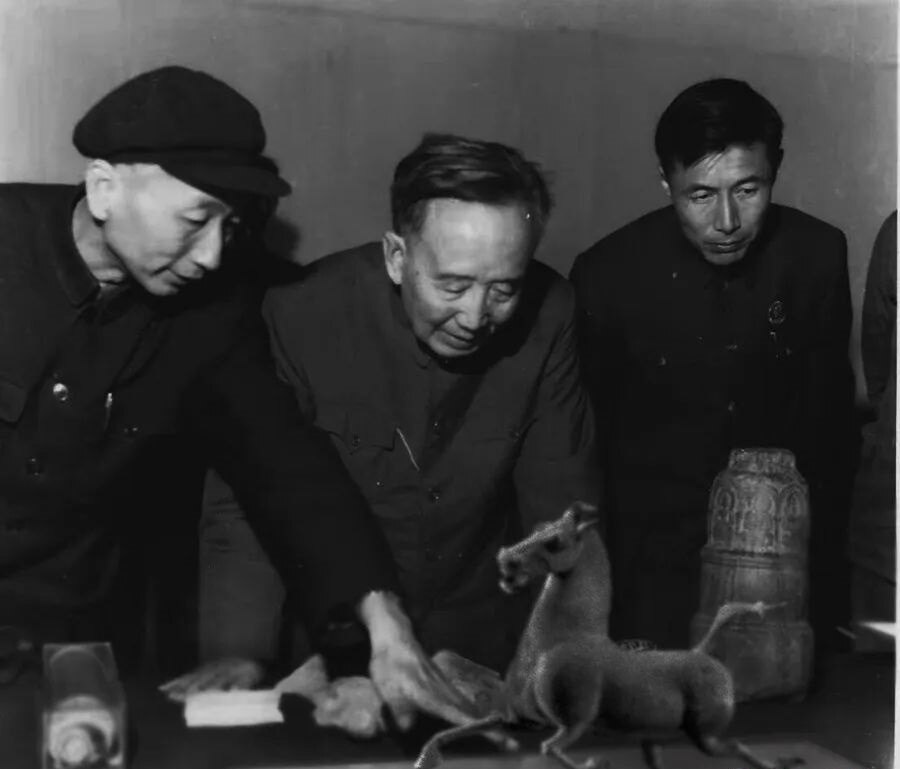
In 1971, Wang Yi (left), then director of the Gansu Provincial Museum, introduced the bronze galloping horse to Mr. Guo Moruo (middle)
Soon after, these bronze figurines, including the bronze galloping horse, were transferred to Beijing to participate in a large-scale national exhibition of historical relics, which were well received by the audience. After the exhibition in Beijing, the bronze galloping horse aroused strong repercussions in the historical and archaeological circles at home and abroad. In 1972, Mr. Guo presided over the preparation of a large-scale exhibition of historical relics of China's foreign exchanges. Originally, the bronze galloping horse was not included in the list of cultural relics to be exhibited. Later, the French and British ambassadors to China repeatedly requested the bronze galloping horse to participate in the exhibition.
In order to see the style of Chinese horses, there was a long queue at the entrance of the British Museum. British audiences praised it as "peerless treasure" and "genius Chinese horse", and the visitors were all in awe. When it was exhibited in the United States, the bronze galloping horse jumped on the huge poster and became the logo pattern for the publicity of the cultural relics exhibition. Overseas media scrambled to report that the copper galloping horse caused a sensation in the world.
According to the statistics of China's official publications in 1975, from April 1973 to August 1975, copper galloping horses were sold in 12 places in France, the United Kingdom, Japan, Romania, Austria, Yugoslavia, Sweden, Mexico, Canada, the Netherlands, Belgium, and the United States. National tour exhibition, the audience reached more than 5 million.
After the reform and opening up, in order to expand foreign exchanges, the fledgling tourism industry also needs a symbol and logo, and the bronze horse, which has been "famous overseas" before, has the implication of galloping forward, which is not in line with the thriving reform and opening up cause. And together, it naturally stands out among many "campaign cultural relics" and becomes a symbol of China's tourism.
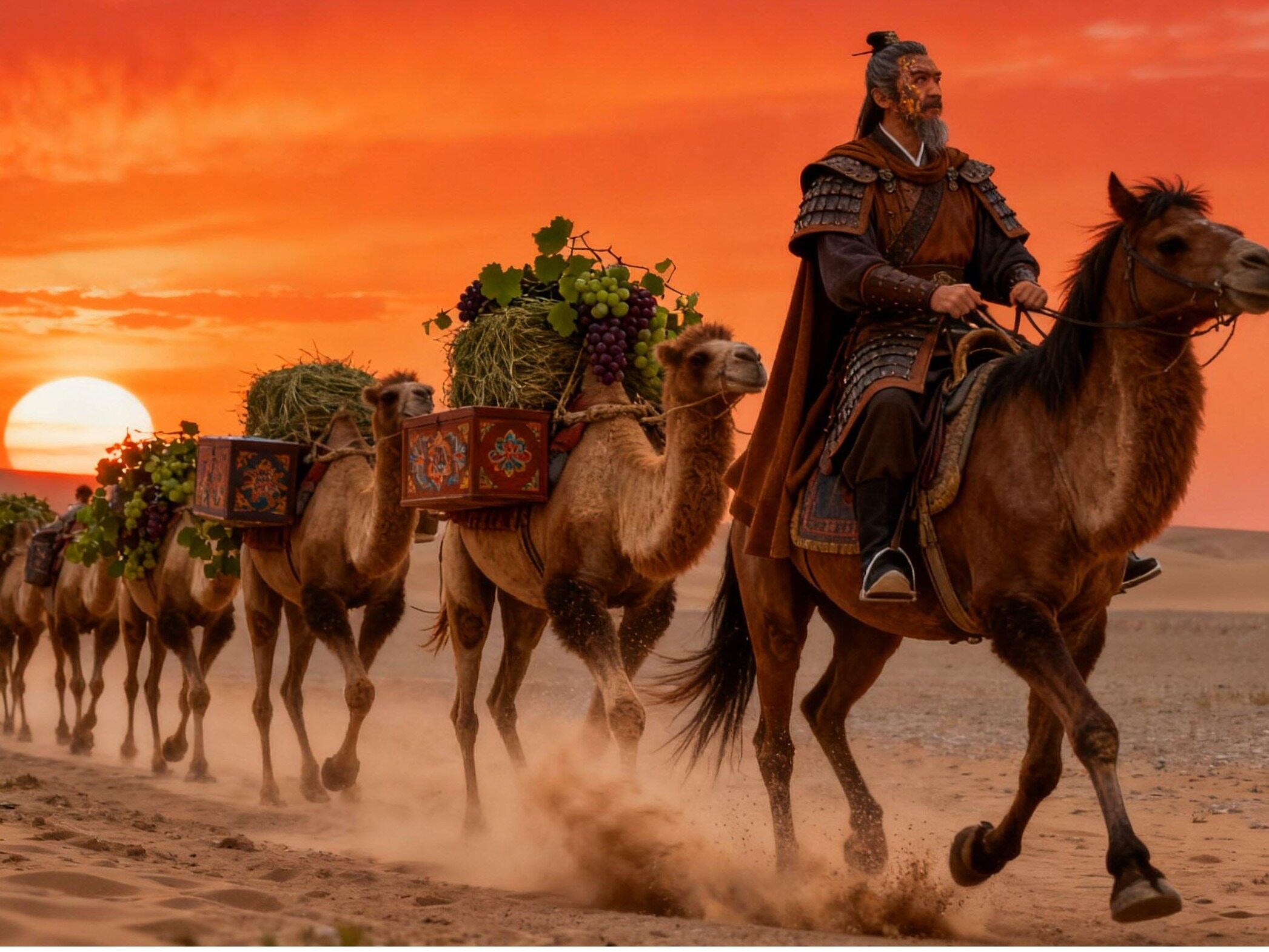
Wang Qi said that before the Han Dynasty, Gansu was the intersection of East and West exchanges. After Emperor Wu of Han sent Zhang Qian to hollow out the Western Regions, Gansu became an important passage to guard the Silk Road. Therefore, many precious historical relics of the Han and Tang dynasties have been unearthed in Gansu, especially a large number of bronze, pottery, wood and other rich and diverse horse cultural relics. These horses also reflect the busy scene of exchanges between the East and the West during the Han and Tang dynasties.
Why does the bronze galloping horse stand out from the crowd? Because the shape of this horse is very peculiar, it is different from other horses. It is three-legged flying on the back of a bird, and the bird shows the shape of the bronze horse at the moment of looking back. Compared with other static horses, the bronze galloping horse vividly interprets the dynamic feeling of the galloping horse, reflecting the creativity of ancient craftsmen's genius and superb casting technology.
The bronze galloping horse was identified as a Chinese tourism symbol by the former China National Tourism Administration in 1983, and was identified as a national treasure-level cultural relic by the expert group of the State Administration of Cultural Heritage in 1996. Peter Hofcock, an Englishman, said in his book "Foreign Devils on the Silk Road": "Although this kind of 'Pegasus' is now extinct, its image was not under the hands of Han and Tang sculptors and artists. annihilated."
Bronze galloping horses belong to the world's treasures, orphans and unparalleled products, and are prohibited from going out of the country for exhibition. In fact, it is to better achieve on-site protection and avoid some accidents during long-distance transportation. Not only that, from May 1st to October 15th every year, the copper galloping horse is exhibited in the Gansu Provincial Museum, and the rest of the time is maintained in the warehouse, so that it can obtain time and space for "recuperation".
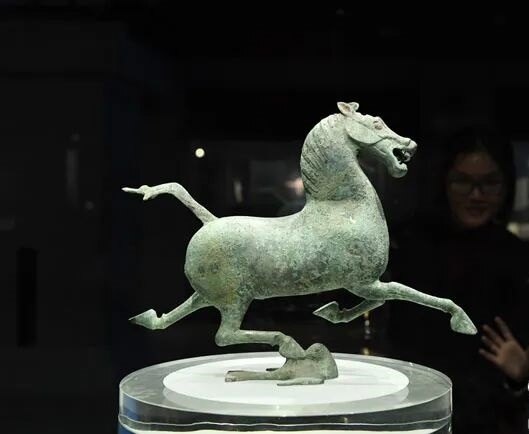
Wang Qi said that with the continuous improvement of the popularity of the bronze galloping horse, the research on the bronze galloping horse in the academic circle has also become popular. What kind of horse is it? Why did this perfect shape two thousand years ago not appear in the culturally prosperous Central Plains, but in the remote Hexi Corridor? What is the relationship between the sweaty horses of Dawan and ancient Liangzhou (now Wuwei, Gansu)?
According to historical records, the Chinese Han nationality raised horses before the Qin and Han dynasties, mainly for farming or pulling carts, and the breed of war horses was not good. In the early Han Dynasty, the Huns, a minority in the north, invaded the northern border areas of the Han nationality all year round with their strong soldiers and horses. Because the speed and endurance of the horses of the Han nationality were not comparable to those of the nomads, the wars were often lost.
In the period of Emperor Wu of the Han Dynasty, Emperor Wu of the Han Dynasty was determined to strengthen the cavalry in the army. He sent people to the Western Regions three times to seek Wusun horses, and set up the first official battalion in the Damaying grassland at the foot of Qilian Mountain between Wuwei and Zhangye in Gansu. The horse farms crossbred the sweaty horses brought back with Mongolian horses, and cultivated the later famous Hexi horses, also known as Shandan horses.
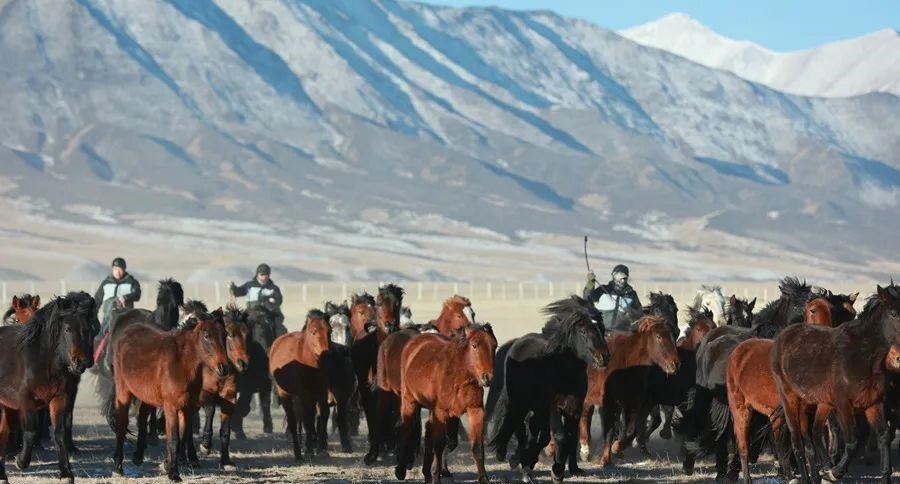
The world's largest racecourse Gansu Shandan Racecourse
After the Western Han Dynasty, the countries in the Western Regions sent some embassies every year to China for visits and trade exchanges. In particular, the Dawan Kingdom paid tribute to the central court every year. With the continuous arrival of good horses from the Western Regions, Wuwei became an important horse breeding base at that time. Because there are so many good horses in Wuwei, it is quite logical that the Bronze Galloping Horse was born here two thousand years ago.
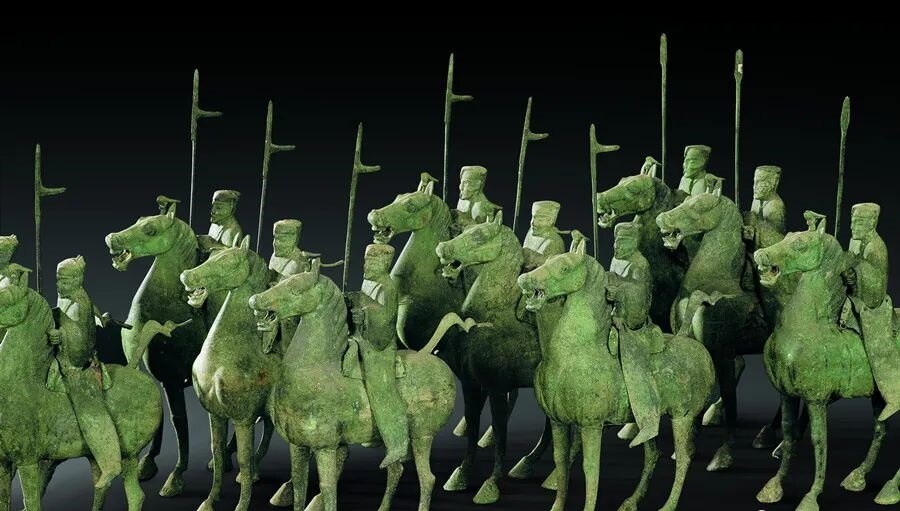
An honor guard of bronze chariots and horses unearthed from the Leitai Han Tomb in Wuwei, Gansu
As an important carrier of "you have me, I have you" in the process of East-West exchanges, horses have gradually withdrawn from the stage of history. But the rise of the ancient Silk Road itself is a process of mutual learning between the East and the West. Modern archaeological excavations show that China's bronze casting industry may have been introduced from the West, and the bronze galloping horse, the highest technical representative of bronze smelting, has both the "excellent elements" of the East and the West at the same time.
In recent years, the bronze galloping horse, which no longer leaves the country for exhibitions, still attracts tourists from many countries. . At the same time, the various online exhibitions opened by the museum also allow more audiences at home and abroad to understand the "shadow" of mutual learning between Eastern and Western civilizations through the bronze galloping horse. Editor/Ma Xue
Comment


 Praise
 Collect
 Comment

 Share
Share


Write something~